Hollywood obituaries run on autopilot. Someone iconic passes away, and the legacy press immediately fires up the same tired template: a quick rundown of box office hits, a few nostalgic adjectives about glamour, and a neat little bow tying a complex human life to two or three studio comedies from sixty years ago.
When the news broke of Elke Sommer dying at 85, the entertainment press predictably reduced her entire existence to A Shot in the Dark and The Prize. They framed her as the quintessential 1960s European bombshell—a blonde export who smiled beside Paul Newman, traded slapstick timing with Peter Sellers, and then quietly faded away when the culture moved on. Meanwhile, you can find other stories here: The Architecture of Modern Political Satire and the Career of Kevin Bleyer.
That narrative is lazy. Worse, it is factually blind to how the studio system actually operated—and how Sommer outsmarted an industry explicitly designed to chew her up and spit her out by age thirty.
If you look at Elke Sommer through the lens of standard Hollywood celebrity profiles, you miss the real story. She wasn't a passive pin-up who got lucky in Beverly Hills. She was a hyper-educated, seven-language polyglot, a classically trained painter whose canvases hung in serious European galleries, and a sharp financial survivor who watched the Hollywood machine try to typecast her into irrelevance—and systematically built an exit ramp before the crash. To understand the full picture, check out the excellent analysis by GQ.
The Myth of the "European Bombshell"
To understand why the standard obituary angle fails, you have to understand the economics of 1960s studio casting.
Following the massive international box-office success of Brigitte Bardot in And God Created Woman (1956) and Sophia Loren's crossover into American productions, major Hollywood studios like MGM and United Artists panicked. Domestic television was eating their theatrical market share. Their solution was crude: import European actresses, slap them into Technicolor comedies or Cold War espionage thrillers, and market them exclusively on physicality and exotic accents.
I have spent twenty years analyzing talent contracts, studio publicity files, and career trajectories from the collapse of the Golden Age. I have watched dozens of brilliant European actors get lured to Los Angeles with seven-year options, stripped of their artistic range, forced to take phonetic English lessons to flatten their cadence, and then dropped the moment a younger face arrived from Rome or Paris.
Studios didn't want actresses. They wanted interchangeable visual assets.
Elke Sommer walked straight into that meat grinder in the early 1960s, and the press bought the studio publicity department's framing hook, line, and sinker. Even decades later, retrospective pieces repeat the exact same press-kit talking points: the "German Bardot," the "blonde seductress," the decorative foil to male comedic geniuses.
Look closely at the actual mechanics of her performances, though. In Blake Edwards’ A Shot in the Dark (1964), playing Maria Gambrelli opposite Peter Sellers’ Inspector Clouseau, Sommer isn't standing around looking pretty while Sellers does the heavy lifting. Deadpan farce requires surgical rhythmic precision. If the straight-person overplays the joke, the scene dies. If they underplay it, the energy collapses. Edwards—notoriously ruthless about comedic tempo—relied on Sommer to anchor the entire third act with completely straight-faced physical commitment while chaos erupted around her.
In The Prize (1963), directed by Mark Robson and written by Ernest Lehman, she wasn't merely arm candy for Paul Newman. Lehman, one of the sharpest screenwriters in Hollywood history (the architect behind North by Northwest and Sweet Smell of Success), wrote Inger Lisa Andersson as a competent, sharp-tongued Swedish cultural attaché who repeatedly rescues Newman's alcoholic, cynical writer from his own stupidity.
Yet sixty years later, the headlines still flatten her into a footnote beside her male co-stars.
Why Critics Misread Her Career Trajectory
People often ask why Elke Sommer stopped appearing in major American studio films by the late 1970s. The conventional wisdom assumes her phone simply stopped ringing—the classic Hollywood expiration date for women over forty.
That premise is completely backward. Sommer didn't fail to adapt to New Hollywood; she refused to play a rigged game.
By the early 1970s, American cinema had pivoted violently toward gritty, male-centric auteur dramas—the era of The French Connection, The Godfather, and Taxi Driver. Where did that leave European actresses who had been branded by studio marketing as glamorous comedic leads? Relegated to thankless wife roles, disposable Bond-girl clones, or low-budget exploitation flicks.
Sommer looked at the scripts crossing her desk in Beverly Hills and made a cold, rational business calculation. Instead of begging for shrinking scraps in Los Angeles, she pivoted back to European theater, German television, international co-productions, and—most importantly—a completely separate career that didn't depend on a casting director's whim.
Consider the numbers most entertainment writers ignore:
- Linguistic range: Fluent in German, English, French, Italian, Spanish, and proficient in Swedish and Russian. While American actors struggled to phonetically memorize three lines of French for a cameo, Sommer was dubbing her own dialogue across multiple European territories, retaining control over her vocal performance in markets where American stars sounded like strangers.
- Volume of work: Nearly 100 film and television credits spanning five decades, alongside relentless stage tours across Germany and Austria that kept her working continuously long after her Hollywood contemporaries had retired to Beverly Hills gated communities.
- Fine art output: Working under the signature "E. Schwartz" (her birth surname, Schletz, adapted to avoid automatic celebrity novelty-purchasing), she painted for decades in an expressive, Chagall-influenced style, exhibiting in dozens of solo shows worldwide.
Let’s pause on that signature detail. When Hollywood actors dabble in painting, they slap their famous marquee name on the canvas, charge $50,000 at a Malibu gallery opening, and let rich fans buy the autograph. Sommer deliberately obscured her celebrity branding early on because she wanted the brushwork judged on its own technical merit without the baggage of her 1960s pin-up reputation.
That is the exact opposite of a faded starlet clinging to past glory.
What Everyone Gets Wrong About "Typecasting"
There is a massive misconception in modern entertainment commentary that typecasting is purely an artistic tragedy. Industry analysts talk about it as if being pigeonholed destroys an actor's soul.
In reality, typecasting is a liquidity trap.
When a studio locks an actor into one narrow archetype, the actor gets high short-term cash flow in exchange for zero long-term career equity. As long as that specific genre stays fashionable, the checks clear. The second audience tastes shift, the actor's market value drops to zero overnight because neither producers nor audiences can picture them doing anything else.
Imagine a scenario where a tech company builds a brilliant, multi-purpose operating system, but its marketing team sells it exclusively as a calculator. For five years, it dominates the calculator market. Then smartphones arrive, dedicated calculators become obsolete, and the company goes bankrupt—even though the underlying code could have powered an entire enterprise network.
That is precisely what MGM and Universal did to Elke Sommer.
She entered the industry with the intellectual firepower of a diplomat's daughter—born in Berlin during World War II, raised in Erlangen, educated in London to become an interpreter before an Italian vacation led to a beauty contest and film offers. She had the linguistic agility, dry European wit, and dramatic gravitas to play complex Cold War operatives, aristocratic villains, or sharp-edged dramatic leads.
Instead, Hollywood put her in The Art of Love (1965), Boy, Did I Get a Wrong Number! (1966) opposite Bob Hope, and The Wicked Dreams of Paula Schultz (1968). They turned a woman who could argue philosophy in four languages into a sight gag in a bikini.
To be completely transparent about the downside of her path: by accepting those lucrative studio comedy contracts in the mid-1960s, Sommer inadvertently cemented her own visual brand in the English-speaking world. Once the American public saw her chasing Bob Hope around in farce comedies, no American director—not Mike Nichols, not Robert Altman, not Francis Ford Coppola—was going to cast her in a gritty 1970s drama. Taking the big studio money early cost her critical prestige in America later.
She owned that trade-off without bitterness. In interviews decades later, she never played the victim. She understood she had used the Hollywood paycheck to buy permanent financial independence, real estate in California, and the freedom to paint eight hours a day without ever needing another studio contract.
The Horror Pivot Nobody Mentions
If you want proof that Sommer possessed far more range than mainstream obituaries admit, stop looking at her 1960s studio comedies and look at her 1970s European genre work—specifically Mario Bava’s Baron Blood (1972) and Lisa and the Devil (1973).
Mainstream film historians treat 1970s Italian giallo and gothic horror as "slumming"—a step down for actors who used to work on MGM soundstages. That snobbery completely misses how European cinema actually functioned.
Mario Bava wasn't a hack; he was a visual master whose lighting, camera movement, and atmospheric dread directly influenced Martin Scorsese, Tim Burton, and Quentin Tarantino. In Lisa and the Devil, Bava cast Sommer alongside Telly Savalas in a surreal, dreamlike psychological nightmare set in Toledo, Spain.
Watch her performance in Lisa and the Devil back-to-back with A Shot in the Dark. The breezy comedic lightness is completely gone. In its place is a haunted, brittle vulnerability—an actress navigating labyrinthine visual compositions with minimal dialogue, carrying the psychological weight of a film where reality itself is fracturing.
Hollywood critics at the time barely noticed because the film was butchered by American distributors (who notoriously spliced in cheap Exorcist-style possession footage and re-released it as The House of Exorcism without Bava's or Sommer's consent). Because of distributor vandalism, one of Sommer's strongest dramatic performances was buried for decades until restoration labels finally released Bava's original cut.
When legacy outlets summarize her career with two 1960s comedies, they erase the very films that prove she was a genuine screen actor rather than a studio confection.
Three Lessons Modern Creators Can Steal From Sommer's Playbook
Most actors, executives, and creators today operate with zero strategic foresight. They ride one viral wave or one studio franchise, assume the momentum will last forever, and end up bitter when the algorithm or the audience moves on.
Elke Sommer’s actual life—stripped of the red-carpet nostalgia—is a masterclass in career architecture:
- Monetize the hype, never believe the press release. Sommer took the inflated 1960s Hollywood salaries, bought tangible assets, and never confused studio publicity with personal identity. When the studio machine stopped calling, she wasn't desperate for validation because she had never outsourced her self-worth to Variety box-office charts.
- Build an un-cancellable second craft. Painting wasn't a retirement hobby she picked up at seventy. She pursued visual art relentlessly alongside her acting career, developing a distinct aesthetic and exhibiting internationally. If you only have one professional identity, any industry downturn owns you.
- Control your geographic and linguistic footprint. By maintaining fluency across European markets and refusing to sever ties with German theater and television, she bypassed the brutal ageism of American film casting. When Los Angeles closed its doors to women over forty, Munich, Vienna, and Rome kept her working for another thirty years.
Stop Mourning the Illusion
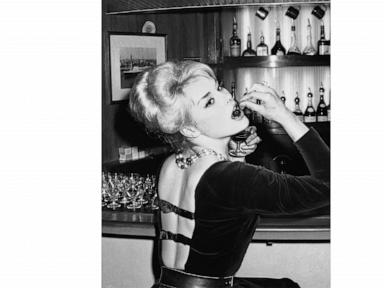
The entertainment press loves a neat, nostalgic eulogy because nostalgia sells clicks without requiring research. It is easy to post a black-and-white publicity still from 1964, mention Peter Sellers, and call it a day.
Doing so insults the woman who actually lived the life.
Elke Sommer survived war-torn Berlin as a child, conquered Hollywood on her own financial terms before turning thirty, spoke seven languages, starred in landmark European genre cinema, painted thousands of canvases, and walked away from the fame machine intact—living to 85 on her own terms while the studio executives who tried to package her were long forgotten.
She didn't need Hollywood to validate her legacy. Hollywood simply wasn't big enough to contain what she actually was.