Glue.
That is all it starts with. Polyvinyl acetate, a splash of sodium tetraborate, and the quiet, persistent hum of a kitchen ceiling fan at ten o'clock on a Tuesday night. For a different view, consider: this related article.
If you have ever stood in the fluorescent glare of a grocery store aisle, holding a calculator on your phone while trying to decide between the name-brand cereal and the rent check, you know the weight of a number that feels just out of reach. For a middle-schooler in the American heartland, that number is rarely measured in mortgages or medical bills. Usually, it comes printed on a permission slip folded twice inside a backpack.
Four digits. A chartered bus to Washington, D.C. Three nights in a hotel off the Beltway, museum passes, and the unspoken social currency of not being the only kid left behind in study hall while your friends walk the steps of the Lincoln Memorial. Similar reporting on this trend has been published by The Motley Fool.
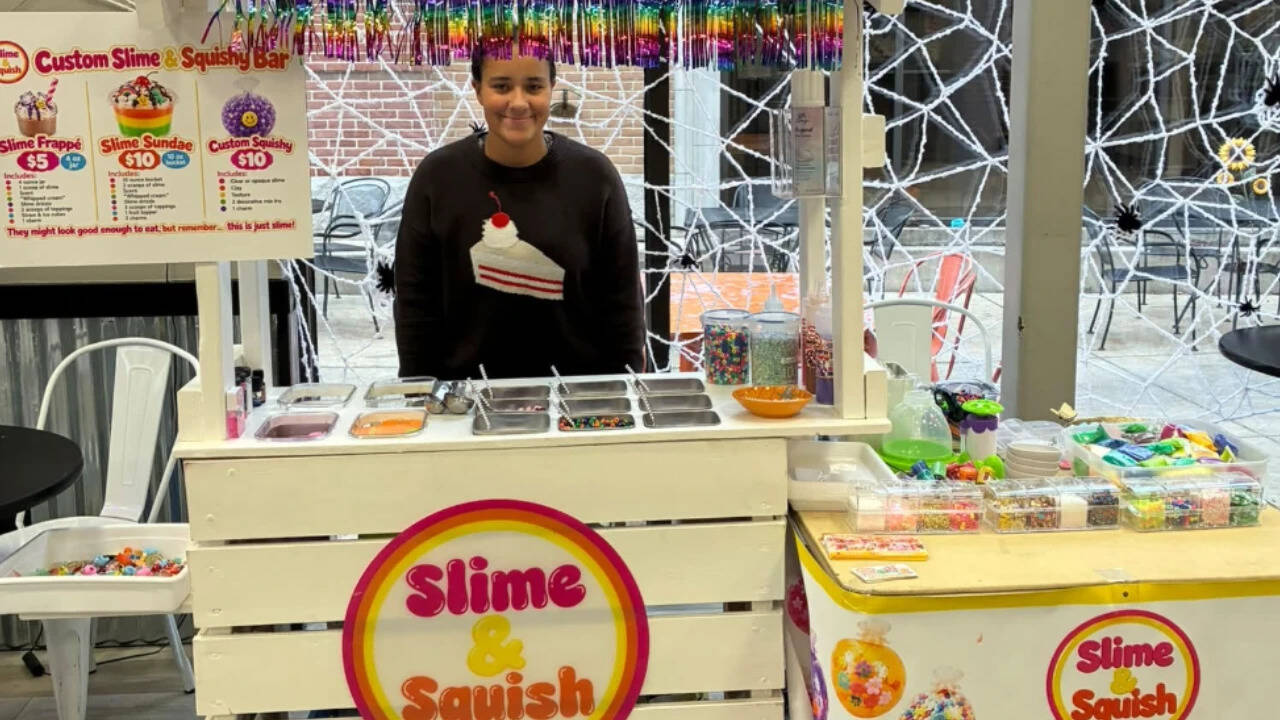
When a young girl in the United States recently set out to pay for her own school trip by mixing batches of homemade slime and posting the results online, the internet responded with a staggering eight million views in thirty days. On the surface, the headline reads like a charming piece of digital fluff—a modern update to the neighborhood lemonade stand, complete with pastel pigments and satisfying squishing sounds.
Look closer, though. Beneath the glitter and the ASMR microphones lies a remarkably sharp lesson in modern economics, attention scarcity, and what happens when sheer necessity collides with an algorithm.
The Architecture of a Permission Slip
To understand why eight million strangers stopped scrolling to watch a child knead colorful polymers, you first have to understand the quiet anxiety of the permission slip.
I remember my own version of that slip from years ago, though mine was for a weekend band competition two states away. The fee was three hundred dollars—an amount that might as well have been three million when your household runs on overtime shifts and careful budgeting. You don't ask your parents for the money because you can already see the math happening behind their eyes before you finish the sentence. You see the pause. You hear the quick, protective lie: We'll figure something out.
Consider a hypothetical student—let's call her Maya—facing that exact kitchen-table silence today.
In 1995, Maya's options were physical and geographically trapped. She could knock on doors in a three-block radius selling wrapping paper from a glossy catalog, rake leaves for five dollars a yard, or wash cars in a church parking lot on a Saturday morning, praying it wouldn't rain. Her total addressable market was roughly forty neighbors, most of whom were already tired of buying overpriced cookie dough from the kid down the street.
Today, Maya sits at the same kitchen table, but the walls of the room have dissolved. Her storefront is a six-inch glass screen propped against a cereal box. Her inventory costs pennies per ounce, bought in bulk jugs from a craft store. And her market isn't forty neighbors; it is millions of exhausted adults lying in bed at midnight, looking for thirty seconds of sensory relief from their own lives.
Why Slime Works When Lemonade Fails
Skeptics love to scoff at the slime economy. To the uninitiated, it looks like a fad that should have died out alongside fidget spinners and silly bands.
That skepticism misses the actual product being sold. Nobody buys a six-ounce plastic deli container of whipped, bubblegum-scented slime because they have an urgent utility need for wet polymer. They buy it because of what happens in the thirty seconds before they click the link in the bio.
Think of a great street musician in a crowded subway station. You don't drop a dollar into the open guitar case because you need to own the song; you pay because the music interrupted your stress and made you feel something pleasant for half a minute. Viral short-form commerce operates on the exact same principle, inverted. The video is the busking performance. The physical jar of slime is simply the souvenir you buy to keep the feeling alive.
For this young entrepreneur, the barrier to entry was practically nonexistent, yet the execution required an intuitive grasp of visual storytelling that corporate marketing departments spend millions trying to reverse-engineer.
Watch how these videos actually capture an audience. There is no hard sell at the beginning. No polished logo. Just the raw, tactile reality of creation:
- The Hook: A crisp, amplified sound—the sharp thwack of a bubble popping or the glossy stretch of clear resin catching afternoon sunlight through a kitchen window.
- The Stakes: A simple, unvarnished text overlay explaining the mission. Not a corporate mission statement, just a human goal: Day 12 of making slime to pay for my 8th-grade trip.
- The Proof: Hands stained with food coloring, rows of neatly labeled jars drying on parchment paper, and the honest exhaustion of packing orders after homework is finished.
People do not rally behind perfection. They rally behind effort they can see. When viewers watched her view count climb into the millions over a single month, they weren't just watching a craft project. They were voting, with their attention and their wallets, for a kid refusing to take no for an answer.
The Invisible Math of Eight Million Views
Eight million views sounds like an abstraction—a number so large it loses its edges. Let's bring it down to ground level.
Imagine filling a major football stadium holding eighty thousand people. Now imagine filling that stadium to absolute capacity every single day for a hundred consecutive days, and every single person in those seats watches a teenager mix glue and shaving cream at a kitchen counter.
In the attention economy, conversions—the percentage of viewers who actually pull out a credit card—are notoriously brutal. Even a wildly successful online storefront might convert only one or two percent of its traffic into buyers. When you are selling a digital course or a piece of software, low conversion rates can sink you. When you are a middle-schooler trying to raise a couple thousand dollars for a bus ticket and a hotel room, the math flips entirely in your favor.
Even if a tiny fraction of a percent of those eight million viewers decides to spend ten or fifteen dollars on a jar of handmade slime, the financial problem doesn't just get solved. It gets obliterated. A school trip that once felt like an insurmountable financial wall gets paid for in a weekend, leaving behind a surplus that most adults don't see in their savings accounts at the end of the year.
Yet the money is almost beside the point. What happens to a twelve- or thirteen-year-old brain when it experiences that kind of direct cause-and-effect?
In traditional schooling, effort is rewarded with a letter stamped in red ink at the top of a worksheet. It is a closed, artificial loop. You study, you take a test, you get an A, and nothing in the physical world changes. When you mix raw ingredients at your kitchen table, film the process, edit the pacing, answer customer questions in the comments, and watch real currency arrive to fund a trip you were told you might miss, the illusion of helplessness breaks forever. You learn that value isn't something handed down by an institution. It is something you manufacture with your own two hands.
The Unspoken Cost of the Kitchen-Table Hustle
Still, it would be dishonest to paint this story purely in warm, triumphant hues without looking at the shadows it casts.
Whenever a story like this goes viral, our culture loves to applaud the grit of the child while quietly stepping over the reality that made the grit necessary in the first place. Why does a twelve-year-old need to become a viral media producer and small-batch manufacturer just to see her nation's capital with her classmates?
Field trips, extracurriculars, and travel used to be the great equalizers of public education—the moments when a kid from a modest zip code stood shoulder-to-shoulder with a kid from the wealthy side of town, looking up at the same dinosaur bones or historical monuments. Increasingly, those experiences have become pay-to-play luxuries, priced far beyond what an average working family can absorb on short notice.
And then there is the machine itself.
Anyone who has ever had a post unexpectedly catch fire online knows the sudden, dizzying vertigo that follows. One morning you are an anonymous kid hoping to sell four jars to your aunt's coworkers; forty-eight hours later, your phone battery is dying by noon from thousands of notifications, strangers are critiquing your packaging, and an order queue is stretching across your dining room table like a physical wall.
Algorithms do not care about bedtime. They do not care that you have a pre-algebra quiz on Friday or that your wrists ache from kneading fifty pounds of thick clay dough. When eight million people show up at your digital door in thirty days, the charming hobby instantly mutates into a fulfillment warehouse. Shipping labels have to be printed. Boxes have to be taped. Post office lines have to be navigated before closing time.
For a young creator, that sudden surge is a masterclass in logistics, customer service, and burnout—all compressed into four frantic weeks. You learn quickly that going viral isn't a finish line; it is a starting gun for a race you didn't entirely know you were entering.
What the Rest of Us Missed
There is a quiet irony in watching grown adults scroll past stories like this, muttering about how kids these days spend too much time on their phones.
We look at the screen and see a distraction. A kid with a goal looks at the exact same screen and sees leverage.
Consider how most adults respond when an unexpected thousand-dollar expense lands in their lap—a blown transmission, a sudden dental bill, a rent hike. Our first instinct is almost always contraction. We cancel subscriptions, skip dinners out, stare at spreadsheets, and absorb the stress quietly. Rarely do we ask what small, tangible thing we could make, package, and put in front of the world before Friday.
That young girl didn't wait for a business plan, a trademark, or a mentor to tell her she was ready. She took the cheapest materials sitting in a craft aisle, turned her disadvantage into a compelling narrative, and invited millions of strangers to watch her work toward a clear, honest target. She understood, instinctively, that people don't just buy products; they buy into momentum. They want to help push the boulder over the hill once they see someone pushing it with everything they've got.
Months from now, the viral surge will cool down, the way all internet waves eventually do. The comments will slow to a trickle, the algorithm will move on to another bedroom creator, and the kitchen table will finally be cleared of bubble wrap and plastic jars.
Somewhere in Washington, D.C., a charter bus will pull up along the National Mall, air brakes hissing as the doors swing open. A girl will step down onto the concrete, squinting up at the white marble columns in the afternoon sun, her fingers finally scrubbed clean of food coloring, carrying a camera roll full of memories she bought one stretch of glue at a time.