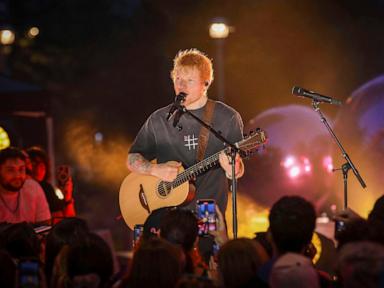
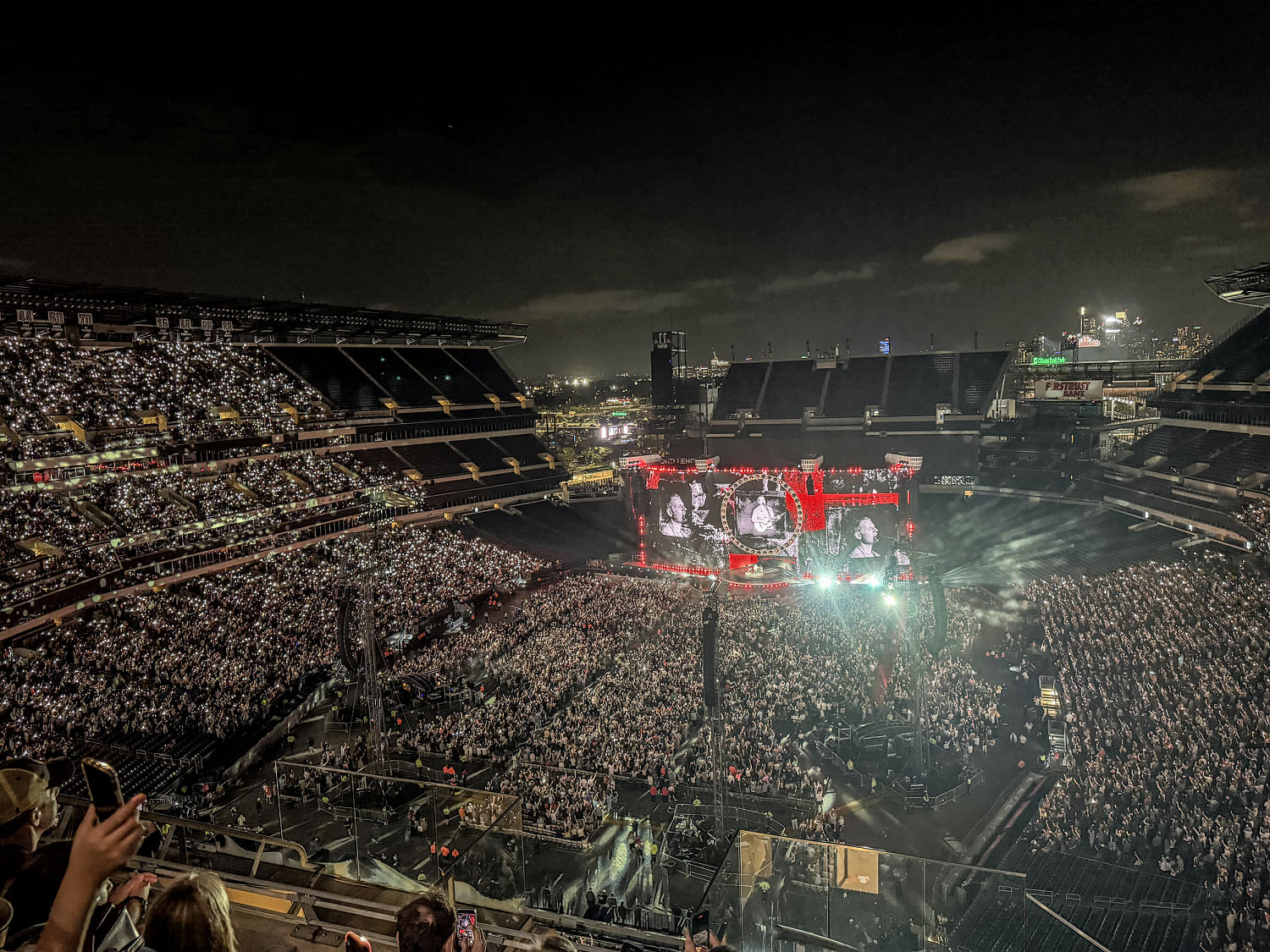
You can't hide behind acoustic guitars and a loop pedal anymore. When Macklemore took the stage at MetLife Stadium and yelled "Free Palestine", he didn't just break the unspoken rules of pop entertainment. He detonated a grenade right in the middle of Ed Sheeran's massive stadium run.
The resulting fallout exposed a brutal reality of modern touring. Billionaire venue owners, corporate sponsors, and hyper-polarized crowds won't let giant pop stars play the innocent bystander routine. If you thought stadium pop could stay detached from global geopolitics, 2026 proved you dead wrong. In related updates, take a look at: Ed Sheeran Did Not Delay His Philadelphia Show Because of Macklemore and You Are Falling For PR Theater.
The Cost of the Quiet Life
Ed Sheeran spent over a decade curating the ultimate "nice guy" persona. He sells tickets by promising a safe space where normal people can escape real-world misery, sing along to acoustic love songs, and drink lukewarm beer in a sea of eighty thousand strangers.
That strategy worked when the world felt slightly less fractured. But when Macklemore used his opening slot to champion Palestinian relief and criticize U.S. immigration enforcement, the illusion shattered. Behind-the-scenes pressure from billionaire New England Patriots owner Robert Kraft—whose stadium was booked for the tour—forced Macklemore off the bill. Entertainment Weekly has also covered this fascinating subject in great detail.
Suddenly, Sheeran was caught in a crossfire of his own making. Was he censoring an artist to protect ticket sales, or was he a victim of corporate heavy-handedness? His initial statement trying to play down the middle—claiming he was disappointed by the dropping of Macklemore while refusing to take an explicit stance himself—pleased absolutely no one.
When Support Acts Walk Out
The backlash came swiftly. Acts like Finneas, indie-folk band Beoga, Aaron Rowe, and Lukas Graham pulled out of the tour in solidarity with Macklemore and Palestine.
Artists refusing to share a bill isn't a minor scheduling hiccup. It is an open revolt against the sanitization of mainstream music. For years, booking agents and promoters preached that politics alienates ticket buyers. They warned artists that expressing deep convictions would tank merchandise revenue and kill sponsorship deals.
Macklemore leaned directly into that financial hit, publicly stating that taking a side costs money, brand deals, and access. By pledging his tour salary to Palestinian aid, he shifted the moral pressure onto every other artist sharing major stages. When support acts started walking, they signaled a generational shift. Younger musicians don't view neutrality as professional maturity. They view it as complicity.
The Trap of Both Sides
Faced with crumbling support acts and escalating protests outside venues, Sheeran changed tune during his Philadelphia show. He stepped up to the microphone and called the situation in Gaza "catastrophic and unjustifiable", admitting he could no longer hide his feelings on a humanitarian crisis.
Yet, that admission arrived too late to satisfy either side. Activist groups like the Palestinian Campaign for the Academic and Cultural Boycott of Israel argued that generalized appeals for peace ring hollow without demanding concrete justice. On the flip side, ticket holders who just wanted a pop concert felt blindsided, with some demanding refunds because they paid for melodies and got a geopolitical flashpoint instead.
You can't please everyone when the stakes are life and death. Trying to find a neutral middle ground on a humanitarian catastrophe just means you end up getting crushed by both extremes.
The Era of Forced Accountability
We have officially moved past the era where pop stars can issue carefully worded notes written by crisis PR teams. Audiences are tracking supply chains, sponsorship ties, and tour alignments with microscopic scrutiny.
When you play massive stadiums, your infrastructure is tied directly to corporate conglomerates, real estate moguls, and international capital. Pretending your tour exists in a political vacuum is pure fantasy. Macklemore found out how hard it is to book major U.S. arenas after speaking out, but Sheeran found out something equally terrifying: staying quiet doesn't keep you safe. It just makes you a target for everyone who thinks your silence is a vote for the status quo.
The music industry will keep trying to sell escapism. But the audience has changed. They don't want an escape hatch anymore. They want to know what side of history their favorite icons are standing on.