The Replacement Logic of Climate-Driven Reconstruction
Disaster recovery functions as a compressed innovation cycle. When a wildfire destroys a residential structure, the owner is forced to make a century-scale infrastructure decision in a span of months. The shift toward all-electric rebuilding is not merely a trend driven by environmental sentiment; it is a response to a shifting cost-benefit matrix involving utility hookup fees, evolving building codes, and the long-term obsolescence risk of stranded gas assets.
To understand the transition from internal combustion and gas-based heating to high-efficiency heat pumps and induction, one must analyze the three structural pillars of post-disaster electrification:
- The Capital Expenditure (CapEx) Convergence: The marginal cost of "going electric" is lowest at the point of total reconstruction.
- Operational Efficiency Ratios: The thermodynamic superiority of heat pumps over combustion-based systems.
- The Regulatory Ratchet: Municipal mandates and insurance premiums that increasingly penalize flammable infrastructure.
The CapEx Parity Framework
In a standard renovation, switching to all-electric is prohibitively expensive because of "sunk cost" infrastructure. A homeowner must pay to decommission gas lines and upgrade electrical panels (often from 100A to 200A or 400A). In a post-fire rebuild, these costs are internalized into the base construction budget.
The economic choice is between two divergent infrastructure paths:
- Dual-Fuel Infrastructure: Requires trenching for gas lines, internal plumbing for gas, venting systems for combustion byproducts, and a baseline electrical connection.
- Decentralized All-Electric: Eliminates gas trenching fees (which can exceed $5,000–$10,000 depending on the utility) and internal gas piping. These savings are redirected into high-performance building envelopes and premium electric appliances.
The "split incentive" problem that usually plagues electrification—where landlords pay for upgrades but tenants reap the energy savings—is removed in the context of an owner-occupant rebuilding a primary residence. For these individuals, the house is a long-term hedge against rising energy prices.
Thermodynamic Advantages of the All-Electric Envelope
The technical justification for electrification rests on the Coefficient of Performance (COP). A traditional gas furnace has a maximum theoretical efficiency of 98% (a COP of 0.98). In contrast, modern air-source heat pumps operating in temperate fire-recovery zones (such as California or Colorado) regularly achieve a COP of 3.0 to 4.0.
This means for every 1 unit of electricity put into the system, 3 to 4 units of heat are moved into the home.
The Heat Pump Performance Curve
The efficacy of this transition depends on the ambient temperature. In extreme cold, the COP of a heat pump drops. However, the logic of rebuilding with all-electric systems relies on the Integrated Building System approach:
- Thermal Mass and Insulation: Rebuilds typically utilize High-Performance Windows (U-factors below 0.25) and Continuous Insulation (CI). This reduces the "load" or the amount of heating/cooling the system must provide.
- Induction Cooking: Beyond energy use, induction removes the indoor air quality hazards associated with Nitrogen Dioxide ($NO_2$) and particulate matter ($PM_{2.5}$) found in gas cooking—a critical consideration for families already sensitized to respiratory issues by wildfire smoke.
- Heat Pump Water Heaters (HPWH): These units act as thermal batteries, allowing homeowners to shift electricity consumption to midday when solar production is at its peak.
Infrastructure Resilience and the Microgrid Transition
Homeowners rebuilding after fires are increasingly viewing their homes as "islands" of energy stability. This introduces the concept of the Residential Resilience Stack:
- Solar PV Arrays: Standard in many new building codes (e.g., California’s Title 24).
- Battery Energy Storage Systems (BESS): Providing backup power during Public Safety Power Shutoff (PSPS) events.
- Bidirectional EV Charging: Using the vehicle's large battery to power the home during grid failures.
A gas-dependent home is fundamentally tethered to two vulnerable grids. An all-electric home, when paired with storage, maintains functionality even when the external grid is severed. The elimination of gas also reduces the "secondary fire risk" where gas leaks contribute to structure fires during seismic events or during the initial stages of a wildfire.
The Stranded Asset Trap
A primary driver for professional strategy in rebuilding is the avoidance of "stranded assets." As municipal governments pass "reach codes" and natural gas bans for new construction, the resale value of gas-dependent homes is expected to decouple from the market.
Early adopters are betting on a future where:
- Gas Utility Rates Spike: As the customer base for gas shrinks, the fixed costs of maintaining the aging pipeline infrastructure are distributed among fewer users, leading to a "utility death spiral."
- Insurance Discounts: Insurance providers are refining their models to account for the reduced fire risk of non-combustion homes.
- Carbon Taxation: Future regulatory environments may penalize residential carbon footprints, making electric homes the only compliant asset class.
Critical Constraints and Execution Risks
While the logic for electrification is robust, the execution contains significant bottlenecks. The most prominent is the Labor-Knowledge Gap. Most residential contractors are trained in legacy HVAC and plumbing systems. Specifying a high-efficiency heat pump system requires precise Manual J load calculations, which many general contractors bypass in favor of "rule of thumb" sizing. An oversized heat pump will short-cycle, leading to humidity issues and premature equipment failure.
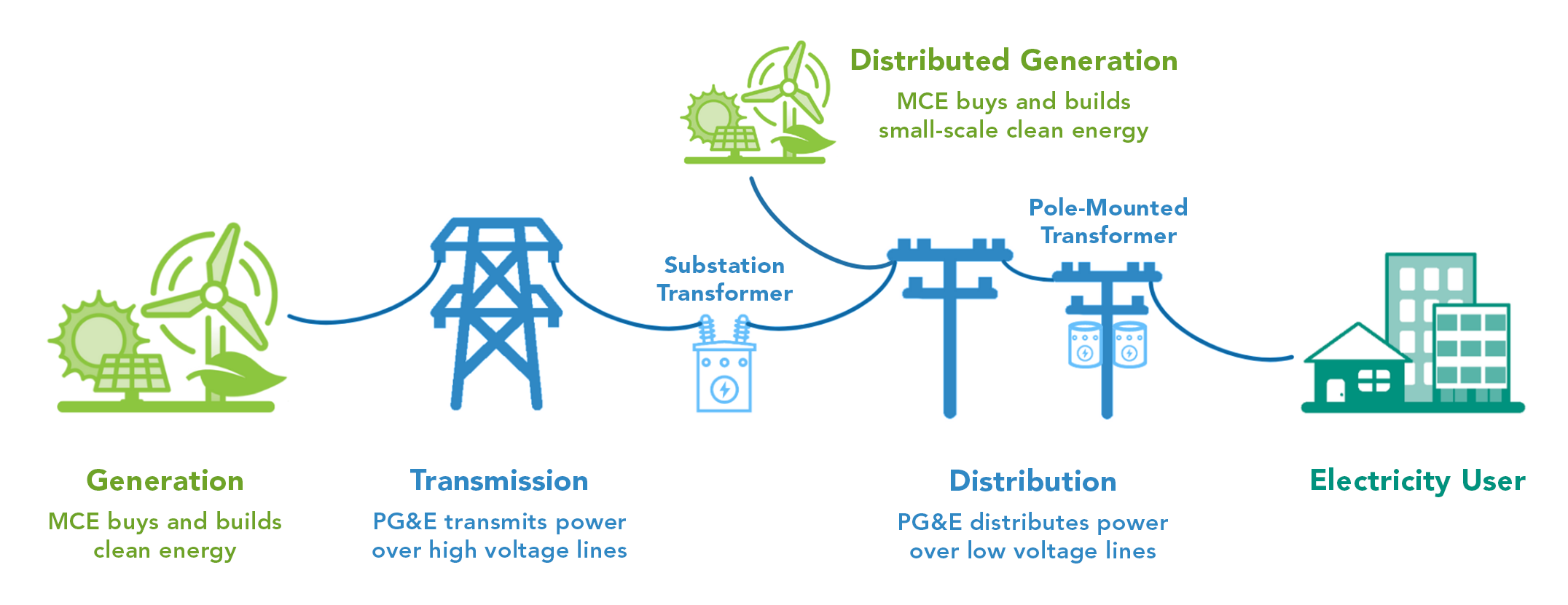
Furthermore, the Grid Interconnect Constraint remains a hurdle. If an entire burned neighborhood rebuilds with all-electric systems simultaneously, the local distribution transformers may lack the capacity to handle the increased peak load, particularly during winter heating peaks. This necessitates a "smart" approach to electrification, utilizing load-shedding devices that prevent the water heater, EV charger, and HVAC from drawing maximum power at the same instant.
The Strategic Path Forward for Rebuilders
For those navigating the reconstruction process, the objective is not just to replace what was lost, but to optimize for the energy environment of 2040.
The sequence of implementation must follow a "passive-first" hierarchy:
- Optimize the Envelope: Maximize airtightness (measured in ACH50) and insulation. A smaller energy load allows for smaller, cheaper electric mechanical systems.
- Right-Size the Electrical Service: Do not settle for 200A if 400A is feasible; the future of the home is as a fueling station for two or more EVs.
- Specify Cold-Climate Heat Pumps: Even in moderate climates, "cold-climate" rated units offer better modulation and efficiency at all temperatures.
- Decouple from Gas Early: Avoid the "dual-fuel" trap. Maintaining a gas line for a single appliance (like a stove or fireplace) incurs a monthly fixed connection fee that negates the operational savings of the heat pump.
The decision to rebuild all-electric is a transition from a volatile, commodity-based energy model to a technology-based model. In the technology model, costs decrease as efficiency improves, and the homeowner gains agency over their own energy production and storage. The fire serves as the catalyst, but the economic and thermodynamic fundamentals are what make the all-electric rebuild the only logical path for long-term asset preservation.