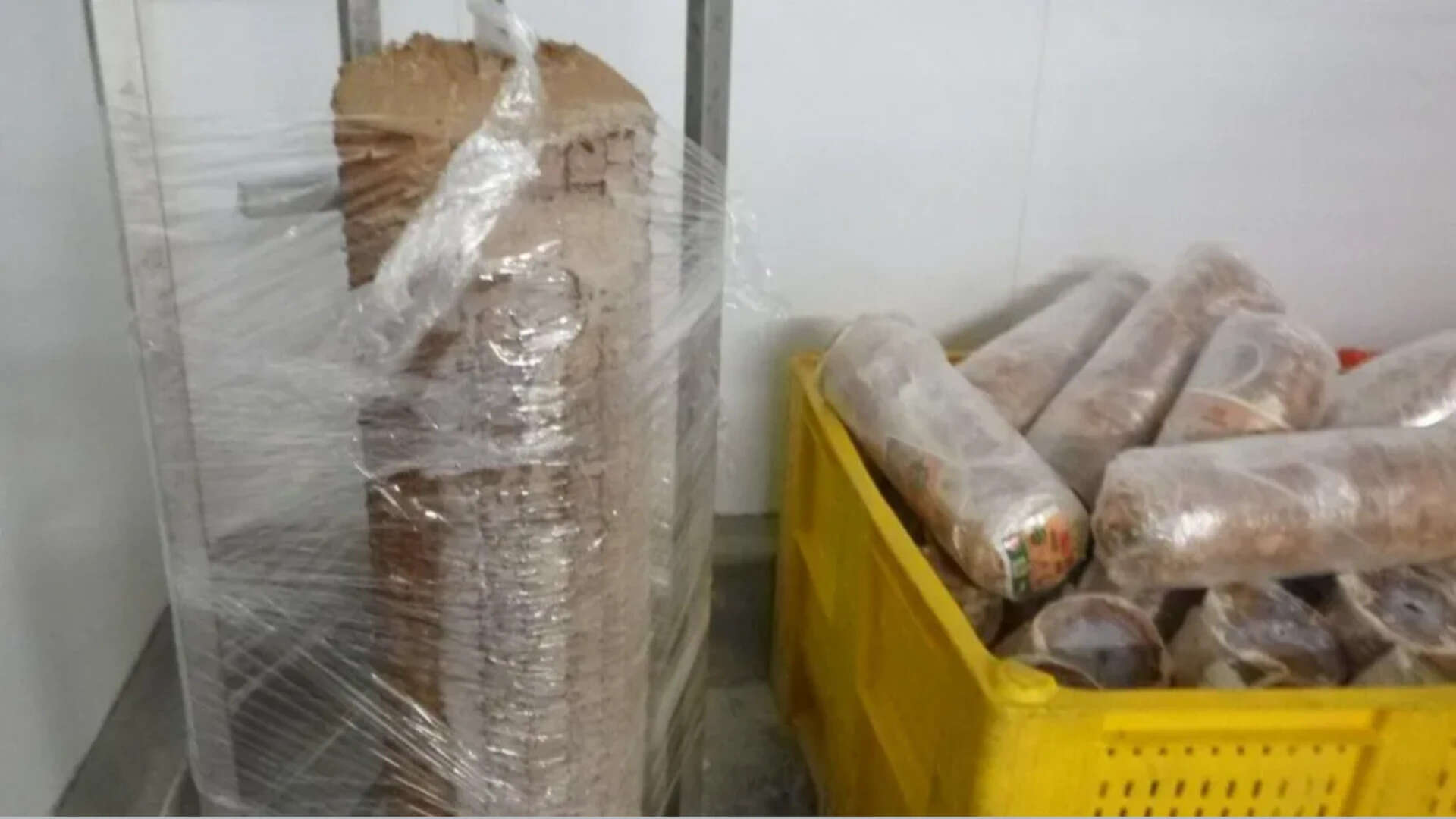
The financial viability of low-cost food production relies on a delicate equilibrium between raw ingredient costs and regulatory tolerance. When a major food manufacturer breaches this equilibrium through systematic ingredient substitution, it exposes the structural vulnerabilities of the entire wholesale supply chain. The recent adjudication of Kismet Kebabs Ltd in the United Kingdom—culminating in a £500,000 (Rs 6.3 crore) corporate fine and £259,298 in prosecution costs—offers a clinical case study in the mechanics of food fraud, the structural failures of corporate oversight, and the economic incentives that drive systemic mislabeling.
To understand how a processing facility can systematically substitute regulated meat with low-grade animal biproducts over multiple years, one must analyze the operational cost functions and regulatory bottlenecks that govern the wholesale meat industry.
The Cost Function of Component Substitution
The core economic driver behind the Kismet Kebabs fraud is structural margin maximization via material substitution. In the commercial production of doner kebabs, raw material acquisition represents the primary variable cost. Authentic lamb meat command a significant premium per kilogram relative to other ovine derivatives or alternative species.
By altering the input formulation, a manufacturer can drastically lower its marginal cost of production. The Swansea Crown Court proceedings revealed that Kismet Kebabs executed a highly organized substitution strategy across three distinct vectors:
- Lipid and Dermal Overloading: Standard commercial formulations specify precise meat-to-fat ratios to preserve texture and compliance. In one audited example, a product marketed as containing 87% lamb was structurally composed of only 51% actual meat, while the remaining 40% consisted of fat and skin.
- Species and Category Misrepresentation: The company routinely introduced goat meat, mutton, and generic ovine components into products explicitly labeled as lamb.
- Volumetric Padding via Mechanical Reclamation: Production logs and factory audits proved the widespread fabrication of a mechanically derived meat mixture. This slurry relied on neck trimmings, mutton trimmings, water, and ice to artificially inflate the declared meat percentage on packaging.
From a processing standpoint, incorporating high volumes of water, ice, and skin represents an optimal method for inflating short-term margins. Water and ice add zero-cost mass, while skin and structural fat function as cheap binding agents. This practice shifts the cost curve downward, allowing the processor to undercut legitimate competitors while maintaining or expanding wholesale margins.
The Architecture of Regulatory Arbitrage
The multi-year timeline of this deception highlights a critical systemic vulnerability: the exploitation of regulatory arbitrage within local government frameworks. In the United Kingdom, food standards enforcement operates on a decentralized model, augmented by the Primary Authority scheme. This mechanism allows a business to form a legally recognized partnership with a single local authority for tailored regulatory guidance.
Kismet Kebabs maintained a Primary Authority Partnership with Essex Council. This structural relationship created an operational bottleneck for outside enforcement agencies. While various local authorities across England registered numerous complaints regarding labeling anomalies originating from Kismet's Chelmsford facility, the centralized framework delayed direct punitive action.
The systemic breakdown occurred because a primary authority relationship can inadvertently shelter a non-compliant manufacturer if factory audits fail to cross-reference physical production realities with financial ledger tracking. The partnership was terminated only after an internal audit by Essex Council uncovered severe labeling anomalies and latent public health risks, which ultimately triggered a coordinated intervention by Swansea Council’s trading standards team, the Food Standards Agency (FSA), and the National Food Crime Unit (NFCU).
Forensic Supply Chain Discrepancies
The definitive dismantling of the fraud relied on data triangulation during a decisive multi-agency raid on May 20, 2021. Regulatory enforcement shifts from suspicion to conviction by proving a structural mismatch between inbound raw materials and outbound finished products.
Inbound Material Invoices (Low-Grade Skin, Fat, Goat, Trim)
                │
                ▼
┌─────────────────────────────────────────┐
│       Kismet Processing Facility        │ ◄─── Discrepancy Audited by FSA/NFCU
└─────────────────────────────────────────┘
                │
                ▼
Outbound Product Labels (Premium "87% Lamb" Doner)
The investigation established the fraud through two primary quantitative data streams:
Invoice Disparity Mapping
A comprehensive review of corporate procurement invoices revealed that Kismet Kebabs was not purchasing the volumes of genuine lamb required to sustain its declared product output. Instead, purchase ledgers showed massive, continuous procurement of low-grade animal trimmings, skin, fat, and alternative meats that fail to meet the statutory legal definition of meat.
Quantitative Compositional Analysis
Independent laboratory testing of retail and wholesale samples established a definitive deviation from statutory limits. When a product claiming 87% lamb content tests at 51% meat and 40% fat, the deviation exceeds any plausible threshold for operational variance or machine error. This data proved systemic intent rather than accidental manufacturing fluctuation, leading to the company's guilty plea to fraud by false representation.
Structural Pitfalls of Corporate Financial Sanctions
The sentencing outcome reveals the inherent limitations of using monetary fines as a deterrent within low-margin, high-volume food ecosystems. While a £500,000 fine alongside roughly £260,000 in prosecution costs appears significant, the judicial implementation exposes a stark compromise between punitive deterrence and corporate survival.
The prosecution initially calculated a theoretical sentencing guidelines fine range between £15 million and £24 million based on the scale and duration of the fraud. However, this range was abandoned as wholly unrealistic given the financial position of the firm. Defense counsel argued that an oppressive penalty would permanently compromise the operational viability of the enterprise, leading to bankruptcy and immediate job losses.
By granting a highly relaxed four-year payment window for the £759,298 total financial penalty, the judicial system prioritizes corporate preservation over immediate capital extraction. This creates an unsettling precedent: a business can engage in long-term, systemic food fraud to gain a market advantage, and if caught, its structural insolvency can be leveraged to reduce the immediate financial blow.
Operational De-Risking for Wholesale Buyers
For commercial food distributors, wholesalers, and downstream hospitality businesses, the Kismet Kebabs case serves as an urgent directive to restructure vendor compliance protocols. Relying solely on a manufacturer's product label or a local authority partnership status introduces unacceptable legal and reputational exposure. Wholesalers must implement rigorous physical and analytical verification frameworks to shield their supply chains from downstream litigation.
Immediate strategic intervention requires downstream buyers to institute random, third-party laboratory testing regimes for all processed meat products. These audits must verify total fat-to-protein ratios and conduct DNA speciation testing to ensure exact compliance with product specifications. Furthermore, procurement contracts must be updated to mandate full transparency of inbound ingredient logs, giving buyers the contractual right to perform unannounced facility audits. Wholesalers who fail to verify these metrics will remain structurally exposed to the financial and legal fallout of vendor-level supply chain deception.