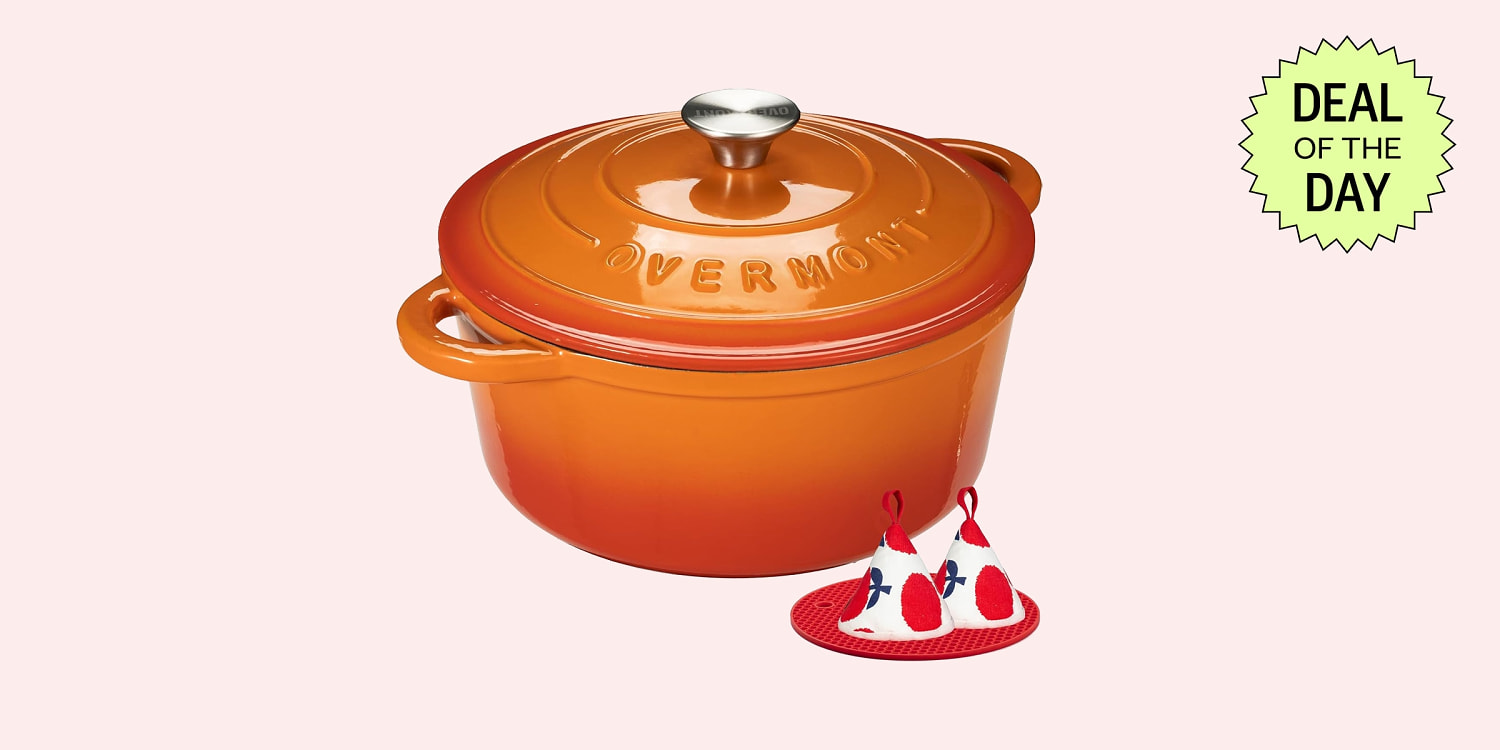
The Price-to-Performance Fallacy in Kitchen Hardware
Consumer retail media continuously promotes the narrative that entry-level cookware achieves total parity with premium legacy brands at a fraction of the cost. A $40 entry-level enameled Dutch oven is frequently framed as an equivalent alternative to a $420 Le Creuset Signature Round Dutch Oven. This framing relies on immediate utility while ignoring long-term thermal dynamics, material composition, structural integrity, and total cost of ownership.
Enameled cast iron operates on fundamental physics: heat capacity, emissivity, and thermal expansion matching between the iron core and the vitreous enamel coating. Evaluating whether a mass-market $40 vessel performs identically to an heirloom-grade counterpart requires breaking down manufacturing engineering, material tolerances, and failure rates over time.
Thermal Mechanics and Material Properties
Cast iron functions as a heat reservoir rather than an efficient heat conductor. Its thermal conductivity is relatively low compared to aluminum or copper, but its volumetric heat capacity allows it to absorb and retain significant thermal energy.
Thermal Conductivity Comparison (W/m·K):
Copper:    385-400
Aluminum:  200-235
Cast Iron: 45-52
Enamel:    0.8-1.2
The primary thermal advantage of cast iron lies in its ability to maintain stable temperatures when cold ingredients are introduced.
Heat Retention vs. Heat Distribution
Both $40 and $420 Dutch ovens use gray cast iron as their structural core. From a thermodynamic perspective, iron atom for iron atom, the heat storage capacity of the raw metal remains virtually identical across price points. A 6-quart vessel containing 11 pounds of cast iron stores approximately the same amount of thermal energy regardless of whether it was cast in Fresnoy-le-Grand, France, or Shijiazhuang, China.
Differences emerge in casting thickness uniformity and bottom plate flatness:
- Wall Thickness Consistency: Premium foundries maintain strict casting tolerances, ensuring the sidewalls and base maintain uniform thickness. Variations in cheap castings create localized hot spots, leading to uneven maillard reactions or scorching during low-and-slow braising.
- Mass Optimization: Higher-end manufacturing techniques allow brands like Le Creuset to achieve structural rigidity with slightly thinner walls, reducing weight by 10% to 15% compared to budget alternatives without sacrificing effective thermal inertia.
Enamel Formulation and Failure Modes
The critical differentiator between value-tier and high-end cookware is not the raw iron, but the glass enamel formulation and the bonding process. Vitreous enamel is formed by fusing powdered glass to a substrate by firing at temperatures between 1,400°F and 1,650°F (760°C to 900°C).
The Three Stages of Enamel Degradation
Budget Dutch ovens frequently perform identically to premium units during initial testing cycles. However, performance diverges as the material experiences cyclic thermal stress.
- Micro-Crazing: Standard heating and cooling cycles cause the iron base and the glass enamel to expand and contract. If the coefficient of thermal expansion (CTE) between the metal and the enamel glaze is not precisely matched, microscopic cracks form across the enamel matrix.
- Pigment and Acid Etching: Low-cost enamels often utilize softer glass formulations that are susceptible to chemical attack from acidic foods (such as tomatoes, wine, or vinegar) over extended simmer times. This results in dulling, increased porosity, and stick prone surfaces.
- Delamination and Chipping: Repeated thermal shock or minor mechanical impacts cause the bond between the iron substrate and the ground-coat enamel to fail, exposing the raw iron underneath to moisture and subsequent rust formation.
+-----------------------------------------------------------------------+
|                       Enamel Quality Spectrum                         |
+-----------------------------------------------------------------------+
| Budget Tier ($30-$60)         | Premium Tier ($300-$500)              |
| ----------------------------- | ------------------------------------- |
| High CTE mismatch risk        | Matched CTE formulations              |
| Thinner ground coat           | Multi-coat high-density firing        |
| Susceptible to acid etching   | Acid and stain resistant matrix       |
| 1-3 year average lifespan     | Multi-decade / lifetime service life  |
+-----------------------------------------------------------------------+
Ergonomics and Operational Efficiency
Cookware functionality extends beyond thermal performance to operational safety and handling ergonomics during high-heat transfers.
Handle Surface Area and Center of Mass
A fully loaded 6-quart Dutch oven containing liquid and protein can weigh between 18 and 25 pounds. Budget manufacturers often minimize material usage by casting small, tight loop handles. This design forces users to grip the vessel using finger-tips rather than a full-hand grip, compounding strain when using thick oven mitts. Premium designs incorporate enlarged loop handles that lower the center of gravity relative to the contact point, reducing tipping risk during transfer from stove to oven.
Lid Fit and Vapor Retention
Moisture retention relies on lid geometry and joint sealing.
- Machined Rim Interfaces: Premium Dutch ovens feature precision-ground rims on both the pot body and lid, ensuring a flush metal-to-metal fit under the enamel coating. This minimizes steam leakage, maintaining internal pressure and moisture levels over 3- to 6-hour braises.
- Condensation Systems: Specialized lids employ internal spikes or concentric rings designed to drip condensed moisture evenly across the cooking surface, preventing localized drying out of proteins.
Financial Analysis: Depreciation and Total Cost of Ownership
Purchasing decisions should evaluate the amortized cost per cooking cycle rather than initial capital outlay.
Depreciation Breakdown Over 10 Years
- The Budget Option ($40 Purchase Price): Assuming an average operational lifespan of two years under heavy usage before enamel crazing or chipping requires unit disposal, a user must replace the vessel four times over a ten-year horizon. Total capital expenditure: $160, with zero resale residual value and recurring material landfill waste.
- The Premium Option ($400 Purchase Price): Backed by lifetime warranties and superior thermal stress tolerance, premium units routinely exceed 30 years of continuous service. Amortized over a decade, the operational cost is $40 per year, decreasing linearly as the lifespan extends toward generation-scale usage. Furthermore, secondary markets maintain active demand for vintage premium pieces, retaining 40% to 60% of original value.
Strategic Purchasing Framework
Selecting between entry-level and heirloom-grade enameled cast iron depends on usage frequency, thermal shock protocols, and financial horizons.
When to Buy the $40 Dutch Oven
- Low Operational Volume: Occasional cooking cycles (fewer than 12 times per year) generate insufficient thermal stress to trigger rapid enamel failure.
- Bread Baking Focus: High-heat bread baking utilizing parchment paper liners mitigates direct chemical and mechanical abrasion on the enamel floor.
- Mobile or Temporary Kitchens: High-risk environments where physical damage or loss makes high-value asset investment impractical.
When to Invest in Premium Cookware
- High Chemical Stress Cooking: Frequent preparation of highly acidic braises, long-reduction tomato sauces, or deglazing with wine.
- Daily or Multi-Weekly Service: Consistent thermal cycles require high-density enamel glazes matched precisely to the substrate's expansion rate.
- Ergonomic Safety: Users handling heavy volumes requiring wide, secure hand-holds to prevent dropped-vessel accidents.
Assess your cooking volume, material requirements, and risk factors before committing capital. For heavy-use applications, the lower initial cost of entry-level iron is offset by shorter replacement cycles and higher failure rates under thermal stress.