Traditional industrial processes often survive not through economic efficiency, but through specialized labor inputs, low opportunity costs of time, and distinct product differentiation in niche markets. The preservation of traditional charcoal burning in modern Germany serves as a compelling case study in the persistence of pre-industrial production methods within a heavily regulated, advanced industrial economy.
To understand how an artisanal methodology survives alongside modern energy grids and chemical forestry, one must deconstruct the operational architecture of traditional charcoal production, map its input-output economics, and evaluate the structural constraints that prevent its displacement or scale-up.
The Operational Mechanics of the Meiler System
Traditional charcoal production relies on the Meiler, a conical earth-and-wood stack designed to achieve pyrolytic carbonization. Unlike modern industrial retorts that capture volatile gases for chemical byproducts or external heating, the traditional Meiler operates as an open-system combustion-in-controlled-deficit process.
The fundamental operational variables comprise wood density, moisture content, packing geometry, and oxygen regulation.
Hardwoods such as beech, oak, and hornbeam are preferred due to their high volumetric density and cellular structure, which retains structural integrity during thermal degradation. Softwoods are avoided because their rapid combustion rates yield low-density charcoal with high ash content and insufficient caloric output for metallurgical or culinary applications.
The production cycle runs through four distinct sequential phases:
- Stacking and Geometry: Billets of wood are hand-stacked radially around a central ignition shaft. The packing density must be uniform to prevent localized drafts, which would cause complete oxidation of the wood rather than carbonization.
- Sealing: The entire stack is sealed with a permeable layer of soil, turf, and previously used charcoal dust. This boundary layer regulates oxygen influx. If the seal is too airtight, the fire extinguishes; if too porous, the wood incinerates into ash.
- Pyrolysis (Sintering and Charring): Ignition occurs at the central core. The burn master manipulates small apertures at the base of the mound to draw air inward, propagating the heat front outward and downward. This phase requires continuous monitoring of smoke color and scent. Blue smoke indicates proper carbonization; white, dense vapor signals excessive moisture; yellow smoke denotes raw wood combustion.
- Quenching and Extraction: Upon completion of the burn cycle, which typically spans several days depending on volume, the stack is smothered with water or soil to halt thermal reactions. The raw charcoal is then cooled, sorted by granularity, and bagged.
The Cost Function and Economic Viability
The survival of artisanal charcoal production cannot be explained by standard market economics. When evaluated purely on throughput, labor hours per metric ton, and thermal efficiency, the traditional Meiler method fails against continuous-feed industrial retorts.
The economic model relies on a specific cost-structure imbalance:
$$\text{Total Cost} = (\text{Labor Hours} \times \text{Opportunity Cost}) + \text{Raw Material Cost} + \text{Regulatory Compliance Cost}$$
In the artisanal model, the opportunity cost of labor is often near zero or subsidized by lifestyle preference, municipal cultural grants, or secondary revenue streams such as tourism, forestry maintenance contracts, and educational workshops.
The raw material input—cull timber and forestry waste resulting from sustainable thinning operations—is frequently acquired at nominal cost or negative cost (where foresters pay processors to clear waste).
Labor Intensity vs. Capital Expenditure
Modern industrial charcoal production minimizes labor and maximizes capital expenditure through automated, continuous-feed kilns. These facilities achieve high yields per ton of dry wood input and capture synthetic byproducts like methanol, acetic acid, and wood tar.
Conversely, the artisanal model reverses this paradigm. Capital expenditure is near zero, limited to basic hand tools, shovels, and transport vehicles. However, labor intensity is exceptionally high. A single burn cycle demands constant human presence for temperature regulation, structural patching of settling earth, and manual harvesting.
This creates a severe scalability bottleneck. A practitioner can only manage a finite number of active stacks simultaneously without compromising yield quality. Consequently, supply is inelastic, forcing price points into a high-margin, low-volume bracket where consumers pay for provenance, heritage, and specific performance attributes.
Product Differentiation and Market Positioning
Why do culinary professionals and specialty consumers purchase artisanal hardwood charcoal instead of mass-market briquettes? The answer lies in chemical purity and burn characteristics.
Mass-market charcoal briquettes typically consist of pulverized scrap wood, coal dust, mineral binders, accelerators (such as sodium nitrate), and fillers. These additives produce sulfurous smoke and inconsistent thermal profiles.
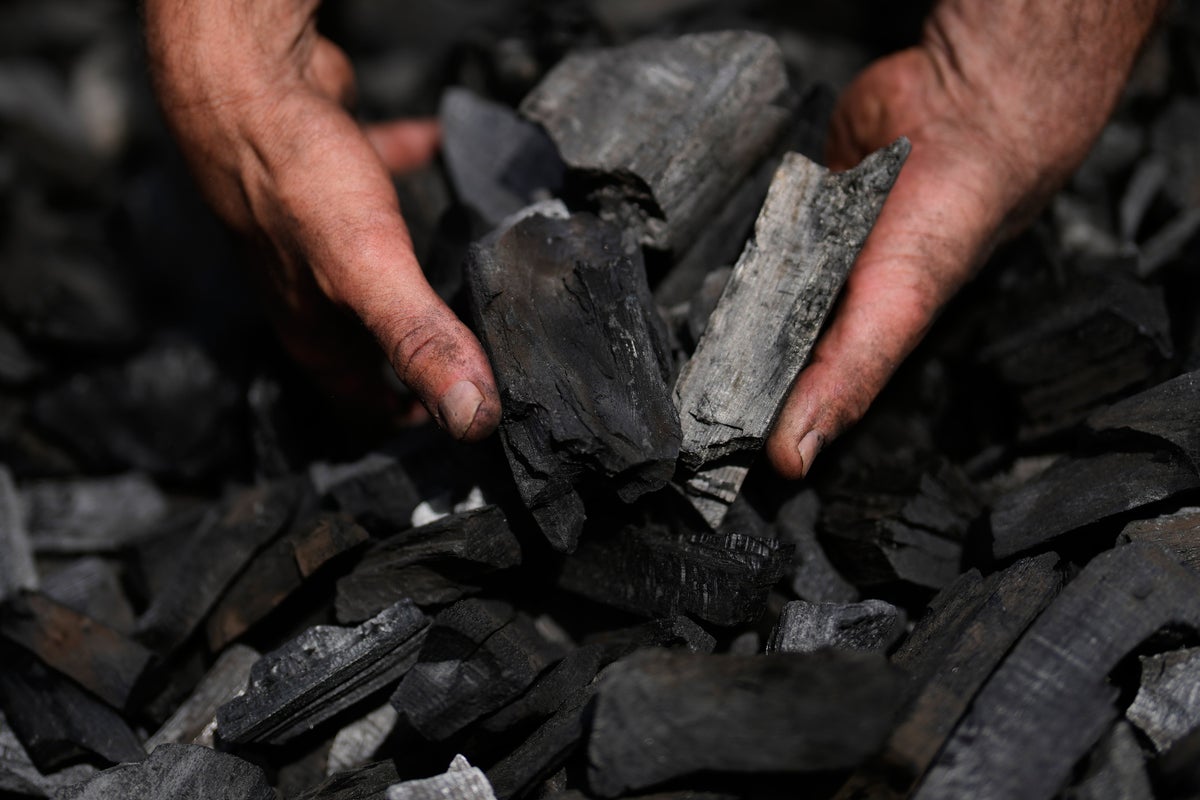
Artisanal lump charcoal derived from single-species hardwood Meilers consists of nearly pure elemental carbon with trace mineral ash.
- Caloric Density: High-density hardwoods processed via slow pyrolysis yield charcoal with a higher calorific value per unit mass than processed briquettes.
- Ignition and Combustion Velocity: The porous cellular architecture of artisanal lump charcoal allows rapid oxygen permeation, leading to faster ignition times and higher peak temperatures.
- Flavor Profile: The absence of chemical binders ensures that volatile cooking fats drip onto pure carbon, generating clean smoke aromatics without chemical taint.
This distinct performance profile commands a premium price per kilogram, insulating traditional producers from direct competition with industrial commodity suppliers.
Regulatory Pressures and Environmental Trade-offs
A common misconception is that traditional charcoal burning is an unregulated, environmentally destructive practice. In modern Central Europe, operations exist within a dense web of environmental, forestry, and zoning regulations.
Air Quality Management
Open-air pyrolysis releases particulate matter, carbon monoxide, methane, and volatile organic compounds into the atmosphere. In heavily regulated jurisdictions, operators must navigate strict clean-air mandates.
Traditional burners mitigate this through low-frequency operations, small batch sizes, and strategic location placement within designated forestry zones where emissions thresholds are calculated on an aggregate regional basis rather than point-source industrial limits.
Circular Economy Alignment
Paradoxically, artisanal charcoal burning fits cleanly into modern circular economy frameworks regarding forestry waste management.
Commercial forestry operations produce massive quantities of small-diameter wood, branch trimmings, and diseased or fallen timber that possess zero commercial value for timber mills or pulp and paper factories. Clearing this debris is mandatory for forest fire prevention and pest management.
Using this waste wood as input feedstock for charcoal production sequesters carbon in solid form and prevents methane emissions that would otherwise occur through natural decomposition on the forest floor.
Structural Threats and Succession Dynamics
The primary vulnerability of this production system is not economic competition, but human capital erosion.
The knowledge base governing traditional charcoal burning is tacit, empirical, and non-codified. It is transmitted via apprenticeship and physical intuition—the ability to read smoke opacity, feel the temperature differential of surface soil with a bare hand, and predict internal collapse zones based on subtle shifts in stack settling.
As the demographic cohort of active practitioners ages, the market faces a structural succession failure. Younger generations face high opportunity costs in advanced economies where digital, technical, and corporate sectors offer vastly superior risk-adjusted compensation.
Without institutional support, formal guild apprenticeships, or integration into regional heritage tourism frameworks, the craft transitions from a viable micro-economy to an endangered cultural artifact maintained solely by preservationist societies.
Strategic Operational Outlook
For practitioners and regional planners looking to stabilize traditional production systems, survival requires a strategic shift from passive preservation to high-value positioning.
Operators must abandon the commodity mindset and treat their output as a certified luxury agricultural or forestry product. Geographic indication labels, strict single-species branding, traceable provenance from specific municipal forests, and direct-to-consumer digital distribution channels bypass traditional retail margins.
Simultaneously, integration with eco-tourism and state-sponsored forestry education transforms the production site from a standalone manufacturing unit into a hybrid enterprise generating dual revenue streams from physical goods and experiential services.
The viability of ancient industrial techniques in a digital age depends entirely on exploiting the margins where automation fails: hyper-local resource utilization, uncompromising material purity, and the market value of human labor embedded in tangible craft.