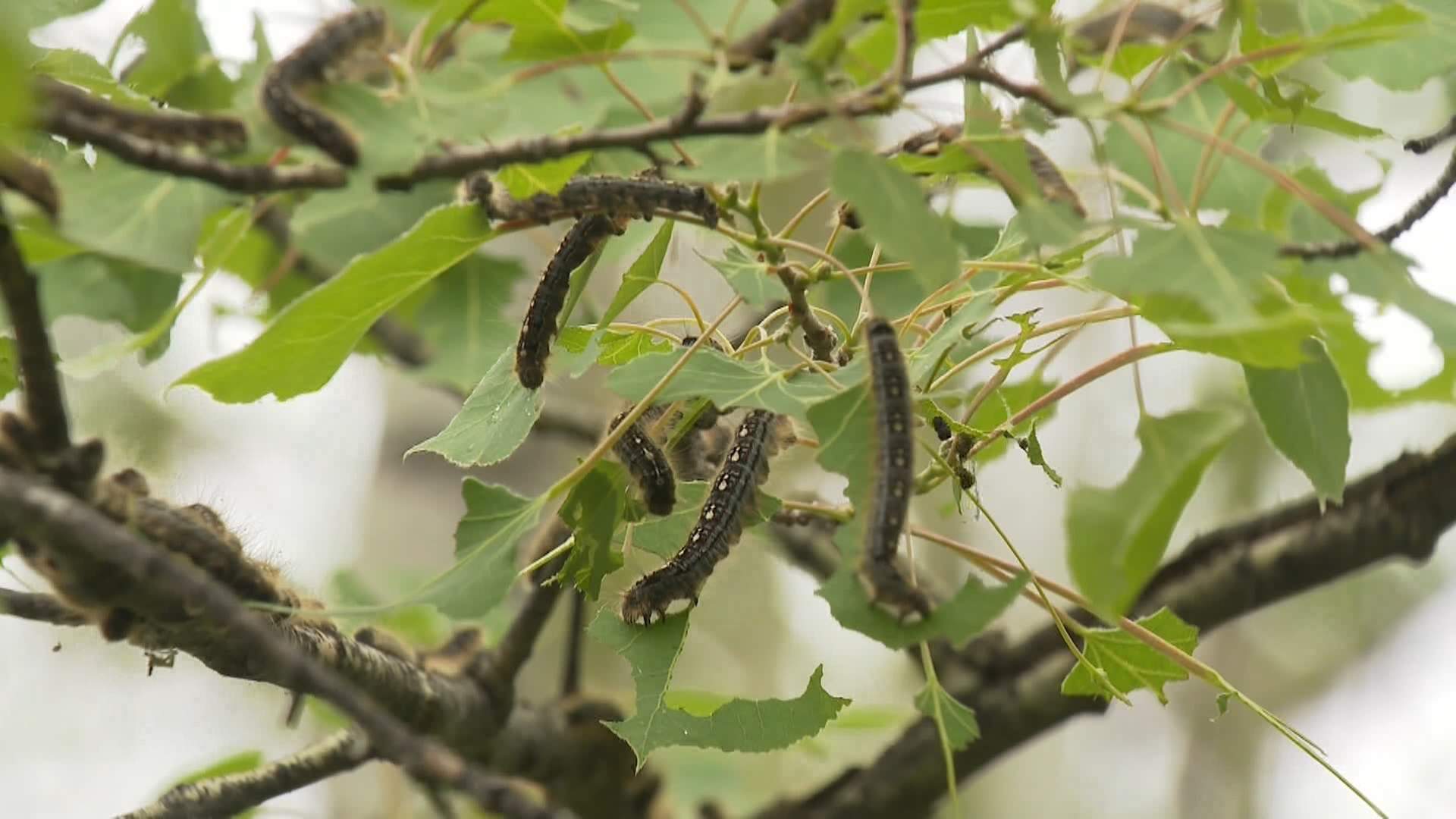
The convergence of cyclical biological phenomena and recreational land management creates a predictable but poorly managed operational bottleneck in northern ecosystems. When media reports chronicle an "invasion" of forest tent caterpillars (Malacosoma disstria) at popular Alberta campgrounds, such as those near Lac La Biche or the boreal transition zones, they frequently frame the event as a sudden, anomalous crisis. This framing is analytically flawed. The phenomenon represents a localized peak in a well-documented, decadal macro-cycle. For park administrators, hospitality operators, and regional stakeholders, the challenge is not a natural disaster, but a predictable asset-protection and resource-allocation problem.
Effectively mitigating the impact of a lepidopteran outbreak requires shifting from reactive, crisis-based messaging to a structured framework of ecological forecasting and biophysical risk management. For another perspective, read: this related article.
The Tri-Phasic Lifecycle and the Mechanics of Defoliation
To quantify the operational risk to recreational assets, one must first isolate the biological mechanisms driving the disruption. The forest tent caterpillar operates on a highly synchronized developmental timeline that dictates the window of maximum economic and operational impact.
[Phase 1: Emergence & Early Instars] -> Early May; minimal visible foliage damage; low disruption.
[Phase 2: Voracious Consumption (Instars 4-5)] -> Late May to Mid-June; exponential defoliation; peak silk/frass production.
[Phase 3: Pupation & Dormancy] -> Late June onward; structural pupae clusters; cessation of movement.
The primary disruption vector occurs during the fourth and fifth larval stages (instars), typically spanning late May through mid-June. During this three-week window, a single caterpillar consumes a significant volume of trembling aspen (Populus tremuloides) leaves daily. The aggregated impact of millions of larvae introduces three distinct operational friction points: Related analysis on this trend has been shared by AFAR.
- Canopy Degradation: The rapid removal of the forest canopy eliminates natural shade, altering the microclimate of campsites by increasing ground-level solar radiation and ambient temperature. This fundamentally degrades the primary asset that premium campsites sell: wilderness isolation and environmental comfort.
- Frass and Silk Accumulation: The mechanical output of mass defoliation—specifically, larval excrement (frass) and structural silk webbing—coats hard infrastructure. Tents, recreational vehicles (RVs), picnic tables, and utility hookups require intensive, high-frequency maintenance to remain sanitary.
- Vector Displacement: As preferred forage zones (the upper canopy) become depleted, populations undergo mass downward migration in search of alternative food sources or pupation sites. This brings millions of organisms into direct physical contact with ground-level human activity.
The population dynamics follow an oscillating curve. Outbreaks typically occur every 9 to 13 years, driven by the collapse of localized environmental suppression factors. The peak of an infestation generally persists for two to three consecutive seasons before natural population regulators—specifically the nuclear polyhedrosis virus (NPV) and the sarcophagid fly (Sarcophaga aldrichi)—cause a rapid demographic crash. Managing a campground during these peak years requires recognizing that the problem cannot be eradicated mid-season; it can only be structurally mitigated.
The Cost Function of Ecological Inaction
Failing to implement a structured response matrix during a peak infestation year introduces compounding financial and reputational liabilities. Hospitality and park assets operate on thin seasonal margins, meaning brief operational shutdowns translate directly to unrecoverable revenue losses.
The financial friction introduces several quantifiable liabilities.
Direct revenue attrition manifests through immediate campsite cancellations and early departures. When canopy defoliation reaches a threshold where frass accumulation compromises basic sanitation, user retention drops sharply. This attrition is amplified by digital feedback loops. Negative reviews detailing unmanaged infestations depress reservation velocities for subsequent booking cycles, long after the larvae have pupation-stabilized.
Operational maintenance costs scale exponentially during peak instar phases. Standard facilities maintenance schedules become insufficient. Labor hours must be reallocated from infrastructure upgrades and trail preservation to continuous pressure washing, structural scraping, and waste management. This reallocation creates an operational deficit, delaying critical off-season winterization tasks.
Long-term asset depreciation is the final component of the cost function. While healthy deciduous trees generally survive two to three years of consecutive defoliation, repeated stripping weakens the structural integrity of the timber stand. This increases susceptibility to secondary boring insects and drought stress, ultimately accelerating tree mortality. For a campground, a dying forest canopy represents a direct devaluation of its core real estate asset, escalating the long-term capital expenditure required for hazardous tree removal and reforestation.
A Strategic Mitigation Framework for Park Operators
Traditional responses to caterpillar outbreaks rely heavily on two flawed extremes: total passivity or indiscriminate chemical intervention. Passivity alienates the consumer base and accelerates infrastructure damage. Chemical intervention via broad-spectrum insecticides risks catastrophic regulatory non-compliance, disrupts non-target pollinator populations, and damages the broader aquatic ecosystems common to Alberta's recreational lakes.
An optimized strategy deploys a tiered, non-chemical containment framework categorized by time horizon and operational severity.
         [Low Population Density]               [Medium Population Density]             [High Population Density]
         ------------------------               ---------------------------             -------------------------
Tactical: Baseline Monitoring                    Targeted Structural Washing             Silvicultural Thinning
Strategic: Community Messaging                   Physical Migration Barriers             Btk Biological Application
1. Biological Suppression via Target-Specific Agents
For large-scale asset protection, the only viable chemical-biological intervention is the deployment of Bacillus thuringiensis var. kurstaki (Btk). This naturally occurring soil bacterium targets the alkaline digestive tract of lepidopteran larvae specifically, ensuring zero toxicity to birds, mammals, or honeybees.
The operational window for Btk application is exceptionally narrow. It must be applied via aerial or high-volume mist-spraying during the first and second instar stages (early May), precisely when larvae are actively feeding but before significant defoliation occurs. Applying Btk during June, when caterpillars are fully grown and migrating, is a systemic waste of capital; the organisms have already completed the majority of their feeding cycle, and their metabolic sensitivity to the bacterium is drastically reduced.
2. Micro-Zone Physical Exclusion
Within individual campsites and high-traffic infrastructure zones, operators can break the migration loop using physical exclusion tactics. Wrapping high-value shade trees with a dual-layer barrier system provides immediate localized relief.
The first layer consists of a smooth, non-porous material like poly-sheeting secured tightly to the trunk. The second layer involves applying a specialized, non-drying adhesive compound to the center of the band. This creates a mechanical barrier that halts the downward and upward movement of larvae, isolating the immediate campsite footprint from canopy-drop migrations. This barrier requires daily inspection to ensure larval accumulation does not create a physical bridge over the adhesive layer.
3. Structural Hardening and Thermal Management
During peak infestation years, infrastructure design must adapt to reduce larval attraction and simplify decontamination. Switching from traditional wood-plank picnic tables to high-density polyethylene (HDPE) or coated metal surfaces drastically reduces the surface adhesion of caterpillar silk and allows for rapid chemical-free sanitization via high-pressure hot water.
Furthermore, clearing low-hanging brush within a five-meter radius of high-density camping zones removes the intermediate ladders larvae use to migrate from the understory to vehicles and tents. Increasing airflow through selective understory thinning also reduces the localized humidity that caterpillars prefer, driving them toward more dense, undisturbed forest interiors.
Communication Architecture and Expectations Management
The secondary point of failure during an ecological outbreak is rarely biological; it is conversational. When park authorities fail to establish clear narrative parameters, consumers fill the information void with hyperbolic risk assessments. The operational goal must be to shift consumer perception from an unexpected hazard to an expected regional characteristic.
This transition requires replacing vague advisories with a definitive index. Implementing a three-tiered "Infestation Severity Index" allows prospective visitors to gauge environmental conditions objectively before arrival:
- Level 1: Baseline (Green): Standard seasonal activity. Larvae present in upper canopy; zero impact on campsite utility; standard maintenance schedules in effect.
- Level 2: Active Defoliation (Yellow): Visible canopy thinning. Minor frass accumulation on hard surfaces; physical barriers deployed on high-value trees; high-pressure washing operating on a 48-hour cycle.
- Level 3: Peak Migration (Orange): Severe canopy defoliation. High larval movement at ground level; continuous infrastructure maintenance required; sensitivity modifications recommended for soft-sided tents.
Integrating this index directly into the reservation engine removes the element of negative surprise. Consumers booking a site are required to acknowledge the current environmental tier, effectively neutralizing future claims for refunds or structural liability based on predictable insect activity.
Long-Term Capital Allocation and Silvicultural Diversification
The structural vulnerability of Alberta campgrounds to Malacosoma disstria outbreaks is fundamentally a monoculture problem. Decades of fire suppression and camp-zone clearing have favored the proliferation of even-aged stands of trembling aspen, the primary host species for the forest tent caterpillar.
Long-term resilience depends on aggressive silvicultural diversification. As aging, defoliation-weakened aspens are removed for safety compliance, capital allocation must pivot toward replanting a heterogeneous canopy. Introducing non-host native species—such as white spruce (Picea glauca), balsam fir (Abies balsamea), and lodgepole pine (Pinus contorta)—breaks the continuity of the food supply.
A diversified canopy disrupts the physical migration vectors of the larvae and dampens the micro-climatic triggers that allow caterpillar populations to reach critical mass. By reducing the density of preferred host trees by even 30%, park operators can structurally flatten the peak of future population spikes, ensuring that the next inevitable decadal cycle remains an manageable ecological footnote rather than an operational shutdown. This shift transforms campground management from a reactive, annual battle against nature into a resilient, engineered system designed to absorb biological volatility.