Silence has a very specific weight in a television studio once the red tally lights blink off.
I learned that two decades ago, holding a clipboard behind a velvet curtain in London, listening to the low hum of cooling klieg lights and the distant, rhythmic thud of a crowd filing out into the rain. When a show ends, the adrenaline leaves the room like water draining from a basin. What remains is the smell of warm dust, cheap hairspray, and the quiet, unspoken hierarchy of who owns the air. Back then, if a man stood at the center of that room—charismatic, manic, draped in beads and velvet, talking so fast the air seemed to bend around him—everyone else simply orbited. You laughed when he laughed. You stepped aside when he walked. You swallowed the strange, sharp feeling in your stomach when a joke crossed a line, telling yourself you were just too sensitive, too square, too slow to catch the brilliance.
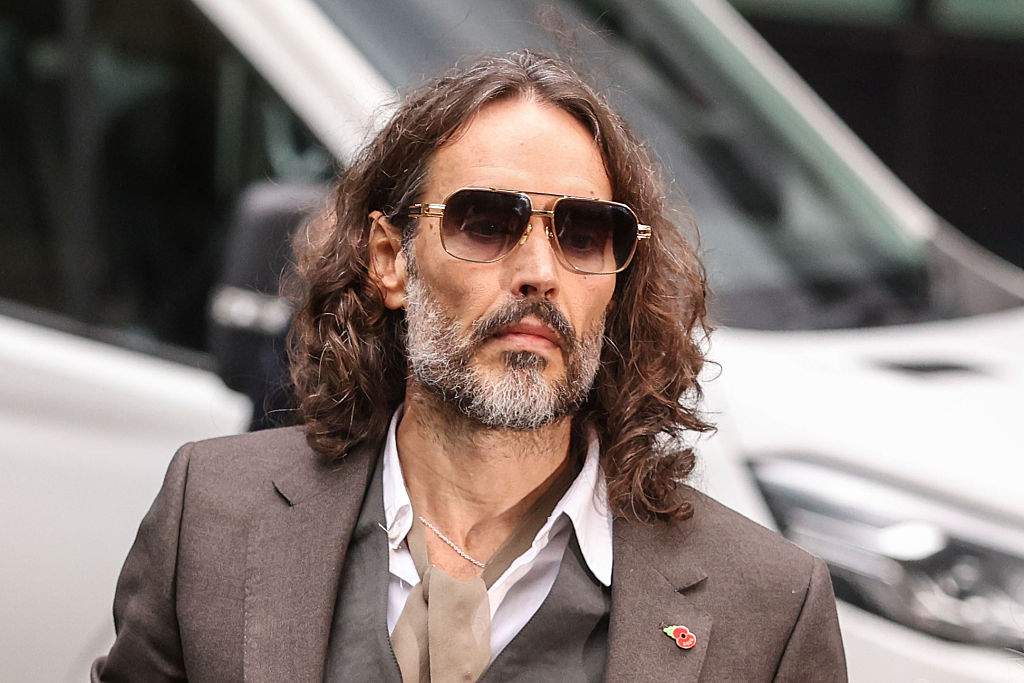
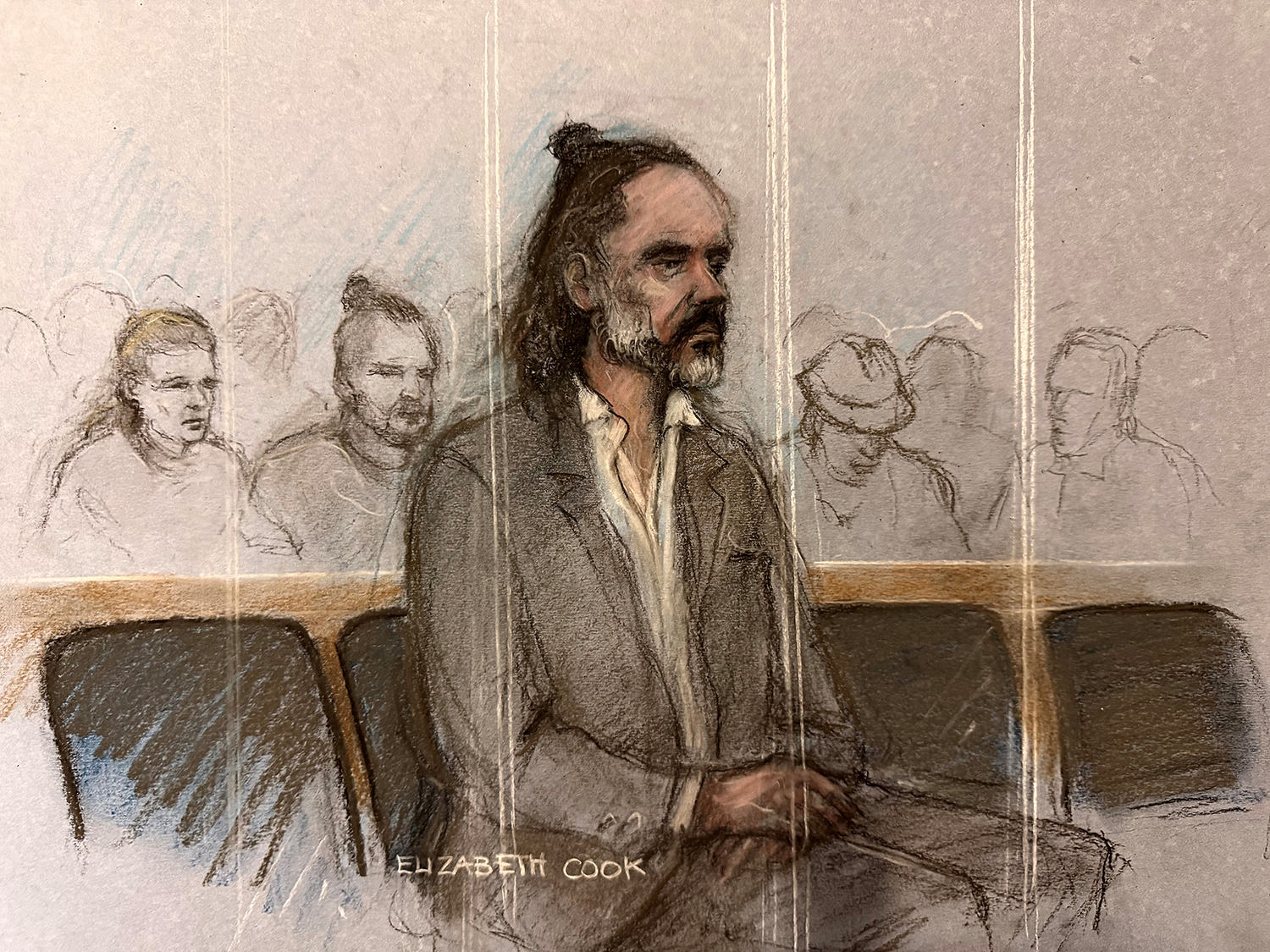
Years later, that same silence settled over a courtroom in London, heavy and cold, as a judge handed down a sentence of more than ten years in prison to Russell Brand for rape and sexual assaults.
Ten years.
On a news ticker, it is a clean, blunt number. It fits neatly into a headline, sandwiched between stock market fluctuations and weather alerts. We read the bullet points—the convictions, the years the offenses occurred between 2006 and 2013, the height of his fame at the BBC and in Hollywood—and we nod, filing it away as another chapter in the long, exhausting ledger of fallen icons.
But numbers do not smell like warm dust and hairspray. Numbers do not know what it feels like to stand in a hallway at twenty-two years old, clutching a script, trying to calculate the exact social cost of saying no to the funniest man in the room.
The Architecture of Impunity
To understand how a man builds a fortress out of charm, you have to look at the mortar we handed him.
In the mid-2000s, British comedy and media operated on a currency of transgression. To be shocking was to be honest; to be boundary-less was to be free. Russell Brand did not merely inhabit that culture—he became its high priest. With his Victorian-urchin silhouette, his sprawling vocabulary, and an energy that felt like a live wire dropped into a puddle, he turned bad behavior into performance art. When he spoke about addiction, sex, and excess, audiences leaned in, mistaking a lack of restraint for radical vulnerability.
Consider a hypothetical young production runner—let’s call her Clara—working on a late-night radio show in 2008. This is a composite drawn from the patterns documented across years of industry inquiries, not a specific witness, yet her dilemma was lived by dozens. Clara wants a career in broadcasting. Her rent is overdue. Her boss tells her that the host is a genius, a force of nature, and that her job is simply to keep him happy so the show stays on the air. When the host corners her in a green room, using rapid-fire humor to blur the line between a bit and an assault, Clara does not immediately reach for a phone to call the police. Why would she? In the ecosystem of 2008, the host is the sun, and she is a speck of dust. If she complains, she is not a victim; she is a problem. She is someone who "didn't get the joke."
That is the invisible architecture of impunity. It rarely requires a locked door or a physical threat to function. It relies on an entire room agreeing, silently and simultaneously, that one person’s comfort matters infinitely more than another’s dignity.
For years, that agreement held. Even as whispers circulated through dressing rooms and Fleet Street pubs—warnings passed from woman to woman like secret maps of a minefield—the public machine kept turning. Brand moved from British radio to Hollywood blockbusters, then pivoted again into the lucrative wilderness of online wellness and anti-establishment commentary. Every reinvention acted like a fresh coat of paint over rotting wood. If you criticized him, you were painted as a prude, a tool of the mainstream media, or an enemy of free speech.
When the Spotlight Turns Into a Scalpel
The unraveling did not happen overnight, nor did it happen cleanly.
When joint investigations by The Sunday Times, The Times, and Channel 4’s Dispatches first brought the allegations into the open in September 2023, the immediate reaction was a familiar, sickening fracture. Millions of people watched the broadcasts and felt a cold recognition. Millions of others retreated into the trenches of modern digital tribalism, insisting the entire thing was a coordinated hit job designed to silence a truth-teller.
I remember watching the discourse unfold online and feeling a profound, paralyzing exhaustion. It is terrifying to watch objective reality get ground up in the gears of fandom and conspiracy. For months, the central question seemed to be not what happened to these women, but whose side are you on?
Yet the criminal justice system, for all its slowness and cruelty, does not care about YouTube subscriber counts.
When the Metropolitan Police opened their investigation following those initial reports, the noise of the internet had to give way to the grinding, forensic reality of evidence. Detectives interviewed women who had carried these memories in silence for over a decade. They pulled old call logs, text messages, medical records, and contemporaneous diaries—the quiet paper trails left behind by people who never imagined they would one day have to prove their own trauma to twelve strangers in a jury box.
What emerged during the trial was not the portrait of a misunderstood bohemian. It was a study in calculation.
Think of the courtroom dynamic like a magic trick performed in slow motion. In real time, a magician’s banter distracts your eyes while his hands do the actual work. In a trial, the banter is stripped away. The prosecutors took the charm, the philosophical tangents, the manic energy, and laid them out flat under fluorescent lights. Without the studio audience laughing on cue, the behavior looked starkly different. What had once been packaged as chaotic seduction revealed itself as predation—systematic, opportunistic, and entirely indifferent to consent.
The Cost of Carrying Someone Else’s Secret
People often ask why survivors wait ten, fifteen, or twenty years to come forward. The question is usually asked with a slight edge of suspicion, as if delay were proof of fabrication.
Anyone who has ever kept a devastating secret knows the answer is the exact opposite. You wait because speaking out requires you to detonate your own life.
To report a sexual assault by a famous man is to volunteer for a public autopsy. Every text message you ever sent, every outfit you wore, every career ambition you harbored, every moment of friendliness you showed after the fact—often out of sheer survival instinct, trying to pretend everything is normal so you don't lose your livelihood—will be held up and weaponized against you. You do not just relive the worst night of your life; you have to defend your reaction to it in front of people who were not there.
During the proceedings that led to Brand’s conviction, the women who testified had to walk back into those rooms in their minds. They had to describe the physical reality of assaults that took place when flip phones were still common and social media was in its infancy. They had to endure cross-examinations designed to poke holes in memories that trauma itself naturally fragments.
And consider what happens next when a guilty verdict finally arrives.
There is a myth that a prison sentence erases the damage. We like to imagine justice as a scale: put ten-plus years of a man’s freedom on one side, and the pain on the other side magically balances out to zero. It does not work that way. You cannot hand someone back their twenties. You cannot refund the years spent flinching at a specific voice on the radio, or the relationships sabotaged by an inability to trust, or the careers quietly abandoned because walking onto a set felt like walking into a trap.
What the sentence does do is shift the weight of the secret. For fifteen years, those women carried the burden of what Russell Brand did. Now, the state has formally declared that the burden belongs to him.
Beyond the Fall of One Man
It would be easy, and deeply comforting, to treat this verdict as a neat ending. A predator was exposed, investigated, tried, and sent to prison. The system worked. We can close the tab and move on.
Except the system did not work in 2006. It did not work in 2009. It did not work in 2013.
For nearly twenty years, the machinery of entertainment functioned exactly as it was designed to function: it protected its assets. Producers, executives, agents, and audiences all played a small, quiet role in keeping the lights bright and the cameras rolling. Whenever a warning flare went up, someone found a way to explain it away. That’s just Russell. That’s his act. Don’t be so uptight.
If we only look at the man standing in the dock, we miss the room that built him.
We still live in a culture that confuses charisma with character. We still hand megaphones to people simply because they are loud, transgressive, and entertaining, and we still look the other way when the collateral damage is someone without a publicist. The venues have changed—the velvet curtains of London television studios have largely been replaced by podcast microphones and algorithmic feeds—but the power dynamics remain stubbornly intact. Whenever we decide that a person’s talent, humor, or ideology makes them too valuable to question, we start laying the bricks for the next fortress.
I think back sometimes to that London studio twenty years ago, standing behind the curtain in the dim, warm air after the crowd had gone home. I remember how small the people without microphones looked, and how enormous the people with them seemed. It felt permanent back then, like a law of nature—some people were born to take up all the space, and the rest of us were just lucky to be standing in their shadow.
The studio lights always go out eventually. The velvet curtains get taken down, the sets are struck, and the loud, mesmerizing voices fade into static. All that is left in the quiet is the truth of what happened when nobody was filming.