The air at three thousand meters above sea level is cold enough to bite your lungs before you even open your mouth. In the high Andean villages of Peru, dawn does not arrive with a roar. It creeps in through the thin mountain haze, smelling of damp earth, dried eucalyptus leaves, and woodsmoke lingering above mud-brick chimneys.
People who live in these hills understand the mountain as an ancient neighbor. You respect it, you walk its steep trails, and you build your life out of the very dirt under your feet.
Then the earth twitches.
It was a magnitude 5.1 earthquake. To a structural engineer sitting in a glass tower in Lima or a news anchor reading a wire update in London, 5.1 sounds almost negligible. On the Richter scale, a five is categorized as moderate. It happens hundreds of times a year across the globe. It barely merits a scrolling banner on breakfast television.
Yet, when six people died and thirty-two others lay bleeding in the dust of southeastern Peru, the raw math of seismology crumbled alongside the walls.
Shock.
Numbers lie because they measure energy at the epicenter rather than terror on the ground. A magnitude 5.1 event occurring tens of kilometers beneath an uninhabited desert is a footnote. The exact same tremor occurring just a few kilometers below a village of unreinforced adobe home is a hammer blow struck directly against human bodies.
The Fragile Weight of Clay and Earth
To understand why a moderate shake turned lethal, you have to look at the walls.
For centuries, indigenous communities across the Peruvian Andes have constructed homes using adobe—sun-dried bricks composed of clay, sand, water, and organic material like straw. Adobe is sustainable, cheap, and brilliantly insulated against the freezing night air of the high plateau. It is a material birthed from necessity and tradition.
It is also heavy. Devastatingly heavy.
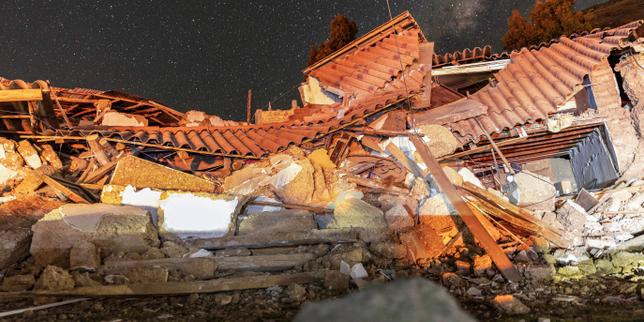
When the seismic waves ripped through the soil, those thick earth blocks did not flex. Concrete and steel can bend under lateral stress; well-engineered timber sways. Clay simply shatters. Within seconds, roofs made of heavy clay tiles collapsed inward, dropping tons of dense material onto families while they slept or prepared morning meals.
Imagine the sound. It is not the sharp metallic screech of a city crash. It is a low, guttural roar from the stomach of the mountain, followed by the dull, suffocating thud of collapsing earth. Then, an absolute, blinding cloud of beige dust that fills nostrils, chokes throats, and turns daylight into an impenetrable gloom.
Consider what happens next in a remote mountain village when the shaking stops.
There are no sirens. There are no heavy rescue cranes parked down the street waiting to deploy hydraulic shears. There is only the sudden, terrible quiet of the mountainside, broken by screaming from beneath the rubble. Neighbors dig with their bare hands, fingernails splitting against shattered brick, pulling away chunks of mud to reach loved ones before the trapped air runs out.
Thirty-two people were pulled from that dust with broken limbs, crushed chests, and deep lacerations. Six did not survive the weight.
The Illusion of the Richter Scale
We live in a world obsessed with measurement, but our metrics often blind us to human reality. Seismologists track moment magnitude, depth, and peak ground acceleration. These data points are essential for mapping fault lines and understanding the tectonic engine churning beneath the South American plate.
Where the Nazca Plate slides beneath the South American Plate, tension builds endlessly. It is one of the most active tectonic zones on Earth. Peru knows earthquakes. Its history is marked by massive catastrophes, like the 1970 Ancash earthquake that wiped out entire towns and claimed tens of thousands of lives.
Because of that history, a magnitude 5.1 event gets categorized as minor.
This creates a dangerous blind spot in how global emergency resources and public attention are directed. When a major metropolis suffers a quake, cameras arrive within minutes. Aid flows. International networks broadcast live footage of modern search-and-rescue teams equipped with thermal imaging.
When a shallow, moderate quake strikes an isolated rural district, the damage is localized but absolute. For the family whose home has vanished into a pile of gray powder, the destruction is one hundred percent. It does not matter to them that the earthquake was not a magnitude 8.0. Their world ended just the same.
The depth of the rupture is the invisible variable. A deep quake dissipates much of its violence through layers of bedrock before reaching the surface. A shallow quake—the kind that struck this region—delivers its energy straight into the foundations of human habitation like a localized explosion.
What Dust Leaves Behind
In the hours following the quake, emergency workers and medical personnel trickled into the affected zones along winding, unpaved mountain roads. Transporting thirty-two injured survivors over rutted tracks at high altitude is a agonizing race against shock and internal bleeding.
A community clinic in the high Andes is not designed for mass casualty events. Doctors and nurses, working with limited supplies, had to prioritize who needed immediate evacuation to regional hospitals and who could be stabilized on makeshift cots set up in open plazas, far from standing walls that might collapse during aftershocks.
Aftershocks are a psychological torture. Every minor tremor that follows sends a jolt of adrenaline through people who have just watched their shelters disintegrate. You cannot trust the floor under your feet. You cannot trust the roof over your head. The sense of absolute stability that we take for granted every morning is permanently fractured.
Survivors huddled under plastic tarps as the cold mountain wind swept down from the peaks. The same air that burned their lungs in the morning now carried the bitter odor of pulverized earth and open fires.
The loss of six lives in a sparse population reverberates through every household. In a village of a few hundred people, there are no strangers. The person killed was the woman who baked the bread, the farmer who shared irrigation water, the child who ran past the doorway every afternoon on the way home from school.
The economic destruction is equally total. When an adobe house collapses, it does not just destroy a structure; it buries seed grain, kills livestock sheltered in adjoining yards, and destroys tools earned through years of physical labor. Poverty in these regions is not a lack of income; it is an absence of a safety net.
The Long Path Through the Rubble
In the aftermath of disaster, the media cycle moves on with cold efficiency. Within forty-eight hours, the news wire dropped the story of the Peruvian quake to make room for market reports, political scandals, and sports scores. The six dead became a permanent line item in a historical database; the thirty-two injured vanished into statistical obscurity.
Rebuilding in the high Andes is not a matter of signing an insurance check or hiring a contractor. It is an exhausting, manual effort of clearing debris by hand, salvaging reusable roof beams, and making new clay bricks under a sun that offers little warmth.
Modern earthquake-resistant building techniques exist, even for adobe structures. Reinforcing mud walls with plastic mesh, wooden ring beams, or internal bamboo grids can prevent cataclysmic collapse during moderate tremors. But implementing these fixes requires money, technical education, and outreach that rarely reaches the most isolated mountain ridges.
So the villagers clear the dust. They stack the unbroken bricks. They mourn their six neighbors beneath a vast, indifferent sky.
When you stand on a ridge in the Andes after the earth has settled, the mountains look unchanged from a distance. Majestic, timeless, serene. It is only when you walk down into the valleys and see a mother sitting on a pile of dried clay, holding a salvaged teacup while her neighbors dig for a missing goat, that you understand what actually happened here.
The earth moved slightly, barely a whisper on the global scale. And an entire world fell apart.