The rain does not negotiate. It falls with a heavy, rhythmic persistence, turning dry earth into a slick, heavy paste that knows only one direction: down.
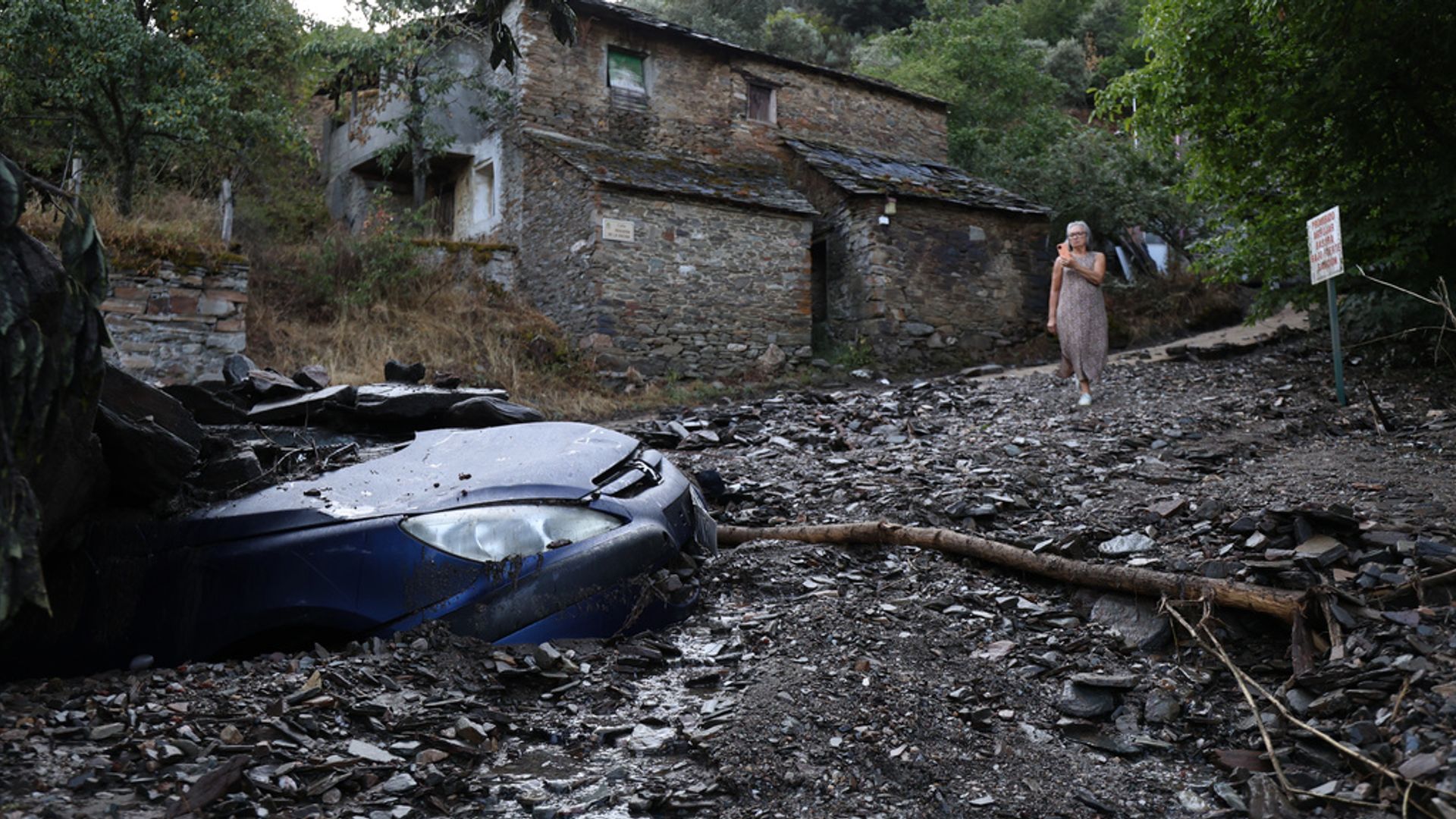
When the hillsides let go in Spain, they did so with a quiet finality. There was no grand theatrical warning, no booming prelude to alert families sitting down behind rain-streaked windows. Just the sudden, crushing weight of a thousand tons of mud swallowing everything in its path. Two lives, extinguished in an instant, swallowed by the very ground they walked upon. Down in the valleys, emergency crews scrambled through the grey muck, their boots sinking deep, flashlights cutting through the gloom. They searched for breath where there was only silence. Building on this idea, you can find more in: The Smoke Above the Table Where Peace Is Tried.
Thousands of miles north, the air tasted of ash.
Belgium was burning. Not in the cinematic, sweeping way of dry scrublands, but with a stubborn, suffocating fury that mocked the damp reputation of Western Europe. The largest wildfire in the nation's history did not care about borders or municipal fire codes. It ate through pine and peat, turning ancient green spaces into blackened skeletons. Firefighters stood shoulder to shoulder against walls of orange flame, their faces caked in soot and sweat, watching the canopy vanish into smoke. The heat was a living thing, pushing them back, demanding respect. Analysts at TIME have shared their thoughts on this situation.
We treat these events as anomalies. We look at the screens in our living rooms, watch the split-screen tragedy of floods in the south and infernos in the north, and call them freak occurrences. Bad weather. Unlucky seasons.
We are lying to ourselves.
I remember standing on a ridge in southern Europe a few years ago, watching a rainstorm roll in off a prematurely warm sea. The air felt thick, heavy with an unnatural moisture that made your skin crawl. An old local farmer, leaning against a weathered stone wall, looked out toward the horizon and shook his head. He didn't use scientific terms. He didn't talk about parts per million or rising global averages. He just said the land was tired. He said the earth had forgotten how to hold water, and the trees had forgotten how to hold their ground.
He was right.
To understand what happened in Spain and Belgium, you have to look past the breaking news banners. You have to look at how we have treated the skin of this planet. For decades, we have paved over natural sponges, channeled rivers into concrete straitjackets, and allowed monoculture forests to replace diverse, resilient ecosystems. We built our lives on the assumption that the climate of our grandparents was a permanent contract.
It was not. It was a temporary condition.
Consider the mechanics of a mudslide. It is not simply water falling from the sky. It is the failure of a relationship between roots and soil. When heavy rains pound deforested or drought-baked slopes, the ground loses its structural integrity. The soil becomes saturated, heavy, and unstable. Gravity does the rest. It is physics stripped of mercy. In Spain, those slopes gave way because the earth could no longer anchor itself against the volume of water delivered in minutes rather than hours.
Now look north. Wildfires like the one consuming Belgium thrive on extremes. They feed on dry undergrowth, tinder-box conditions created by erratic rainfall patterns, and rising baseline temperatures. When rain finally does come to these drought-stressed regions, it often arrives in violent, torrential bursts that flash-flood the scorched earth instead of soaking into it.
Water and fire. Two elements that should balance each other, now locked in a chaotic dance of extremes.
We sit in our climate-controlled rooms and feel disconnected from this chaos. We click to the next article. We check the weather app on our phones, noting the little sun icon or the rain cloud with a detached curiosity. But the separation is an illusion. Every ton of topsoil washed away in a Spanish valley represents a loss of agricultural fertility that feeds communities. Every acre of forest turned to ash in Belgium alters the carbon sink that dictates the air quality of the entire continent.
The invisible stakes are staggering.
We are living through a grand recalibration. The planet is reacting to centuries of industrial acceleration with blunt, unvarnished force. It does not hate us. It does not plot against us. It simply obeys the new baseline we have written into the atmosphere.
When the rescue workers in Spain finally packed up their gear, and when the exhausted crews in Belgium finally managed to trace firebreaks through the smoldering timber, the silence that followed was heavy. It was the silence of a wake-up call left unanswered.
The earth is speaking in the only languages it has left. Flood. Fire. Mud. Ash.
And the real question is not whether the weather will return to normal. The real question is how long we will pretend that normal still exists, waiting for the ground to shift beneath our feet while we look the other way.