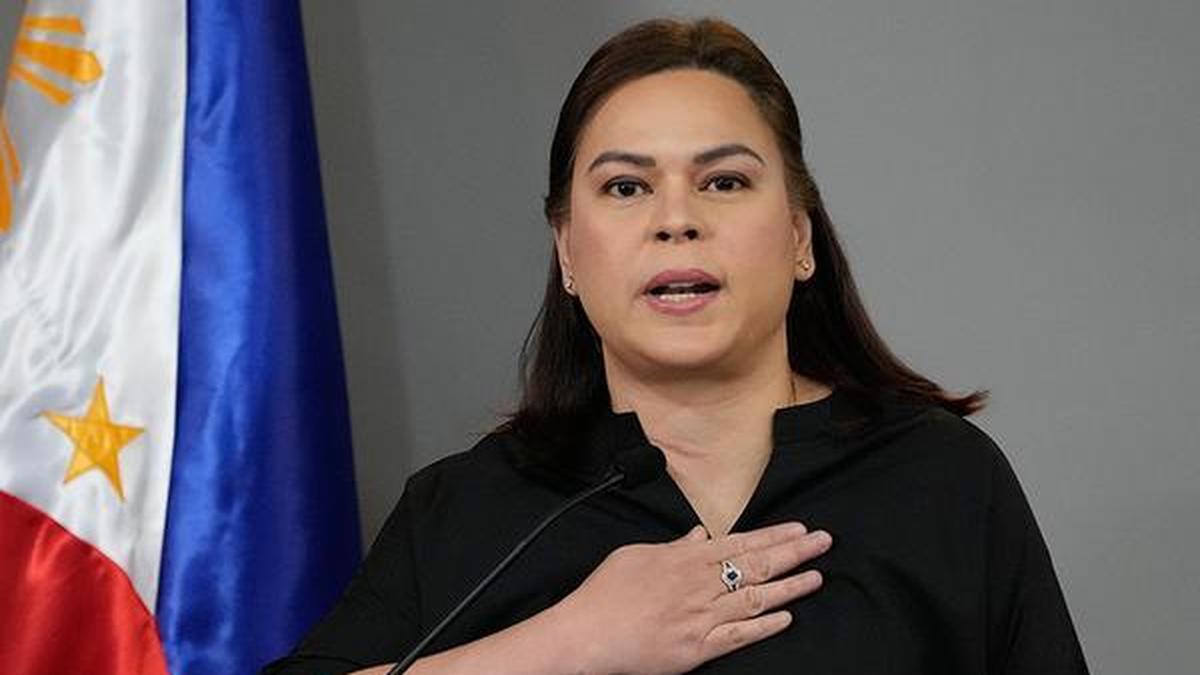
The House of Representatives in the Philippines has set in motion the most significant political assassination of a career in a generation. By voting to impeach Vice President Sara Duterte, lawmakers have officially ended the "Uniteam" alliance that swept the 2022 elections. This is not a sudden burst of legislative conscience regarding fiscal responsibility. It is a calculated, cold-blooded dismantling of the Duterte political dynasty by the sitting President’s allies. The move pushes the daughter of former President Rodrigo Duterte toward a trial in the Senate, threatening her with permanent removal from office and a lifetime ban from public service.
This development answers the immediate question of how far the rift between President Ferdinand Marcos Jr. and the Dutertes has grown. It has grown into a total war. While the formal charges focus on the alleged misuse of confidential and intelligence funds (CIFs), the underlying reality is about the 2028 presidency. Sara Duterte was the frontrunner for that seat. Now, she is fighting for her legal survival.
The Money Trail Used as a Political Noose
The heart of the impeachment complaint rests on hundreds of millions of pesos in "confidential funds" spent with alarming speed. Specifically, the Commission on Audit (COA) flagged 125 million pesos spent by the Office of the Vice President in just 11 days during late 2022. For context, that is roughly 11 million pesos every single day.
When the House Committee on Good Government and Public Accountability began its probe, the Vice President’s defense was not one of detailed accounting, but of jurisdictional defiance. She refused to attend most hearings, calling the process a "political circus." This refusal became the fuel for the impeachment fire. Lawmakers argued that her stonewalling constituted a betrayal of public trust and a violation of the constitution.
However, a veteran observer of Manila politics knows that "confidential funds" have been a staple of Philippine governance for decades. They are the dark matter of the national budget—invisible, hard to track, and often used at the executive's discretion. The sudden urgency to prosecute their use now, after years of looking the other way during her father’s administration, points to a selective application of the law. The House, led by Speaker Martin Romualdez—the President’s cousin—has effectively weaponized the budget process to corner a rival.
A Dynasty Under Siege
The Duterte brand was built on the image of the "punisher" from Davao. It relied on a populist connection with the masses that bypassed traditional Manila elites. By targeting Sara, the current administration is testing whether that brand can survive a sustained legal and PR assault.
This is a multi-front offensive. Beyond the impeachment, the elder Rodrigo Duterte faces the looming shadow of the International Criminal Court (ICC) and its investigation into his "War on Drugs." For years, the Marcos administration shielded the Dutertes from the ICC. That shield has been lowered. By allowing ICC investigators more leeway and simultaneously pushing impeachment, the Marcos camp is effectively telling the Dutertes that their era of immunity has expired.
The strategy is clear. Strip the Vice President of her budget, dismantle her reputation through televised hearings, and eventually remove her from the line of succession. If she is convicted by the Senate, she cannot run for President in 2028. This clears the path for a Marcos-aligned successor, likely Romualdez himself, to take the reins without facing the formidable Duterte voting bloc in the south.
The Senate as the Ultimate Jury
The battle now shifts to the Senate, which acts as the impeachment court. Unlike the House, which is often a rubber stamp for the sitting President, the Senate is composed of 24 individuals who see themselves as independent republics.
To convict and remove Sara Duterte, the prosecution needs a two-thirds majority—16 votes. This is a much higher mountain to climb. The Senate currently contains several Duterte loyalists and "independent" figures who may worry about the precedent this sets. If a Vice President can be removed over spending disagreements, any one of them could be next.
We are seeing a shift in the Senate’s internal gravity. Senators who were once eager to be seen in photos with Rodrigo Duterte are now weighing the risks of appearing "pro-corruption" if they vote to acquit Sara. Conversely, they risk the wrath of the Duterte base in Mindanao if they vote to convict. It is a mathematical nightmare for any politician seeking re-election.
Economic Fallout and Investor Anxiety
While the headlines scream about political betrayal, the markets are watching with a different kind of intensity. The Philippines has long struggled with a reputation for "unstable" transitions of power. This impeachment creates a period of prolonged uncertainty.
Foreign investors generally prefer the "Uniteam" stability they were promised in 2022. A government at war with itself is a government that isn't passing tax reforms, improving infrastructure, or lowering the cost of electricity—the highest in Southeast Asia. The impeachment trial will consume the legislative calendar for months. It will stall the 2026 budget deliberations and distract from the pressing need to address inflation, which remains the primary concern for the average Filipino family.
The "Davao Group," a collection of businessmen and power brokers aligned with the Dutertes, is also feeling the squeeze. As the Vice President’s power wanes, the flow of government contracts and political favors is being rerouted through Malacañang. This isn't just a fight over a title; it’s a fight over the economic patronage networks that run the country.
The Vice President’s Counter-Attack
Sara Duterte is not going down quietly. Her rhetoric has shifted from polite disagreement to open hostility. She has publicly criticized the President’s policies on everything from the South China Sea to the handling of the insurgency. In doing so, she is positioning herself as the leader of the "genuine opposition."
Her gamble is that the impeachment will make her a martyr. In Philippine politics, the victim narrative is incredibly powerful. If she can convince the public that she is being bullied by the "Manila Elite" and the "Marcos-Romualdez Clan," she could consolidate her base and even gain sympathy from the undecided. She is betting that the House has overplayed its hand.
She has also hinted at possessing her own "dirt" on the administration. This is the "mutually assured destruction" phase of the divorce. If she decides to release information regarding the 2022 campaign finances or internal dealings of the Marcos family, the impeachment could trigger a wider collapse of public trust in the entire government.
The Historical Echoes of 2000
The current situation mirrors the impeachment of Joseph Estrada in 2000. That process started in the House and moved to the Senate, eventually spilling out into the streets in what became known as "EDSA II."
The risk for Marcos is that if the Senate trial is perceived as unfair, it could trigger mass protests. The Dutertes still command significant support in the military and police forces, many of whom were promoted during the previous administration. A botched impeachment doesn't just end a career; it can destabilize the republic itself.
The House has taken the first step in a process that is notoriously difficult to control once it begins. They have ignited a fire to clear the brush for the 2028 election, but they may find that the wind is blowing in a direction they didn't anticipate.
The impeachment is not about 125 million pesos. It is about who owns the future of the Philippines. By voting to impeach, the House has declared that the Duterte name is no longer an asset, but a liability to be removed. Whether the Senate and the Filipino people agree is a question that will define the next decade.
The proceedings will now move to the upper house, where the rules of evidence and the theatre of the trial will be laid bare for a public already weary of dynastic feuding. The coming months will be a masterclass in political survival and ruthless ambition. Sara Duterte remains in her post for now, but she is a Vice President without a budget, without an alliance, and soon, potentially, without a job.
The ultimate verdict won't just be written in the Senate journals; it will be written in the results of the next election, provided she is allowed to reach it. The move to impeach is the loudest admission yet that the current administration fears she would win if she did.