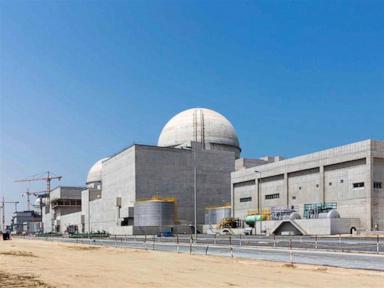
The headlines are screaming that the sky is falling in the Persian Gulf. A drone hits a nuclear facility in the United Arab Emirates, Washington and Tehran exchange the usual synchronized saber-rattling, and suddenly every geopolitical talking head is predicting World War III and a regional nuclear meltdown.
It is lazy. It is predictable. And it is completely wrong. Expanding on this topic, you can also read: The Real Reason India is Arming the South China Sea.
The mainstream consensus has bought into a double fantasy: first, that modern containment structures are fragile eggs waiting to be cracked by a commercial quadcopter; second, that the US and Iran are actually prepared to launch a full-scale regional war over a localized proxy provocation.
I have spent years analyzing regional security architecture and industrial defense systems. If you look at the cold, hard engineering of modern infrastructure and the grim reality of state-level deterrence, you realize quickly that the panic is manufactured. The recent strike is not the opening salvo of a global conflict. It is a highly theatrical, low-risk stunt designed to exploit media ignorance for maximum psychological impact. Experts at BBC News have provided expertise on this situation.
The Myth of the Vulnerable Reactor
Let us start with the physics that the breathless television reports conveniently ignore. The Barakah nuclear power plant—and similar modern facilities across the globe—are not built like standard commercial warehouses. They are among the most heavily fortified civilian structures on the planet.
To cause a catastrophic radiation release via an external strike, an attacker needs to breach the containment building. This is not a sheet-metal roof. We are talking about several feet of high-density, steel-reinforced concrete backed by a robust inner steel liner.
Consider the actual testing data for these structures. The US Sandia National Laboratories famously ran a test where they launched an F-4 Phantom fighter jet at a concrete wall at nearly 500 miles per hour. The jet disintegrated into powder; the concrete suffered minor surface gouging.
To believe that a drone carrying a standard explosive payload poses an existential threat to a reactor core is to reject basic structural engineering.
- The Reality of Drone Payloads: Most loitering munitions used by regional proxies carry payloads ranging from 40 to 100 pounds of conventional explosives.
- The Reality of Concrete Penetration: To punch through reinforced nuclear containment, you require specialized, heavy bunker-buster munitions delivered by strategic bombers, not a low-flying, slow-moving drone.
- The True Target: Attacks like these target the soft underbelly—switchyards, power lines, and administrative offices—to cause operational disruption and financial headaches, not a nuclear disaster.
When a drone strikes the periphery of a nuclear site and causes a localized fire in a transformer yard, the facility did not "narrowly avoid a meltdown." The containment system worked exactly as designed by keeping the core isolated and safe while peripheral systems absorbed the disruption.
The Choreographed Dance of US Iran Deterrence
The second half of the panic relies on the assumption that Washington and Tehran are sliding uncontrollably toward open warfare. This narrative misinterprets the entire playbook of modern gray-zone conflict.
Total war is incredibly expensive, politically ruinous, and inherently unpredictable. Neither side wants it. Instead, what we are witnessing is a highly calculated, calibrated exchange of signals.
Think of it as geopolitical theater where the script is agreed upon in advance. Iran utilizes localized proxies to demonstrate its reach and remind the world that it can increase the cost of doing business in the Gulf. The United States responds with targeted airstrikes on isolated militia depots or issues stern diplomatic warnings to satisfy domestic political audiences.
If Iran genuinely intended to start a war, it would not send a handful of drones to scuff the concrete of a heavily defended facility. It would deploy its massive arsenal of anti-ship ballistic missiles to choke the Strait of Hormuz entirely. They have not done that because they know the consequences.
The danger in believing the mainstream narrative is that it confuses posturing with policy. The rhetoric is loud precisely because the actual actions are constrained.
Dismantling the Flawed Questions Surrounding Regional Security
If you look at the public forums and major news outlets, the public is asking entirely the wrong questions. Let us dismantle the most common misconceptions.
Are nuclear plants in the Middle East a magnet for catastrophic terrorism?
No. This question stems from a fundamental misunderstanding of nuclear security architecture. Attacking a nuclear plant is an incredibly inefficient way to cause mass harm. The layers of physical security, air defense networks, and passive safety systems mean that an extremist group or a state proxy would achieve a far higher casualty count by targeting standard, soft civilian infrastructure. The plant is chosen for its symbolic value, not because it is an easy vector for a weapons-grade catastrophe.
Can regional air defenses stop 100% of drone threats?
Absolutely not, and pretending they can is a dangerous illusion. No air defense system—whether it is Patriot, Iron Dome, or advanced terminal radar—has a perfect interception record against low-radar-cross-section, low-altitude drones. But here is the hard truth: they do not need to be perfect. Air defenses are designed to protect critical vulnerabilities, not to prevent a single piece of shrapnel from touching any square inch of a facility's property.
The Strategic Cost of Media Alarmism
There is a distinct downside to my contrarian view. By pointing out that the physical danger to the reactor is minimal, some argue that we risk downplaying the psychological impact of these attacks.
Yes, stock markets dip when these headlines break. Yes, shipping insurance premiums in the Gulf spike temporarily. That economic friction is real, and it is exactly what the attackers want.
But panicking plays directly into the adversary's hands. When the media treats a minor security incident at a fortified facility as if it were the dawn of an apocalypse, it hands a massive psychological victory to the entity that launched the drone. They get maximum geopolitical leverage for the price of a cheap, off-the-shelf motor and some fiberglass.
We must separate actual physical risk from political theater. The physical risk of a drone-induced nuclear disaster in the UAE is functionally near zero. The political risk of Western leadership making rash strategic decisions based on a distorted media narrative, however, is dangerously high.
Stop analyzing the conflict through the lens of Hollywood disaster movies. Stop assuming that every explosion near a nuclear sign means a localized Chernobyl. Look at the concrete thickness, look at the economic calculus of the regimes involved, and recognize the difference between a real military escalation and a loud, desperate cry for attention.