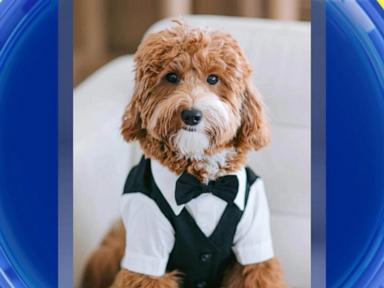
Silk rustles. Tulle catches the afternoon sun. A tiny terrier trots down a runner of scattered petals with a velvet bow tied neatly beneath its chin, stopping halfway to sniff a silver cufflink dropped on the grass.
Guests laugh. Someone whispers that the dog stole the whole ceremony.
If you have ever stood near a wedding altar with a leash in one hand and a champagne glass in the other, you know that quiet, slightly dizzy thrill. A wedding is already a theater of memory, expectation, and affection. Add a dog in a miniature tuxedo or a ruffled white dress, and suddenly the room softens. The tension leaves people's shoulders. Even the most stoic uncle smiles.
When news broke about David's Bridal launching a puppy collection, plenty of people rolled their eyes before clicking. Another novelty? Another way to sell matching outfits to couples already spending thousands on seating charts and floral arches?
Maybe. Or maybe something deeper is happening right under our noses.
We tend to treat pet fashion as a joke until we watch a couple hold their aging golden retriever while exchanging vows in their backyard. Then it stops looking like a gimmick. It starts looking like a record of family.
The Aisle Where Nobody Leaves Behind
To understand why bridal wear for dogs exists at all, you have to look at how the modern household has rearranged itself. For decades, pets occupied a clearer boundary: yard dogs, barn cats, companions kept outside the formal rituals of adult milestones. That boundary has blurred almost beyond recognition.
In the United States, pet ownership surged during the pandemic years and stayed elevated, with surveys from organizations like the American Pet Products Association consistently showing tens of billions of dollars spent annually on pet care, treats, accessories, and apparel. At the same time, many couples marry later in life than their grandparents did. A couple in their early thirties getting engaged today may have lived together for five years, adopted two rescue dogs along the way, survived apartment leases, broken air conditioners, and long nights of work together before ever picking out a ring.
By the time the engagement happens, the dog is not a side character. The dog is the starter family.
Consider a hypothetical couple—let's call them Maya and Devon. Six months before their autumn wedding in upstate New York, Maya is scrolling through bridal sites late at night while Devon sleeps beside her. She isn't worried about centerpiece candles. She is worried about Barnaby, their three-year-old terrier mix who barks at delivery vans and hates tight collars.
Maya imagines Barnaby walking down the aisle with her niece. In her head, he looks sharp in a little linen vest. In reality, she wonders if he will freeze, slip his harness, or chew through three hundred dollars of faux silk before the first toast.
That tug-of-war is where most of us actually live. We want the magic of the moment, yet we know the messy truth of living with animals who have zero interest in dress codes.
When a mainstream bridal retailer steps into that space—offering coordinated outfits meant to echo bridal and formalwear palettes—it signals a shift in retail strategy. Bridal stores have long survived on tradition, volume, and emotional milestones. Expanding into coordinated pet attire taps into a customer who views celebration as inclusive rather than rigid. Instead of treating the dog as an afterthought or an outsider at the reception, the collection treats the pet as part of the wedding party aesthetic.
Yet a fair question lingers beneath the cute photos: is a wedding outfit for a dog actually for the dog?
Honesty requires admitting the truth. No puppy cares about Chantilly lace. A dog does not know what "ivory" means or why everyone is wearing matching colors.
Still, dismissing pet clothes as pure vanity misses half the story. Dogs live in close emotional orbit with us. They read our posture, our tone of voice, and the atmosphere of a room. When their humans are calm, joyful, and present, dogs often mirror that ease—provided the outfit itself doesn't trap them in heat, restrict their stride, or make them feel clumsy.
What Happens When Novelty Meets Real Fur
I have spent years watching events unravel over small, well-meaning details. A boutonnière pinned too tightly to a nervous groom's lapel. A veil catching on a folding chair. A dog wearing a stiff costume on a ninety-degree afternoon because someone insisted the photos required a collar, a bow tie, and a hat.
Heat is the quiet enemy of dressed-up pets. Dogs cool themselves primarily through panting and paw pads rather than sweating across their skin the way humans do. Heavy polyester, thick linings, or tight neckbands can turn a pleasant outdoor gathering into an uncomfortable ordeal fast.
Then there is mobility. Watch a dog put on a poorly fitted sweater for the first time. Sometimes they walk like astronauts on the moon, lifting each front leg high and freezing mid-step. On a wedding day, when guests are moving fast, doors are opening and closing, and emotions are running high, a dog that feels restricted or spooked is far more likely to bolt or nip out of fear.
Good design respects animal comfort first and camera angles second. Breathable fabrics, easy hook-and-loop or snap closures that don't catch long fur, clear space around the tail and hindquarters, and room to lie down naturally matter far more than intricate trim. If a piece of apparel looks charming in a catalog but makes a dog stiff, anxious, or overheated in ten minutes, it fails its real job.
There is also the question of cost. Weddings already carry heavy financial pressure. Couples frequently feel nudged—by social media feeds, Pinterest boards, and retail marketing—to buy a special outfit for every single person and creature involved.
Here is where a bit of skepticism is healthy. You do not need a designer dog suit to prove your pet matters. A simple, well-fitting collar with fresh flowers woven safely through it, a clean bandana in your wedding colors, or letting your dog wear nothing at all can be just as meaningful. Sometimes the most honest photograph is the dog just being a dog beside people dressed to the nines.
Still, for couples who do love coordinated details—who want their pup matching the groomsmen or echoing the bride's train in miniature—having accessible, ready-made options through a familiar bridal brand takes the guesswork out of hunting through dozens of tiny specialty shops. It turns a niche whim into an easy choice.
Memory, Mortality, and Why the Photos Hurt a Little
Why do wedding pet photos hit people so hard?
Look closely at the expression on a couple's face ten years after a wedding when they flip through the album. The cake is gone. The venue might have changed hands. Friends have moved to different cities, had kids, or drifted into new chapters.
Dogs have shorter lives than we do. Everyone who loves a dog carries that math in the back of their mind, even on sunny days.
Think of a metaphor: a wedding album is like a time capsule buried in the yard of your life. Most of what you put inside is meant to stay crisp for decades. A dog's presence in those frames is different—it is both permanent in memory and painfully brief in real time. A decade later, that dog in a tiny bow tie might be gone, leaving behind a photograph that captures a specific season of warmth, youth, and belonging that can never be duplicated.
That is why people care about this stuff even if they never plan to buy a dog tuxedo. A puppy collection in a bridal store is really a mirror held up to changing family norms. It shows how deeply animals are woven into our sense of home, loyalty, and celebration.
When marketing leans strictly into cuteness, it can feel frothy—like cotton candy you eat in two bites and forget. When you look at the human side, though, there is real tenderness underneath. People want the creatures who sit by their feet during hard weeks to stand nearby on one of their happiest days.
How to Decide If a Bridal Look Fits Your Dog
If you are planning a wedding—or just daydreaming about one—and wondering whether putting your dog in formalwear makes sense, start with temperament rather than trend.
Ask yourself how your dog handles crowds, loud music, cameras, and new people. A bold, outgoing pup who greets strangers like long-lost cousins may breeze through a walk down the aisle in a lightweight vest. A shy or noise-sensitive dog might do much better greeting guests briefly during cocktail hour or staying home with a trusted sitter rather than standing near cheering crowds.
Next, test any outfit days or weeks ahead of time. Put it on for five minutes at home. Offer treats. Let your dog walk around the living room, sit, and lie down. Watch their ears, tail, and body language. If they try frantically to scratch it off or tuck their tail and hide under the coffee table, listen to what they are telling you.
Finally, keep the day flexible. Have a backup plan if the weather turns warm or your dog gets tired halfway through portraits. Nobody ever remembers a dog taking off a bow tie halfway through the reception as a tragedy. People remember warmth, laughter, and feeling welcome.
Trends come and go in bridal fashion. Necklines rise and fall. Color palettes shift from blush to sage to moody jewel tones. Yet the urge to gather the ones you love into the frame remains constant.
A small dog trots down a carpet of white petals, ears perked, tail wagging once, twice, three times, pausing right where two people are waiting to promise each other a life.