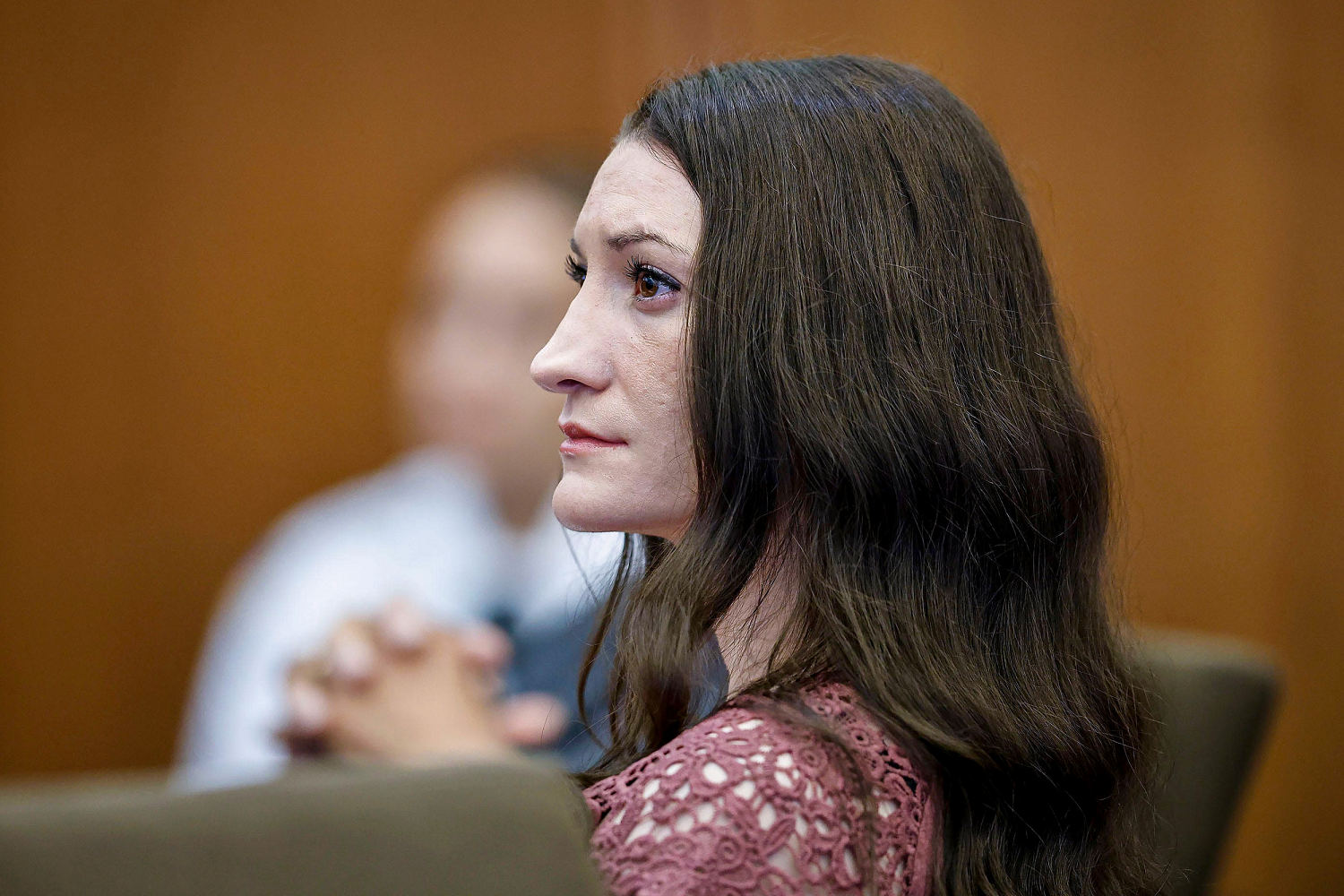
When a criminal defense team moves to block a retrial in a high-profile Massachusetts homicide case, the litigation shifts from factual guilt to the constitutional boundary between state persistence and individual finality. In the prosecution of Lindsay Clancy—charged with the January 2023 killings of her three children in Duxbury, Massachusetts—defense counsel's effort to bar a second trial operates within a rigid appellate and constitutional framework governed by the Fifth Amendment’s Double Jeopardy Clause, Massachusetts common law, and the specific procedural triggers of a mistrial or appellate reversal. Understanding whether a court can legally prohibit a retrial requires isolating the exact mechanism that terminated the initial proceeding and testing it against the narrow exceptions recognized by the Massachusetts Supreme Judicial Court (SJC).
The Structural Architecture of Double Jeopardy in Massachusetts
Standard news coverage frequently reduces double jeopardy to a binary rule: a defendant cannot be tried twice for the same offense. In practice, constitutional doctrine treats the termination of a trial not as an automatic bar to reprosecution, but as a conditional gate governed by the concept of "jeopardy attachment" and the cause of termination.
In a Massachusetts jury trial, jeopardy attaches the moment the jury is empaneled and sworn. Once attached, the defendant possesses a valued constitutional right to have the trial completed by that particular tribunal. However, that right is subordinate to the public interest in fair trials designed to end in just judgments. Whether the Commonwealth of Massachusetts may retry a defendant after an initial trial fails to produce a valid conviction depends entirely on three distinct procedural pathways:
- Manifest Necessity (Hung Jury or Structural Breakdown): When a trial judge declares a mistrial without the defendant’s consent because the jury is deadlocked or an external event makes continuation impossible, double jeopardy does not bar a retrial. The state retains the authority to reprosecute because the initial jeopardy never legally terminated; it remains continuing jeopardy.
- Defense-Requested Mistrial and the Kennedy Exception: When the defense moves for a mistrial, the motion ordinarily waives double jeopardy protection. The sole exception, established by the U.S. Supreme Court in Oregon v. Kennedy and adopted into Massachusetts jurisprudence, occurs when prosecutorial or judicial conduct giving rise to the defense motion was specifically intended to "goad" the defendant into moving for a mistrial.
- Evidentiary Insufficiency vs. Trial Error: If a conviction is overturned—or if a trial terminates—due to legal or procedural errors (such as improper evidentiary rulings or faulty jury instructions), retrial is permitted. Conversely, if a reviewing court determines that the Commonwealth failed to present legally sufficient evidence to sustain a conviction under the Latimore standard (whether any rational trier of fact could have found the essential elements of the crime beyond a reasonable doubt), double jeopardy strictly prohibits a second trial.
The Three Pillars of a Motion to Block Retrial
To succeed in a pre-trial motion to dismiss on double jeopardy grounds in Plymouth County Superior Court or before a single justice of the Supreme Judicial Court under Massachusetts General Laws Chapter 211, Section 3, defense counsel must establish one of three high-threshold legal conditions.
1. The Goading Standard and Prosecutorial Intent
The most contested battleground in high-stakes retrial litigation involves allegations of prosecutorial misconduct. Under Massachusetts law, demonstrating mere prosecutorial error, overreach, or even bad-faith evidentiary violations is insufficient to bar a retrial. The defense bears the heavy burden of proving subjective intent: that the prosecutor deliberately engineered a mistrial to rescue a failing case or to obtain a more favorable jury pool.
Courts evaluate objective facts to infer this subjective intent:
- Trial Trajectory: Was the prosecution’s case collapsing at the moment the misconduct occurred? If key forensic or psychiatric testimony had already undermined the state’s theory of criminal responsibility, a court scrutinizes late-stage procedural violations more closely.
- Pattern of Behavior: Did the state ignore explicit warnings from the trial judge regarding inadmissible evidence or improper closing arguments?
- Strategic Advantage: Did the termination of the trial allow the Commonwealth to cure a fatal defect in its witness list or expert disclosures that could not have been remedied during the active trial?
Without concrete evidence that the Commonwealth sought to abort the proceeding rather than win it, Massachusetts courts default to ordering a new trial rather than dismissing the indictment with prejudice.
2. The Latimore Sufficiency Threshold
In cases involving complex psychiatric defenses—such as lack of criminal responsibility due to mental disease or defect (the insanity defense under Commonwealth v. McHoul)—the sufficiency of the evidence becomes a primary vector for blocking retrial. Under Massachusetts law, once a defendant introduces evidence raising the issue of criminal responsibility, the burden shifts to the Commonwealth to prove beyond a reasonable doubt that the defendant was criminally responsible at the time of the acts.
If the first trial ended in a hung jury, the defense may file a post-mistrial motion for a required finding of not guilty under Massachusetts Rule of Criminal Procedure 25(b)(2). The logic is straightforward: if the Commonwealth failed to meet its evidentiary burden during the first trial, allowing a second trial grants the state an unconstitutional second bite at the apple to supply missing proof.
The legal hurdle here is steep. Under the Latimore standard, the trial judge must view all evidence in the light most favorable to the Commonwealth, disregarding contrary defense expert testimony. Even if the defense presents overwhelming psychiatric consensus regarding severe postpartum psychosis or major depressive disorder, the existence of minimal circumstantial evidence—such as internet search histories, planning behaviors, or lay witness observations of coherent speech—typically satisfies the low legal threshold required to send the issue of sanity to a second jury.
3. Judicial Abuse of Discretion in Declaring a Mistrial
When a trial ends in a hung jury, the timing and manner of the mistrial declaration determine whether retrial is permissible. Under Massachusetts General Laws Chapter 234A, Section 68C, if a jury returns after due and thorough deliberation without agreeing on a verdict, the court may send them out again; if they return a second time without agreement, they cannot be sent out again without their consent.
Defense motions to block retrial frequently target premature mistrial declarations. If a trial judge declares a mistrial over defense objection before exhausting reasonable alternatives—such as delivering a Tuey-Rodriquez charge (the Massachusetts instruction urging deadlocked jurors to re-examine their views)—the declaration lacks "manifest necessity." When a mistrial is declared prematurely without manifest necessity, jeopardy terminates permanently, and any subsequent prosecution is barred.
Causality in Insanity Defense Litigation: Why Retrials Happen
High-profile homicide cases centered on psychiatric defenses exhibit structural features that routinely produce hung juries and subsequent retrial battles. The friction arises from the collision between clinical psychiatric frameworks and rigid legal definitions of mens rea (criminal intent).
In Massachusetts, the McHoul standard defines lack of criminal responsibility through two distinct prongs: a defendant is not criminally responsible if, at the time of the conduct, as a result of mental disease or defect, they lacked substantial capacity either to appreciate the criminality (wrongfulness) of their conduct or to conform their conduct to the requirements of law.
This creates a bifurcated analytical problem for jurors:
- Cognitive Capacity vs. Volitional Control: A defendant may clearly understand that killing is illegal and morally wrong—evidenced by calling 911, expressing remorse, or concealing actions—yet still lack the volitional capacity to control their impulses due to acute psychosis or severe medication side effects.
- The Layperson Heuristic: Prosecutors exploit the cognitive prong by emphasizing rational micro-decisions (e.g., looking up directions, sending text messages, or waiting for a spouse to leave the house). Defense counsel must counter by demonstrating that organized behavior can coexist with profound psychotic delusions.
When twelve jurors diverge on whether organized behavior negates volitional impairment, the result is a deadlock rather than an acquittal or a conviction. The state then faces a strategic calculation: absorb the financial and political cost of a second trial, offer a negotiated disposition (such as a plea to second-degree murder or manslaughter, or an agreed-upon commitment to a secure psychiatric facility), or face appellate challenges aimed at terminating the prosecution altogether.
Procedural Bottlenecks and Appellate Gatekeeping
When a Superior Court judge denies a defense motion to dismiss on double jeopardy grounds, the defendant does not have to endure a second trial before seeking appellate review. Massachusetts procedure recognizes that the Double Jeopardy Clause protects against the ordeal of the trial itself, not merely against double punishment.
Consequently, the defense utilizes a specialized procedural mechanism: a petition to a single justice of the Supreme Judicial Court pursuant to G.L. c. 211, § 3. This statute grants the SJC general superintendence over all courts of inferior jurisdiction to correct and prevent errors and abuses where no other remedy is expressly provided.
The single justice conducts an independent review of the double jeopardy claim before a second jury can be empaneled. However, this gatekeeping mechanism carries strict operational limitations:
- Deference to Trial Judge Findings: On questions of manifest necessity and juror deadlock, the single justice grants substantial deference to the trial judge’s on-the-scene assessment of jury fatigue and potential coercion.
- Record-Bound Review: The single justice evaluates only the existing trial transcript. Allegations of prosecutorial misconduct or improper judicial pressure must be explicitly preserved on the record through timely objections by trial counsel.
- Interlocutory Delay: Invoking c. 211, § 3 freezes the trial calendar, often delaying a second trial by six to eighteen months while briefs are filed and the single justice—or the full SJC bench, if the matter is reserved and reported—issues a written opinion.
Strategic Reality and the Path to Resolution
Defense motions to block a retrial in major Massachusetts homicide prosecutions face low statistical probabilities of outright dismissal. Appellate courts reserve permanent bars to retrial for unambiguous failures of prosecutorial proof under Latimore or egregious, documented misconduct designed to sabotage a trial. Where the record shows a good-faith evidentiary dispute over criminal responsibility and a properly administered Tuey-Rodriquez deliberation process, the constitutional presumption favors allowing the Commonwealth to present its case to a new jury.
For the defense, however, litigating the double jeopardy bar serves a dual strategic function beyond the immediate ruling. First, it forces the Commonwealth to lock in its legal theories and defend the sufficiency of its expert testimony on the appellate record prior to a second trial. Second, the prolonged interlocutory delay alters the leverage dynamic between the prosecution and the defense, creating a structural window for pre-trial resolution—specifically, negotiated pleas or stipulated mental health dispositions that eliminate the uncertainty of a second jury verdict while securing long-term institutional custody.