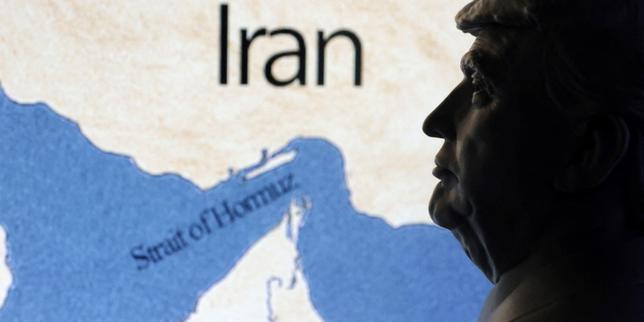
Donald Trump just posted something online that sounds like a joke, but reality has a funny way of catching up to his eccentric branding exercises. The US president took to Truth Social to pitch a brand new label for one of the most volatile maritime chokepoints on earth: the Trump Strait.
You read that right. Amid an active military conflict with Iran, rising global oil anxiety, and persistent regional skirmishes, the White House is pushing to stamp personal branding onto a critical global trade route. For another perspective, check out: this related article.
The Reality Behind the Trump Strait Proposal
If you follow foreign policy, you know this pattern. It starts with a provocative social media post, moves to official graphics, and eventually turns into a geopolitical headache for everyone involved. Trump asked his followers a direct question online: "Now that we have it under U.S.A. control, should we change the name Hormuz Strait to TRUMP STRAIT???"
This isn't an isolated incident. Since returning to office, the administration has made a habit of cartographic rebranding. On day one, the Gulf of Mexico became the Gulf of America. Weeks ago, Lake Ontario was abruptly ordered to become Lake America, a move that stunned Canadian officials and forced quick compliance from digital mapping giants like Apple and Google. Further insight regarding this has been shared by Al Jazeera.
Yet, applying this strategy to the Middle East carries a different weight entirely. The Strait of Hormuz handles roughly a fifth of the world's daily petroleum supply. It sits thousands of miles away from American shores, bordered by nations that view Washington's unilateral declarations with deep hostility. Tehran has spent months attempting to block or restrict traffic through the passage, making any talk of US ownership a hard sell on the ground.
Why Geography Has Become a Political Battleground
Geopolitics rarely involves literal name changes of international waters, but this administration treats cartography like real estate marketing. When Trump claims the US has absolute control over the strait, military analysts point out a much messier reality. Iranian forces continue to operate nearby, drone and missile exchanges flare up regularly, and commercial tankers tread carefully through a war zone.
Naming bodies of water usually requires centuries of historical consensus, colonial expansion, or international treaties. Trump is trying to shortcut that entire process through sheer executive force and digital repetition. When he changed the Gulf of Mexico, Mexico shrugged it off. When he renamed Lake Ontario, local politicians protested while tech companies updated their apps.
Trying the same trick on a strategic artery in West Asia is a different beast. It acts as psychological warfare against Iran just as much as a domestic PR stunt. Tehran responded with predictable fury, while regional allies in the Gulf quietly fretted over the escalation.
What Happens When Digital Maps Play Along
Technology platforms find themselves caught in the crossfire of these presidential decrees. When the White House publishes maps marked with rebranded titles, Silicon Valley faces immediate pressure to match government communications. Apple Maps and Google adjusted their interfaces for domestic American users following previous naming orders.
Whether international mapping agencies adopt the Trump Strait moniker remains doubtful. Maritime navigation relies on standardized global coordinates and centuries-old nautical charts recognized by the International Hydrographic Organization. Captains steering supertankers through narrow lanes don't care about political vanity projects; they care about avoiding anti-ship mines and missile fire.
The proposal highlights a broader truth about modern governance. Physical control of a territory matters less in the digital age than who controls the narrative and the screen interface. Trump understands that repetition turns absurd ideas into normal baseline conversation.
Keep an eye on how shipping insurers and defense analysts react over the next few weeks. If the white-hot rhetoric cools down, the name change might fade away like a bad tweet. If the conflict deepens, don't be shocked to see official government briefings unblushingly use the new terminology while the rest of the world ignores it entirely.