The coffee in the terminal lounge is always too bitter. Everyone knows this. People drink it anyway because waiting has its own gravity, pulling patience thin until the only thing left to do is stare at the departure boards and watch letters flip from green to red.
For thirty years, the geometry of Australian aviation was held together by routines like that. Planes left Sydney for Melbourne every hour on the hour, a mechanical heartbeat. Behind those flights stood an infrastructure of human hands—people who checked the weights, processed the paperwork, cleaned the galleys, and answered the midnight phone calls from passengers stranded by storms in Adelaide.
Then the spreadsheets arrived.
Consider a hypothetical employee named Sarah, working out of a grey-carpeted office complex near Mascot. Let us call her Sarah, though she could just as easily be Michael or Priya. Sarah has spent twelve years managing ground operations logistics for Qantas. She knows the exact turning radius of a Boeing 737 on a wet tarmac. She knows which meal carts need priority loading when a connecting flight from Perth is delayed by forty minutes.
Sarah does not think of herself as a cost center. She thinks of herself as someone who keeps things moving.
Last week, Sarah received an email invitation to a meeting with the subject line: Operational Update.
There is a specific kind of silence that follows corporate restructuring announcements. It is not the silence of an empty room; it is the dense, vibrating quiet of a thousand people looking at their computer screens at the exact same moment, realizing that the architecture of their daily lives has just been redrawn by someone sitting ten thousand miles away who has never smelled jet fuel.
The announcement was precise. Eight hundred and fifty jobs, gone. Not because the planes stopped flying, but because the math changed. Or rather, the philosophy of the math changed. Certain administrative and operational roles are migrating overseas, routed through third-party providers in India, where labor costs less.
Efficiency. That is the word used in the press releases. It is a clean word. It sounds like oiled machinery, like smooth glass, like a knife cutting through silk.
Efficiency rarely describes the person holding the knife.
To understand why a major airline trims its domestic workforce while reporting record passenger volumes, you have to look at the pressure cooker of modern corporate governance. Post-pandemic recovery has been a chaotic sprint. Airlines are squeezed between surging ticket prices, volatile fuel costs, and the relentless demand from shareholders for higher margins. When every quarter is a referendum on survival, loyalty becomes an expensive luxury.
Outsourcing is the oldest trick in the corporate playbook. It treats labor as an import-export commodity, no different than jet fuel or spare wing flaps. If you can buy a widget cheaper in another hemisphere, buying it locally starts to look like financial negligence to a board of directors.
Yet, an airline is not a shipping container company. It is an enterprise built entirely on trust.
When you strap yourself into a metal tube and launch thirty thousand feet into the stratosphere, you are engaging in an act of radical faith. You are trusting strangers you will never meet to have tightened the right bolts, calculated the right weather vectors, and anticipated the unexpected. That trust is holistic. It doesn't just live in the cockpit; it lives in the invisible web of coordination that happens long before boarding begins.
When you hollow out the local core of an operation to save a few percentage points on overhead, something subtle shifts. The institutional knowledge walks out the door with Sarah. The informal networks—the quick conversations across cubicles that solve a scheduling crisis before it becomes a headline—evaporate.
What replaces them? Standardized workflows. Ticketed response times. Time-zone lag.
The corporate defense is simple: the consumer will never notice. The plane will still push back from the gate. The boarding pass will still scan. The frequent flyer miles will still accumulate. And for the most part, they are right. Modern automation and globalized staffing can keep the trains—and the planes—running on schedule.
Until they don't.
Because when an unexpected crisis hits—a volcanic ash cloud, a cyber outage, a massive industrial dispute—systems built purely for cost-efficiency often lack the local resilience to adapt on the fly. You cannot email a localized emergency response. You need people who know the geography, who understand the culture, and who have a personal stake in the survival of the enterprise.
Back in the terminal, the departure board flips again. A flight to Brisbane is delayed.
Down below, on the tarmac, a baggage handler gestures to a pilot. A tug vehicle pulls away from a wide-body jet. The world keeps spinning, indifferent to the corporate restructurings happening in glass-walled boardrooms across the city.
Sarah is clearing out her desk this week. She is packing up a small cactus, a few family photographs, and a mug that says World's Okayest Logistics Coordinator. She will find another job eventually. Her skills are real, hard-earned, and grounded in decades of operational reality.
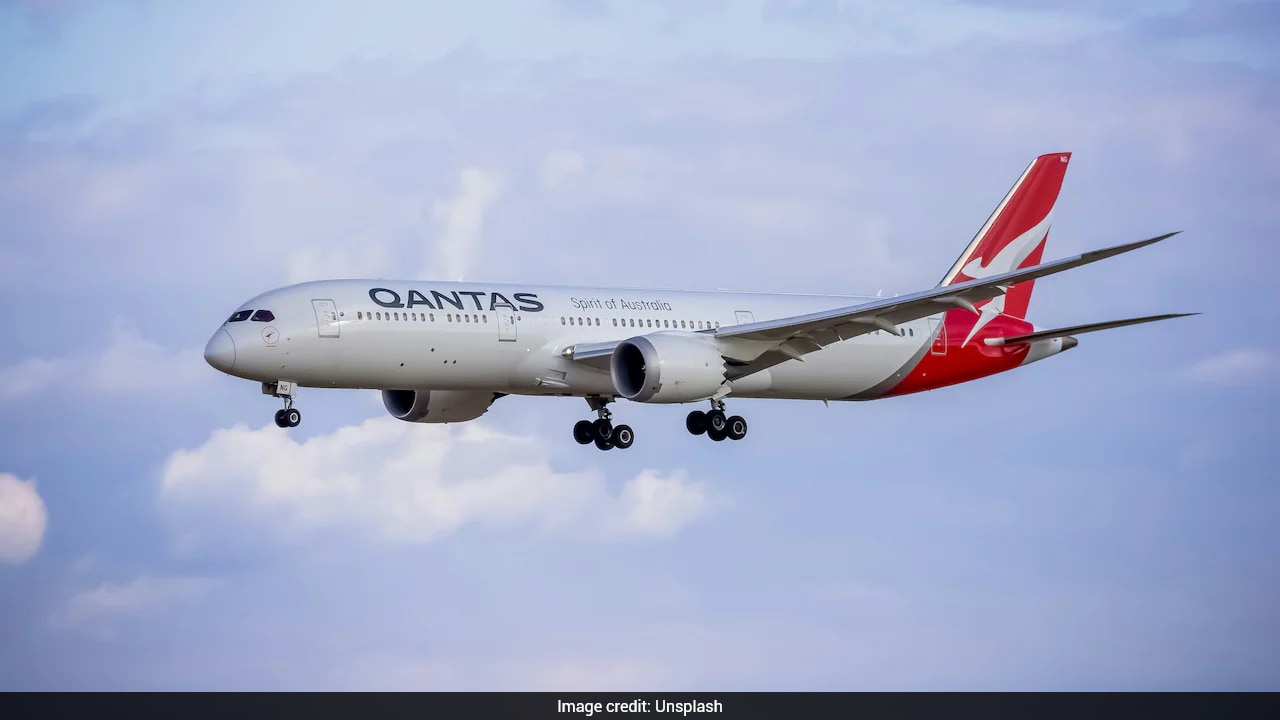
But as the next Qantas flight thunders down the runway, lifting its nose toward the clouds, it carries more than just passengers and cargo. It carries the quiet weight of a shifting economic contract—one where the people who keep the world moving are increasingly treated as optional variables on a distant spreadsheet.