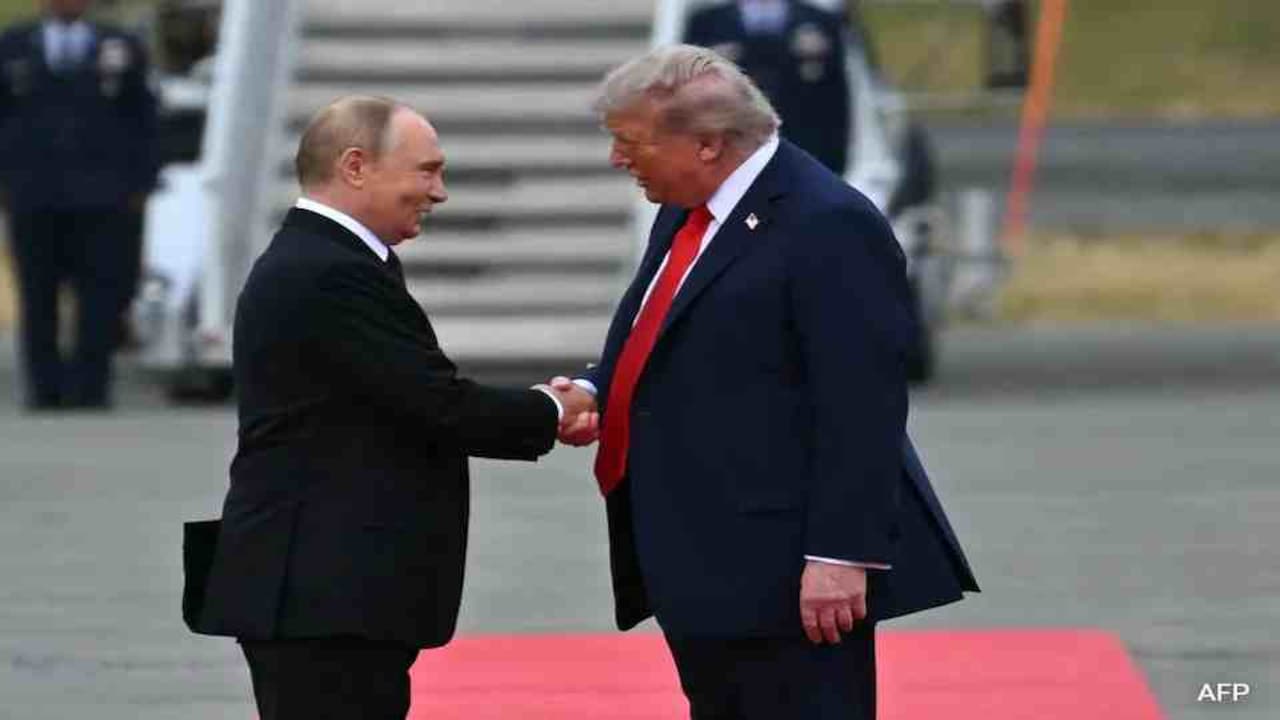
Negotiating territorial cessation under existential threat requires a precise alignment of military capacity, economic endurance, and credible security guarantees, variables that traditional bilateral summits consistently fail to calibrate. When political principals announce intentions to convene a high-level diplomatic forum for a negotiated settlement regarding the conflict in Ukraine, the market for international relations theory immediately divides into two predictable camps. Optimists point to the signaling value of face-to-face dialogue, arguing that direct communication channels between heads of state reduce miscalculation. Realists counter that summits without pre-negotiated structural concessions operate as performative exercises, serving domestic political signaling rather than resolving interstate friction.
The structural mechanics of high-stakes diplomatic interventions reveal why meetings between leaders often amplify instability rather than reduce it. A summit functions as a high-visibility forcing mechanism. It compresses complex multi-party bargaining into a binary outcome: success or failure. When leaders commit personal political capital to a negotiated settlement without prior bureaucratic alignment, the cost of walking away rises precipitously. This dynamic creates an asymmetric vulnerability. A leader facing domestic pressure for economic relief or diplomatic vindication may accept terms that lack long-term enforcement mechanisms, trading structural security for short-term optical victories. Learn more on a similar issue: this related article.
The Three Variables of Bilateral Bargaining Failure
Asymmetry of Information regarding resolve remains the primary driver of diplomatic breakdown in territorial disputes. In a standard bargaining model, states signal their willingness to absorb costs through mobilization, economic restructuring, and alliance formation. When a summit is proposed without a preceding convergence of battlefield realities, the parties enter the room operating under divergent utility functions. One actor evaluates success through territorial acquisition and regime preservation, while another measures utility through the restoration of international legal norms and sovereignty. No amount of rhetorical engagement bridges a fundamental divergence in core state objectives. More analysis by The Guardian delves into similar perspectives on this issue.
The absence of a self-enforcing equilibrium plagues every proposed framework for a negotiated settlement in Eastern Europe. International agreements lack a central enforcement authority, meaning any cessation of hostilities depends entirely on the marginal cost of defection exceeding the marginal benefit. If a frozen conflict rewards the initiating party with territorial gains and sanctions relief, the incentive structure favors future aggression. A sustainable diplomatic architecture requires an institutionalized deterrence mechanism, such as forward-deployed allied forces or automated economic sanctions triggers, which were consistently absent from historical precursor agreements like the Minsk accords.
Domestic political audience costs constrain the maneuverability of negotiating principals. Democratic and autocratic leaders alike face severe retribution from nationalist factions if they concede core territorial or sovereignty claims. When a summit is framed as an imminent peace deal, domestic constituents anticipate definitive outcomes. This expectation forces leaders into rigid negotiating postures. Flexibility is penalized as weakness, transforming a diplomatic negotiation into a positional standoff where compromise equals political defection.
The Economic Cost Function of Protracted Stagnation
Evaluating the utility of another leadership-level meeting requires analyzing the baseline alternative: a war of attrition characterized by high capital expenditure, demographic depletion, and structural supply chain re-routing. The economic friction of the conflict operates through distinct transmission channels. Fiscal deficits in the combatant nations expand as defense allocations crowd out productive investment. Simultaneously, global commodity markets price in persistent geopolitical risk premiums, affecting agricultural yields, energy distribution networks, and sovereign debt yields across emerging markets.
The cost function for the defending state is linear regarding human capital and non-linear regarding infrastructure destruction. Every month of sustained artillery exchange erodes the productive capacity required for post-war economic convergence with Western markets. Conversely, the aggressor state absorbs fiscal shocks through hydrocarbon revenue redirection and state-directed credit expansion, though this creates long-term structural fragility by starving civilian sectors of capital and technological inputs.
Diplomatic initiatives that bypass these structural economic realities treat the symptom while ignoring the underlying ledger. A cessation of hostilities that leaves economic sanctions intact without clear reintegration milestones provides no incentive for long-term compliance. Similarly, relief packages that lack targeted conditionalities fail to alter the strategic calculus of the revisionist power.
The Mechanics of Credible Security Commitments
Any viable framework emerging from a high-level summit must solve the credibility problem inherent in international security guarantees. A security assurance is only as reliable as the retaliatory cost the guarantor state is willing to bear. Budapest Memorandum precedents demonstrated that verbal assurances and territorial integrity declarations carry near-zero deterrent value when unaccompanied by integrated military planning, joint command structures, and pre-positioned material assets.
Integrating a contested state into an existing collective defense architecture changes the mathematical calculation of future incursions. The threshold of conflict escalation rises because the aggressor must now weigh the probability of a multi-state conventional war against the marginal utility of tactical territorial gains. Bilateral summits that propose ambiguous neutrality formulas or demilitarized zones without international monitoring and enforcement mandates simply establish a deferred timeline for renewed hostilities.
The diplomatic push for a swift resolution consistently underestimates the friction of verification. Establishing a durable ceasefire requires real-time telemetry, satellite reconnaissance sharing, neutral observer missions with unhindered access, and automated penalty mechanisms for truce violations. Without these technical layers, a negotiated settlement functions merely as an operational pause, allowing the depleted military apparatus to reconstitute forces, retool supply chains, and re-engage under more favorable operational conditions.
Strategic Execution for Conflict Termination
Resolving protracted territorial conflicts requires shifting focus away from personal leadership summits and toward institutionalized, multi-lateral attrition management. The diplomatic strategy must invert the traditional sequencing of peace talks. Instead of attempting to negotiate high-level political settlements before establishing facts on the ground, structural durability must be engineered through incremental, verifiable operational freezes tied to automated economic and military metrics.
Negotiators must abandon the premise that a single diplomatic intervention can reconcile incompatible sovereign ambitions. Sustainable conflict termination relies on establishing an inescapable economic and military cost structure that makes continued hostility irrational for the revisionist state, backed by institutionalized enforcement mechanisms that render defection structurally impossible rather than merely politically costly.



