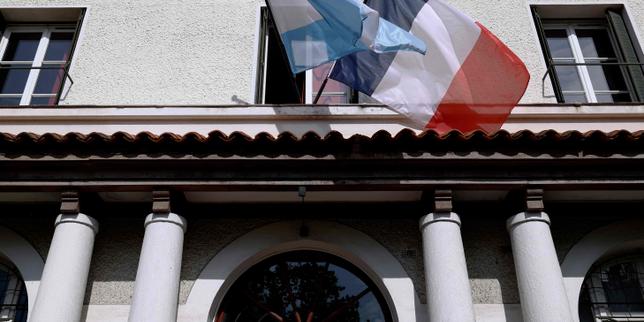
The sudden resignation of Santiago Muzio, director of the Casa Argentina at the Cité Internationale Universitaire de Paris, represents far more than an isolated administrative shuffle. Appointed by the libertarian government of President Javier Milei, Muzio’s tenure transformed a historically quiet academic sanctuary into an ideological battleground. His exit, engineered quietly behind closed doors ahead of high-level state visits, exposes the friction generated when populist statecraft collides with European institutional autonomy.
For decades, the Casa Argentina operated as a cultural and intellectual outpost on the southern edge of Paris. It housed graduate researchers, master's candidates, and artists, functioning under an unwritten code of academic neutrality. That framework fractured following the ideological realignment in Buenos Aires. Muzio, whose professional background included ties to conservative European political networks, stepped into the role with an explicit mandate to reshape the cultural ethos of the residence. Residents soon reported an environment defined by anxiety, citing arbitrary disciplinary measures and ideological policing that stripped the institution of its traditional pluralism.
The breaking point arrived not merely from student grievances, though those were severe, but from a direct collision with French diplomatic sensitivities. Tensions escalated sharply after management removed a commemorative plaque dedicated to victims of Argentina's military dictatorship. For French authorities and local human rights organizations, erasing historical memory within a public educational foundation crossed a red line. Quiet consultations between Quai d'Orsay officials and Argentine representatives revealed an uncomfortable reality. The controversy threatened to overshadow upcoming bilateral engagements, including the anticipated diplomatic calendar surrounding the Argentina Week events in Paris.
When state-sponsored political appointments clash with the institutional safeguards of host nations, collateral damage usually follows. The administration in Buenos Aires faced a calculated choice. Maintain a polarizing appointee whose actions invited mounting public scrutiny and friction with French officialdom, or cut ties to protect broader economic and diplomatic objectives. The decision to accept Muzio's resignation and install Alfredo Mario Soto—a jurist and university vice-rector from Rosario—signals a tactical retreat. It is an effort to restore procedural normalcy and defuse a localized crisis before it metastasized into a wider diplomatic embarrassment.
Yet, replacing an administrator does not erase the underlying structural friction. Governments pursuing aggressive ideological overhauls often overlook the friction points when exporting domestic culture wars to international soil. European academic spaces operate on distinct traditions of tenure, shared governance, and historical memory. Treating foreign outposts as ideological testing grounds inevitably triggers resistance from resident communities accustomed to institutional independence.
The episode at the Cité U serves as a cautionary study in modern statecraft. Ideological fervor travels easily across borders, but its execution on foreign institutional ground demands a delicate touch that heavy-handed appointments frequently lack. As the new leadership attempts to stabilize the residence, the damage to its reputation lingers. The quiet departure of a director solves an immediate PR hurdle for an incoming presidential delegation, but it leaves open questions regarding how sovereign states manage their cultural diaspora in an era of deep political polarization.