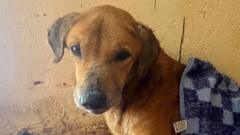
The notification pings at 2:00 AM. You are scrolling in the dark, seeking a hit of dopamine or a distraction from the day's stress, when the image appears. It is a Golden Retriever puppy, ribs jutting out like the teeth of a comb, huddled in a patch of red Ugandan dust. Its eyes are milky with infection. The caption is a frantic prayer for help. "We have no food. Max is dying. Please, just $10 saves him."
Your heart tightens. It is a physical sensation, a tug in the chest that feels like a moral mandate. You click the link. You send the money. You go to sleep feeling like a savior.
But Max doesn’t exist. Or rather, Max exists, but he is a prop. He is a biological asset in a sophisticated, cross-continental theater production designed to strip you of your empathy and your cash. This is the new frontier of the "Ugandan Dog Scam," a grift so cynical it turns the world’s most vulnerable creatures into tools for digital panhandling.
The Architecture of the Grift
To understand how this works, we have to look past the puppy’s eyes and into the logistics of the scammer’s "office." Usually, this is a cramped room in a bustling suburb of Entebbe or Kampala. There is no kennel. There is no vet. There is only a smartphone and a collection of stolen photos.
The scammers operate in networks. They don't just post a single photo; they build entire sagas. Consider a hypothetical scenario—let’s call our actor "Kato." Kato knows that a one-off photo of a sick dog might earn $20. But a narrative of a sick dog? That is worth thousands.
Kato starts by creating multiple social media accounts—Instagram, X, and TikTok are the preferred stages. He follows thousands of animal lovers in the United States, the UK, and Australia. He waits for them to follow back. Then, the "rescue" begins. He posts a video of a dog he found in a gutter. He gives it a name. He films himself pouring a little water into a plastic bowl.
The money begins to pour in.
The brilliance—and the horror—of the scam lies in its persistence. Kato doesn't stop once the dog is "saved." He invents a secondary crisis. The dog has parvovirus. The landlord is evicting the rescue. The local police are threatening to cull the animals. Each crisis is a new "call to action."
The Stolen Faces of Compassion
The BBC’s investigation into these networks revealed a chilling layer of deception: the identity theft of the innocent. Scammers frequently "scrape" content from legitimate, struggling animal shelters in Eastern Europe or South America. They download videos of dogs being treated by actual vets and re-upload them as if the events are happening in Uganda.
They use AI tools to scrub watermarks or voice-over the original audio with a local accent. When you see a video of a puppy being bandaged, you aren't seeing a rescue in progress. You are seeing a ghost. You are watching a digital recording of an event that happened years ago, thousands of miles away, while the actual dog in the scammer's possession sits in a hot crate, waiting for the next "content shoot."
This isn't just about the money. It’s about the erosion of truth. When the scam is eventually exposed, the victim doesn't just lose $50. They lose their faith in the possibility of doing good. They stop giving to the real shelters—the ones actually scraping mud off their boots in the middle of the night to save a stray. The scammers aren't just stealing dollars; they are poisoning the well of global altruism.
The Red Flags We Choose to Ignore
Why do we fall for it? Because we want to believe. We live in a world that feels increasingly cold and uncontrollable. Saving a dog through a screen offers a rare, tangible sense of agency. We want to be the hero in the puppy’s story.
If we look closely, however, the seams of the narrative start to fray.
- The Payment Tunnel: Scammers will almost always steer you toward untraceable payment methods. They avoid registered 501(c)(3) platforms or official crowdfunding sites with buyer protection. They want Friends & Family transfers on PayPal, or direct wire transfers.
- The Scripted Crisis: The emergencies happen with the regularity of a heartbeat. If a rescue is perpetually on the brink of total collapse every Tuesday for six months, it isn't a rescue. It’s a subscription service for guilt.
- The Video Loop: If you ask for a specific, real-time proof—like holding a piece of paper with today’s date next to the dog—the tone shifts. They become aggressive. They accuse you of being "heartless" or "letting the dog die" because you dared to ask for verification.
The Human Cost of the Prop
There is a darker side to this that rarely makes the headlines. To keep the donations coming, the dogs must look miserable. A healthy, happy, wagging dog is a bad investment for a scammer.
Investigation into these rings has found evidence of "staged suffering." Dogs are intentionally kept in poor conditions to ensure they look "camera-ready" for a plea. They are denied medical care because a healed dog means the end of the revenue stream. In the most extreme cases, animals are swapped out. When one dog becomes too healthy or, conversely, dies from neglect, the scammer simply finds another that looks vaguely similar and continues the story under the same name.
This is a parasitic relationship. The scammer feeds on the empathy of the Western donor, and the dog is the host. Neither the donor nor the animal gets what they were promised.
The Psychology of the "Hook"
Psychologists refer to this as "Identifiable Victim Effect." We are statistically more likely to give money to save a single, named individual than we are to give to a large-scale cause that could save thousands. Kato knows this instinctively. He doesn't ask you to solve "Uganda's stray problem." He asks you to save "Cooper."
He uses language that mirrors a hostage situation. "If we don't reach the goal in two hours, the vet will stop treatment." This creates a "hot" emotional state where the rational brain—the part that says Wait, why is a vet in rural Uganda charging in US dollars via a personal PayPal account?—shuts down.
The scammers also exploit the power of the "Social Proof." They create hundreds of fake accounts to comment on their own posts. "I just sent $100! God bless you for this work!" When you see a dozen other people trusting the source, your internal alarm system goes quiet. You assume someone else has done the vetting.
Reclaiming the Act of Giving
So, how do we fix a broken heart? We don't stop giving. That would be the final victory for the scammers. Instead, we change the way we see the screen.
True rescue is boring. It is paperwork. It is government registration. It is long-term partnerships with local veterinarians whose clinics can be found on Google Maps. It is transparent accounting.
If you want to help animals in Africa, look for organizations with a "boots on the ground" history. Look for those who focus on spay and neuter programs—the unglamorous, non-viral work that actually ends the cycle of suffering. Look for charities that are audited.
The next time you see that 2:00 AM post, the one that makes your breath catch and your thumb hover over the "Send" button, stop. Take a breath. Look past the ribs and the sad eyes.
Real compassion requires more than a credit card; it requires the courage to look for the truth behind the lens. The puppy in the dust deserves better than to be a prop in a digital play. And you deserve to know that your kindness actually reached the soul you intended to save.
The light from your phone is a powerful thing. Use it to illuminate the truth, not to fund the shadows.
The dust in Kampala is real, and the dogs there are truly suffering. But the man behind the keyboard isn't holding a leash; he's holding a script. It’s time to stop playing our part.