The removal of fax-based communication between the Hong Kong Police Force (HKPF) and the Fire Services Department (FSD) represents more than a simple hardware upgrade; it is a structural elimination of asynchronous data bottlenecks that have historically compromised the "Golden Hour" of emergency response. While the public views fax as a relic of the 1990s, its persistence in public safety sectors globally stems from a perceived legal audit trail and the physical air-gapping of sensitive data. However, the transition to the Digital Emergency Communications Link (DECL) indicates a shift toward a unified, synchronous data architecture designed to resolve the inherent latency and high error rates of analog-to-digital translation.
The Architecture of Latency: Why Fax Fails in Critical Paths
To understand the necessity of this shift, one must deconstruct the communication flow of a joint-departmental emergency. When a 999 call requires both police and medical/fire intervention, information must be mirrored across departments. Under the legacy system, this mirror was often achieved via fax.
The cost function of faxing in an emergency is defined by three primary variables:
- Serialization Delay: Information exists digitally in the HKPF dispatch system. To send a fax, that data must be rendered into a static image, transmitted over a voice-grade line, and then re-interpreted—often manually—by a recipient at the FSD. This creates a "dead zone" where data is neither searchable nor actionable.
- Transmission Collision: If the receiving machine is engaged or the line quality is poor, the transmission fails. In a high-volume crisis, such as a multi-vehicle accident or civil unrest, the probability of "line busy" signals increases exponentially with the number of concurrent reports.
- Manual Transcription Errors: The recipient must read the faxed text and manually input it into their localized Command and Control Centre (CCC) system. This introduces a 5% to 12% probability of typographical errors regarding addresses, license plate numbers, or chemical identification codes—errors that can lead units to the wrong location.
The Three Pillars of the Digital Emergency Communications Link (DECL)
The replacement system, the DECL, moves the HKPF and FSD into a shared data environment. This transition optimizes the response via three specific mechanisms:
I. Data Atomicity and Synchronization
In the new framework, data is "atomic." When an operator at the HKPF CCC enters a location, that specific data point is updated in real-time across the FSD’s terminals. There is no "sending" or "receiving" in the traditional sense; rather, both departments are subscribing to a live, shared state. This eliminates the 30 to 90 seconds required to dial, handshake, and transmit a physical fax page.
II. Geospacial Mapping Integration
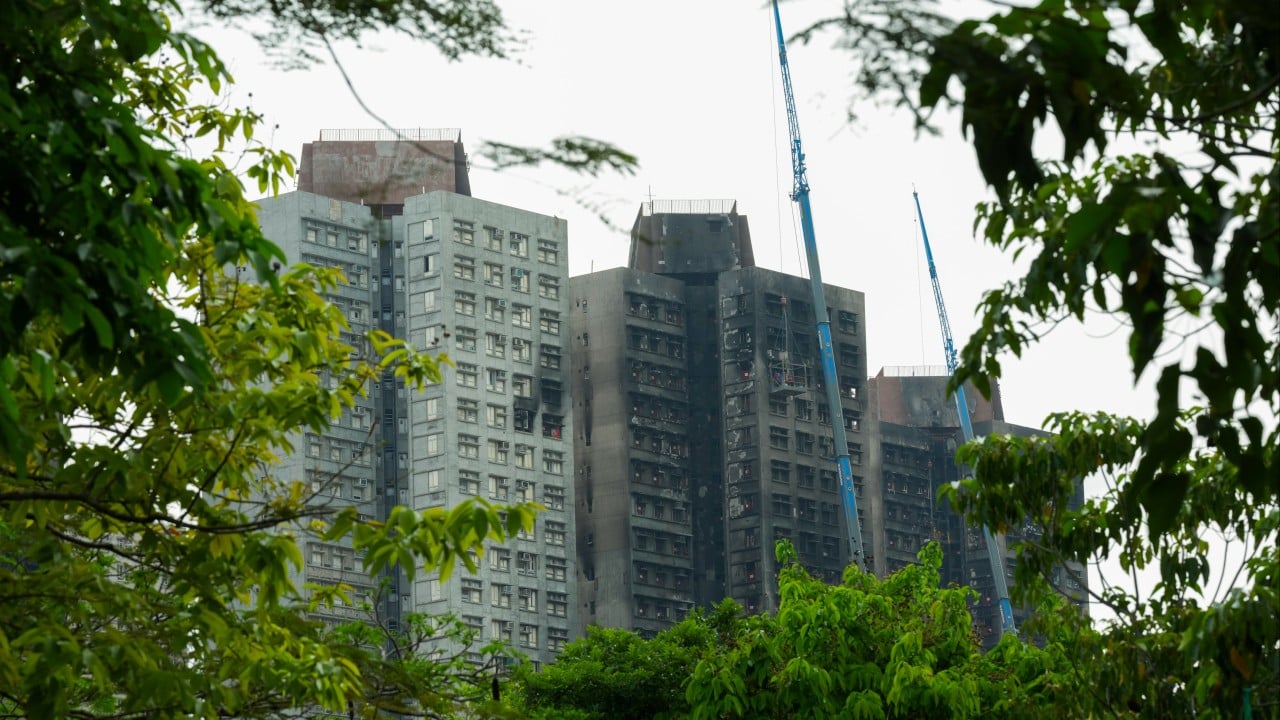
Legacy fax systems provide text-based locations. The DECL allows for the instantaneous transfer of GIS (Geographic Information System) coordinates. In a city as vertically and horizontally dense as Hong Kong, the distinction between a street-level incident and one occurring on a specific floor of a high-rise is critical. Digital packets carry metadata—GPS coordinates, building floor plans, and hydrant locations—that an analog fax cannot support.
III. Automated Resource Allocation
By digitizing the link, the departments can leverage automated logic. If the HKPF logs a "Type 4" fire, the system can automatically suggest the nearest FSD assets based on live AVL (Automatic Vehicle Location) data. The fax system functioned as a notification tool; the digital system functions as a coordination engine.
Structural Impediments to Digital Transformation
The delay in retiring fax machines in Hong Kong—and globally—is rarely a result of technological ignorance. It is a byproduct of two specific institutional requirements: Non-repudiation and System Resilience.
The Audit Trail Requirement
In legal proceedings, a fax confirmation slip has historically served as a "hard" proof of receipt. It provides a timestamp and a physical artifact. Transitioning to a digital link requires a robust logging system that can withstand the scrutiny of a Coroner’s Court or a Commission of Inquiry. The DECL must implement cryptographically signed logs to ensure that no department can claim they "never received the packet."
Hardened Infrastructure vs. Network Dependence
Fax machines operate over the Public Switched Telephone Network (PSTN), which often remains functional even when data networks or internet service providers experience outages. The risk of moving to a fully digital link is the "Single Point of Failure" (SPOF). If the fiber-optic backbone connecting the CCCs fails, the departments lose their primary communication channel. To mitigate this, the HKPF and FSD must maintain redundant paths—likely utilizing a combination of dedicated government fiber, encrypted microwave links, and satellite failovers.
The Operational Impact: Quantifying Time Savings
While the government has not released specific internal benchmarks, industry standards for Emergency Medical Services (EMS) indicate that removing manual data entry stages reduces "Turnout Time" (the interval between the call being received and the vehicle departing) by an average of 18 to 25 seconds.
In the context of cardiac arrest or a flashover fire, a 20-second reduction is statistically significant.
$T_{total} = T_{call} + T_{dispatch} + T_{turnout} + T_{travel}$
By optimizing $T_{dispatch}$ through digital synchronization, the departments are attacking the only variable in the equation that is purely administrative and not restricted by physical traffic or human movement.
Systemic Risks of the Digital Transition
A critical analysis must acknowledge that digital systems introduce new failure modes.
- Data Overload: Unlike a fax, which is a discrete event, a live digital stream can overwhelm dispatchers with constant updates. Proper UI/UX design is required to ensure that high-priority changes (e.g., "Suspect is armed") are highlighted while low-priority updates do not distract.
- Cybersecurity Surface Area: A fax machine is difficult to "hack" in the modern sense. A networked, inter-departmental link creates a new vector for lateral movement. If the HKPF network is compromised, the FSD network is now at higher risk due to the DECL connection. This necessitates a "Zero Trust" architecture where every data packet is verified regardless of its origin.
Strategic Implementation Pathway
The retirement of the fax is the first stage in a broader integration of the "Smart City" infrastructure into public safety. The logical progression following the DECL implementation involves the integration of the following:
- IoT Sensor Feeds: Directly piping data from building fire sensors or CCTV into the shared digital link.
- Public Data Crowdsourcing: Allowing 999 callers to upload video or photos that are instantly viewable by both Police and Fire commanders through the same synchronized link.
The shift is not merely about "stopping faxes." It is about moving from a culture of Information Transfer (where data is handed off like a baton) to a culture of Information Visibility (where data is a shared resource).
The success of this transition will be measured not by the removal of the machines, but by the reduction in cross-departmental radio traffic. As the digital link becomes the "single source of truth," the need for verbal confirmation of fax receipts disappears, freeing up radio bandwidth for tactical, on-scene coordination. The departments must now focus on rigorous stress-testing of the redundant data paths to ensure that the increased speed of a digital system does not come at the cost of the absolute reliability that the old analog lines provided.