Dianna Russini just hit a wall. A body camera wall, to be exact.
For months, the former star NFL reporter for The Athletic has been a central figure in sports media gossip. Most of that heat stemmed from tabloid photos showing her with New England Patriots head coach Mike Vrabel at a resort in Sedona, Arizona. That scandal led to her abrupt resignation in April. But a newly leaked piece of police bodycam footage from a January traffic stop in Ridgewood, New Jersey, exposes something much uglier than personal drama. It lays bare the toxic reality of modern access journalism.
If you follow sports media, you probably heard the fun story Russini told on the Stugotz and Company podcast in February. She recounted getting pulled over for texting behind the wheel. According to her, she told the officer she was merely trying to break a massive scoop about Buffalo Bills coach Sean McDermott being fired. When that failed to move the officer, she asked about his favorite team, called up that head coach on FaceTime, and had the coach tell the officer she was a "good citizen."
It was a great story. It made her look connected, powerful, and untouchable.
Except it never happened.
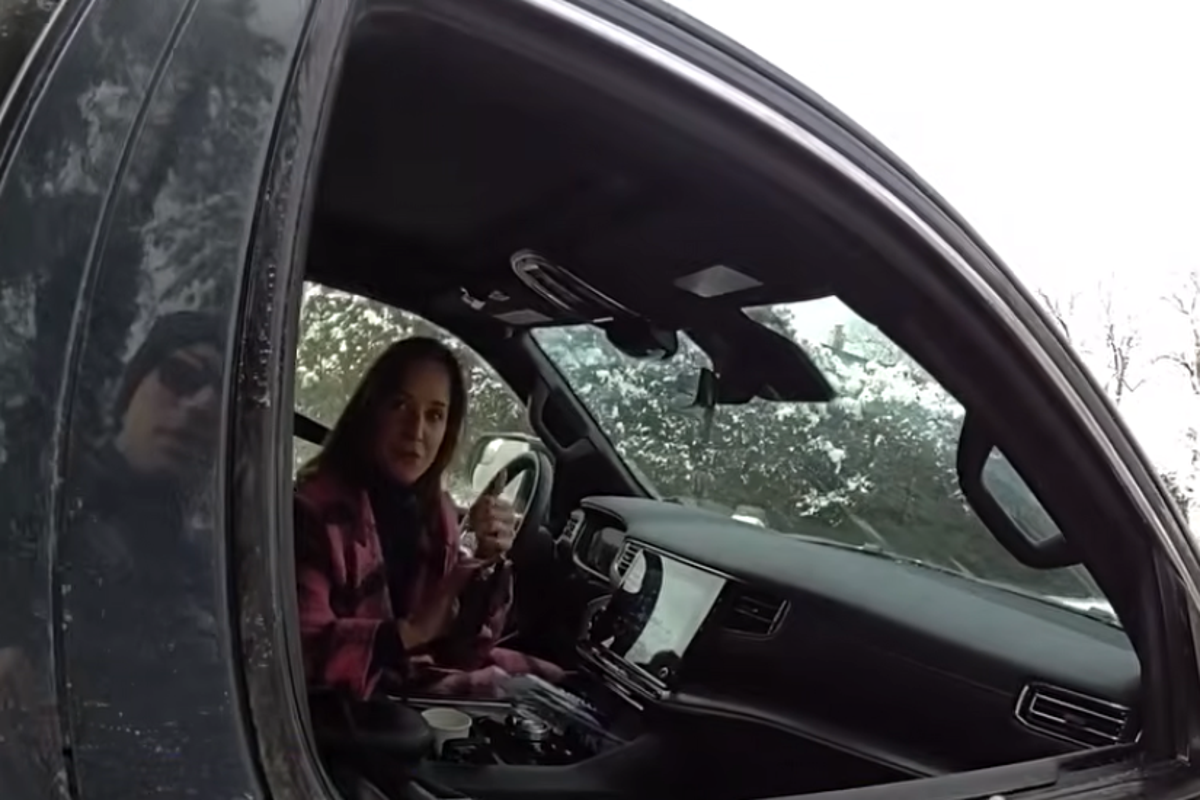
On Monday, police bodycam footage obtained by investigators revealed that Russini fabricated the most memorable part of her tale. There was no live video call. There was no coach vouching for her citizenship. Instead, the footage shows something far more cringeworthy: a desperate attempt to weaponize insider information to avoid a moving violation.
Breaking Down the Real Bodycam Transcript
The actual interaction on January 19, 2026, on Godwin Avenue looks nothing like the high-powered flex Russini described to her podcast friends. The seven-minute video shows a standard traffic stop that quickly devolves into a masterclass in name-dropping.
When the Ridgewood police officer approaches her car and asks for her license and registration, Russini immediately tries to shift the narrative. She doesn't just hand over her papers. She introduces herself as an NFL journalist and claims she was in the middle of tweeting out a major story about the Buffalo Bills.
Then comes the real insider trading.
"You know who I was on the phone with? Brian Daboll," Russini tells the officer, referencing the former New York Giants head coach. "He wants the job."
Think about that for a second. She is dangling active NFL coaching carousel gossip in front of a local cop to build rapport. When she realizes the officer isn't biting on the New York teams, she pivots. She asks if he is a Giants or Jets fan.
The officer responds that he is a Minnesota Vikings fan, adding a sigh and a tired "unfortunately."
That is when Russini plays her hand. She doesn't FaceTime anyone. She unlocks her phone, opens a message thread, and thrusts it toward the officer's face. It is a text conversation with Vikings head coach Kevin O’Connell.
The officer looks at the screen. "Oh my god, KOC?" he asks.
"Look what I said to him, though, just now," Russini urges. "Go to the bottom."
The officer reads it and smiles. "Oh my god. Wow. Pretty cool!"
Russini follows up with a quick compliment for the coach before insulting the team the officer loves. "KOC's awesome," she says, before dropping a blunt line: "Your quarterback sucks, though."
The cop shrugs it off. "Yeah, he’s gotta fix it."
The officer ultimately lets her go with a verbal warning, advising her to wait until she gets home to use her phone. The Ridgewood Police Department later issued a statement explaining that the officer used standard professional discretion based on her clean driving history. But the damage to Russini’s credibility was already done.
The Fiction vs The Reality
| What Russini Claimed Happened | What the Bodycam Actually Shows |
|---|---|
| She FaceTimed an NFL head coach from her car. | She showed the officer a text thread on her screen. |
| The coach talked directly to the officer. | The coach had no idea the stop was happening. |
| The coach told the cop she was a "good citizen." | Russini gossiped about Brian Daboll and insulated J.J. McCarthy. |
| It was a harmless, funny story about elite media access. | It was a clumsy attempt to trade NFL secrets for a legal pass. |
Why the Lie Matters for Sports Journalism
It is easy to dismiss this as a minor embellishment. People stretch the truth on podcasts all the time to sound more interesting. But Russini wasn't just a casual storyteller. She was one of the highest-paid sports journalists in the country, pulling down an annual salary close to $800,000 at The Athletic. Her entire professional brand was built on trust, accuracy, and unprecedented access to the most powerful men in professional football.
When an elite reporter gets caught manufacturing a detailed story out of whole cloth, it invalidates her entire body of work. If she lies about something as easily verifiable as a police encounter, how can readers trust her reporting on multi-million dollar contracts, front-office firings, or locker room chemistry?
Worse, the story wasn't just a podcast blip. The New York Times, which bought The Athletic for $550 million in 2022, actually included the FaceTime anecdote in a massive investigative feature about Russini just last week. The paper of record printed her fiction as fact because she looked them in the eye and repeated the lie.
The Times reporter didn't have the bodycam footage at the time. Now that it is out, the publication is facing a massive embarrassment. They ran a colorful anecdote that turned out to be a total fraud.
The Ethics of Source Exploitation
The real issue here goes beyond the lie itself. It highlights a massive ethical blind spot in how modern NFL insiders operate.
Journalists are granted access to NFL coaches, general managers, and players to inform the public. That access is a privilege, not a personal shield. Using a text thread with Kevin O'Connell as a get-out-of-jail-free card is an egregious abuse of that privilege.
Think about the position this puts Kevin O'Connell in. He exchanges texts with a prominent reporter under the assumption that they are discussing football business. He has no idea his private messages are being flashed to a police officer on the side of a New Jersey highway to help that reporter avoid a fine for distracted driving. It is cheap, unprofessional, and entirely selfish.
The Broader Collapse of an $800,000 Career
This traffic stop scandal does not exist in a vacuum. It is the second major blow to Russini's career in less than three months.
Back in April, her world unraveled when photos emerged of her holding hands, hugging, and dancing on a rooftop with Patriots coach Mike Vrabel at a luxury resort in Sedona. Both Russini and Vrabel were married to other people. The optics were disastrous. It shattered the necessary boundary between an objective reporter and the high-profile source she was tasked with covering.
The Athletic initially backed her, claiming the photos lacked essential context. They launched an internal investigation to ensure her reporting hadn't been compromised. But Russini didn't wait for the findings. She resigned before the probe could finish, claiming she had no interest in submitting to a public inquiry. Her contract was set to expire on June 30, 2026. She walked away early to escape the heat.
Now we see that the internal review at The Athletic has even more ground to cover. The company brass is reportedly looking for other instances where Russini might have crossed ethical lines or manufactured narratives to boost her status.
The Price of Access Culture
NFL insider culture has become an arms race. Reputations are built entirely on who can tweet a draft pick or a coaching hire thirty seconds before anyone else. To get those crumbs of information, reporters have to embed themselves deeply within the lives of coaches and executives.
But when you get that close, the lines blur. You start thinking of these coaches as your personal friends or, worse, your personal assets. You use their names to impress people at bars. You use their text messages to intimidate or charm local police officers. You lose the perspective required to do the job honestly.
What Happens Next for Sports Media Consumers
If you are a fan who consumes NFL news daily, you need to change how you read scoops. The era of blindly trusting the all-knowing insider is over.
When you see a breaking news tweet, ask yourself what the reporter traded to get that information. Did they hold back a negative story about a coach to get the exclusive on a free-agent signing? Did they use their relationship to protect someone who deserved criticism?
The Dianna Russini saga is a cautionary tale for the entire industry. It proves that when access becomes a currency, the truth is usually the first thing that gets deflated.
Stop treating sports insiders like rock stars. Demand transparency. Look closely at the boundaries they maintain with their sources. If a reporter is willing to trade a coach's privacy to avoid a simple traffic ticket, they will trade anything.