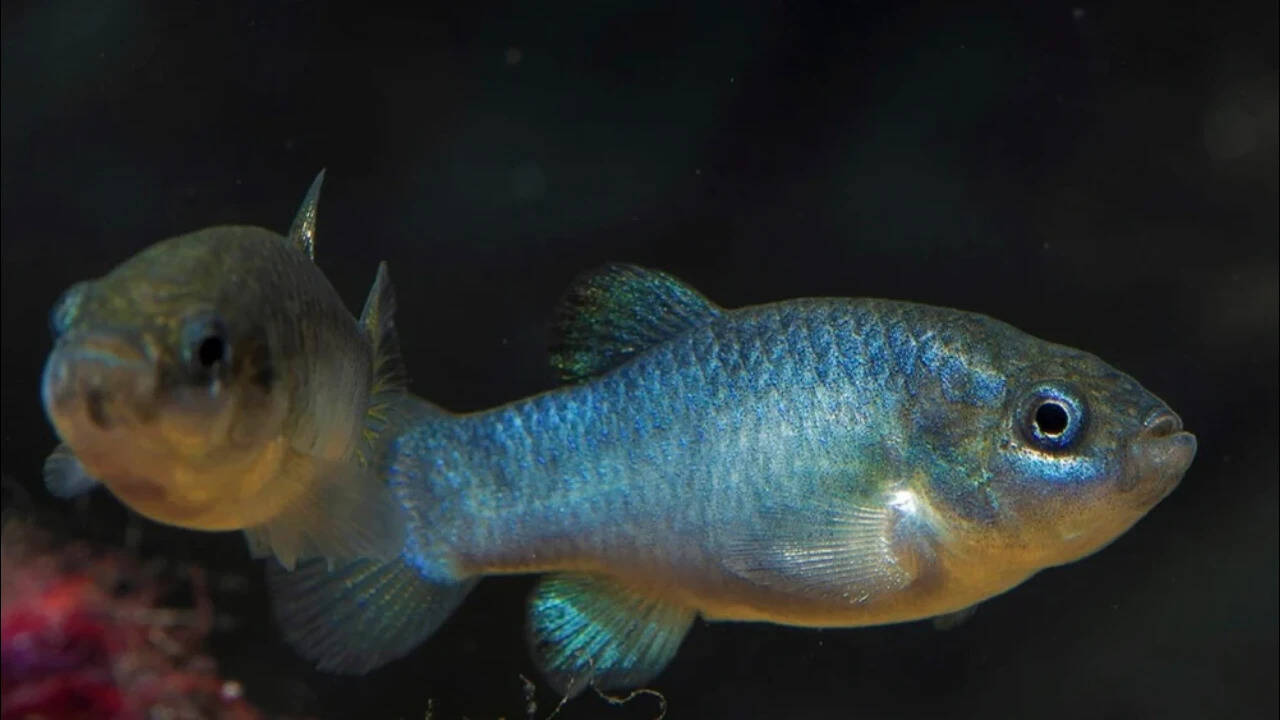
A single autumn count of 137 Devils Hole pupfish (Cyprinodon diabolis), up from 69 the prior fall, represents a 98.55% year-over-year population expansion—yet treating this figure as an unqualified ecological victory misreads the structural fragility of single-habitat endemism. In conservation biology, raw headcount increases in hyper-restricted populations often mask extreme demographic volatility. The Devils Hole pupfish occupies the smallest known geographic range of any vertebrate species on Earth, confined entirely to a limestone cavern in Nevada’s Mojave Desert. Analyzing this rebound requires separating short-term stochastic recovery from long-term carrying capacity limits, isolating the physical variables that govern survival in an extreme thermal environment, and evaluating the operational interventions required to prevent a subsequent collapse.
The Structural Constraints of Single-Habitat Endemism
Standard wildlife management models assume spatial redundancy. When a species spans multiple watersheds or fragmented patches, localized disturbances—such as flash floods, thermal spikes, or algal die-offs—trigger metapopulation dynamics where surrounding subpopulations recolonize depleted zones. Cyprinodon diabolis operates with zero spatial redundancy. The entire wild population exists within a single geothermal aquifer system inside a detached unit of Death Valley National Park.
This geography creates an acute bottleneck defined by three rigid physical parameters:
- The Shallow Shelf Constraint: While the subterranean cavern plunges over 400 feet into the aquifer, the pupfish depend almost entirely on a sunlit limestone shelf measuring roughly 11 by 16 feet near the water's surface. This shelf is the sole zone receiving sufficient solar radiation to drive photosynthesis, support algal growth, and maintain the invertebrate food web required for spawning and larval development.
- Thermal Equilibrium Limits: Geothermal heating holds the water at a constant 92°F to 93°F (33°C to 34°C). This temperature sits near the upper lethal thermal limit for teleost fish, forcing the pupfish to maintain an elevated basal metabolic rate. High metabolic demand paired with low dissolved oxygen saturation—a direct physical consequence of warm water—leaves virtually no physiological buffer against caloric deficits.
- Genetic Homogeneity: Having been isolated in Devils Hole for an estimated 10,000 to 20,000 years following the desiccation of Pleistocene lakes, the species exhibits severe genetic bottlenecks and high levels of inbreeding. While purging of deleterious recessive alleles has allowed persistence, the lack of standing genetic variation limits adaptive capacity if environmental parameters shift rapidly.
Because the physical dimensions of the spawning shelf remain static, the carrying capacity of Devils Hole is tightly capped. Historically, autumn counts in the 1970s and 1980s routinely reached 400 to 500 individuals before a multi-decade decline pushed the population to a record low of 35 fish in spring 2013. A jump from 69 to 137 fish moves the population away from immediate extinction thresholds, but it remains roughly 70% below historical baseline capacity.
Deconstructing the Bi-Annual Census Methodology
Evaluating population trends in Devils Hole requires understanding how biologists generate the data. Unlike open-water fisheries that rely on mark-recapture tagging or trawling—methods that would cause unacceptable physical trauma and habitat disturbance in a fragile limestone pool—researchers execute direct visual censuses twice annually, in spring and autumn.
This bi-annual cadence captures the fundamental seasonal oscillation of the ecosystem:
- The Spring Baseline: Conducted in April, the spring count measures overwinter survival. During winter months, the steep canyon walls of Devils Hole block direct sunlight from reaching the water surface. Photosynthesis halts, algal mats senesce, and primary productivity crashes. The fish survive on stored lipids and scarce detritus, causing natural attrition. Spring numbers consistently represent the annual demographic floor.
- The Autumn Peak: Conducted in September or October, the autumn count captures the cumulative output of the summer reproductive window. Direct overhead sunlight returns in late spring, triggering rapid algal blooms and an explosion of amphipods, ostracods, and flatworms. Fueled by abundant calories, adult pupfish spawn continuously across the shallow shelf, driving population numbers to their annual ceiling.
The census protocol itself combines surface observation with subterranean scuba surveys. Surface observers tally fish on the sunlit shallow shelf, where the majority of feeding and spawning occurs. Simultaneously, certified cave divers descend into the upper 100 feet of the cavern to count individuals suspended in the deeper water column, ensuring fish are not double-counted across the vertical gradient.
Comparing autumn-to-autumn figures—69 in the previous fall versus 137 in the current fall—controls for seasonal variance. The near-doubling indicates that summer recruitment and juvenile survival rates outperformed the prior cycle by a wide margin. However, isolated year-over-year comparisons in r-selected or short-lived species (Devils Hole pupfish typically live only one year) reflect immediate environmental favorability rather than permanent structural stabilization.
The Three Drivers of the 98.5% Surge
When a closed population nearly doubles within twelve months, the causal chain traces back to energy availability, reproductive synchrony, and mortality suppression. Based on established ecological mechanics in Devils Hole, three primary variables govern this magnitude of expansion.
1. Primary Productivity and Algal Mat Integrity
The trophic foundation of Devils Hole rests on green algae and cyanobacteria coating the shallow shelf. In years when seasonal solar angles align with stable water chemistry and minimal physical disruption, algal biomass thickens rapidly. This creates a dual benefit: direct caloric intake for omnivorous adults and physical interstitial shelter for newly hatched larvae. Adult pupfish are opportunistic cannibalists; dense filamentous algae physically obscures eggs and fry from adult predation, directly increasing larval recruitment into the autumn adult cohort.
2. Hydrological and Seismic Stability
Devils Hole acts as a natural seismograph. Because the cavern connects to an extensive regional carbonate aquifer, distant earthquakes—even those occurring thousands of miles away in Alaska, Japan, or Chile—generate seiches, or standing waves, within the pool. A violent seiche sloshes water across the shallow shelf, scouring away fragile algal mats, crushing adhesive eggs against limestone, and flushing larvae into the aphotic depths where they starve. An absence of major seismic sloshing events during the critical spring-to-summer spawning window preserves the substrate intact, allowing uninterrupted cohort accumulation.
3. Supplemental Feeding and Predator Suppression
Biologists from the National Park Service, U.S. Fish and Wildlife Service, and Nevada Department of Wildlife actively manage the caloric deficit through targeted supplemental feeding. By introducing measured quantities of commercial fish food and spirulina-based pellets, managers artificially elevate the energy ceiling of the system without triggering eutrophication or fouling the closed water column. Concurrently, active monitoring and removal of invasive terrestrial predators—specifically predaceous diving beetles (Neoclypeodytes cinctellus), which colonized the pool in the late 1990s and prey heavily on pupfish eggs and larvae—eliminates a major source of early-life-stage mortality.
Known Facts Versus Working Hypotheses
Rigorous ecological analysis requires drawing a hard boundary between empirical measurements and theoretical explanations.
Established Facts:
- The autumn visual census recorded 137 pupfish, up from 69 the prior autumn.
- Cyprinodon diabolis exists naturally in only one location on Earth, with a reproductive zone restricted to a shallow rock shelf roughly 11 by 16 feet.
- Water temperatures remain stable around 92°F to 93°F, imposing extreme metabolic costs and limiting dissolved oxygen.
- Groundwater pumping in the surrounding Amargosa Desert during the late 1960s and 1970s lowered the water table in Devils Hole, exposing the spawning shelf and triggering a landmark 1976 U.S. Supreme Court ruling (Cappaert v. United States) that established federal reserved water rights to maintain minimum water levels.
Working Hypotheses:
- The Epigenetic Bottleneck Hypothesis: While the species exhibits minimal classical DNA sequence variation, researchers hypothesize that phenotypic plasticity and epigenetic regulation allow the fish to adjust metabolic efficiency in response to rapid temperature or oxygen fluctuations. This remains under active investigation rather than proven certainty.
- The Nutrient Cycling Threshold: While supplemental feeding correlates with higher counts, the exact threshold at which added organic matter shifts from boosting invertebrate prey to causing toxic ammonia spikes or anoxic bacterial blooms on the shelf is modeled rather than fixed. Managers operate within conservative dosing margins to avoid triggering a self-inflicted water quality collapse.
- Long-Term Climate Aquifer Lag: Regional climate models project rising ambient air temperatures and altered precipitation patterns across the Mojave Desert. While air temperature spikes alter surface evaporation and micro-stratification on the shelf, the multi-decade lag time between reduced mountain snowpack recharge and deep carbonate aquifer water levels remains an unquantified risk factor.
Operational Risks and Management Limitations
Conservation interventions in Devils Hole operate on a razor's edge. Every management tool carries asymmetric downside risks.
The Captive Propagation Trap
To hedge against total extinction in the wild, agencies constructed the Ash Meadows Fish Conservation Facility, a 100,000-gallon refuge tank engineered to replicate the exact temperature, water chemistry, and shelf geometry of Devils Hole. While this facility serves as a critical genetic ark, captive propagation introduces domestication selection. Over multiple generations in an artificial tank—even one meticulously modeled on the wild habitat—selective pressures shift. Fish adapted to tank feeding schedules and predator-free environments lose wild foraging behaviors and morphological traits. Reintroducing captive-bred individuals into Devils Hole risks diluting the wild gene pool with maladapted traits, meaning the refuge functions best as an emergency backup rather than a routine population subsidy.
Groundwater Enforcement Friction
The 1976 Supreme Court mandate protects the water level in Devils Hole from local agricultural pumping, yet the regional aquifer spans thousands of square miles across Nevada and California. Adjudicating water rights against expanding solar energy developments, municipal growth, and agricultural demands in the broader Amargosa Basin requires continuous hydrological modeling and legal enforcement. A drop of even six inches in the Devils Hole water level exposes large percentages of the sloped limestone shelf, instantly slashing spawning acreage.
Over-Intervention Hazard
Intensive management—frequent diver entries, automated sensor arrays, manual beetle trapping, and pellet feeding—introduces physical disturbance into a closed ecosystem. Divers inevitably kick up fine silt that settles over eggs, while nutrient additions alter microbial communities. Managers must constantly balance the immediate gain of saving an individual cohort against the cumulative degradation of the natural substrate.
Strategic Framework for Sustaining the Recovery
Translating a single-year surge of 137 fish into durable species survival requires shifting management focus from short-term headcount maximization to structural resilience. Conservation teams must execute three sequential priorities:
- Enforce Strict Caloric Dosing Controls: Maintain supplemental feeding protocols tied strictly to real-time dissolved oxygen and ammonia telemetry rather than static calendar schedules. Feeding should taper immediately during peak summer algal blooms to prevent nutrient overshoot, reserving artificial inputs strictly for late-winter bottlenecks when natural primary productivity hits zero.
- Automate Non-Invasive Monitoring: Replace high-disturbance physical interventions with fixed underwater optical arrays and environmental DNA (eDNA) sampling. Continuous automated video tracking across the shallow shelf can quantify spawning frequency, larval survival rates, and beetle predation density without requiring divers to enter the water column outside the semi-annual census windows.
- Establish Regional Aquifer Buffer Zones: Utilize hydrological modeling to enforce strict drawdown moratoriums across the broader Amargosa Desert recharge zones. Protecting the 137 pupfish in the cavern requires locking down the regional groundwater table decades ahead of projected Mojave Desert aridification, ensuring the shallow limestone shelf remains submerged under every plausible climate scenario.