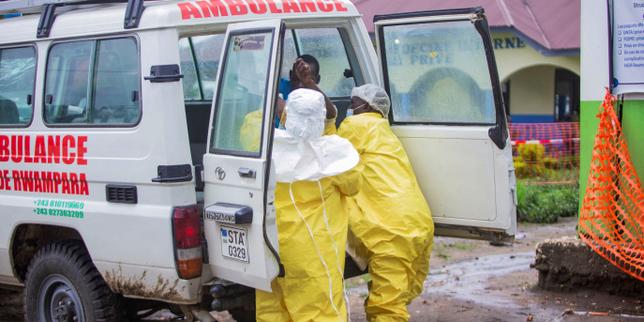
The Democratic Republic of Congo is fighting another deadly battle against Ebola. It is a script we have seen before, but this time the stakes are dangerously high. With more than 200 suspected deaths already logged, the virus is moving faster than the response teams on the ground. This isn't just a localized crisis anymore. It is a regional threat that jeopardizes neighboring countries like Uganda, Rwanda, and South Sudan.
When an outbreak hits this scale, the traditional containment playbook starts to fracture. Health officials face a toxic mix of geometric virus spread, deep-seated community mistrust, and violent conflict in eastern DRC. If you think this is just a Congolese problem, you are misjudging how modern viral dynamics work. Borders in this region are highly porous. Thousands of people cross them daily for trade, family, and survival.
Understanding this crisis requires looking past the raw numbers. We need to look at why containment is failing and what needs to happen right now to prevent a repeat of the devastating West African epidemic of 2014.
The Reality Behind the 200 Suspected Deaths
The official tally of over 200 suspected deaths is almost certainly an underestimate. In dense forest regions and conflict zones, tracking every single chain of transmission is virtually impossible. Many individuals die in their communities without ever testing positive or seeing a doctor.
Ebola moves with terrifying speed. The virus causes severe hemorrhagic fever, vomiting, and diarrhea. It spreads through direct contact with bodily fluids. When a patient dies, their body is at its most contagious. This makes traditional burial practices a primary driver of new infections.
Ebola Transmission Cycle in Outbreak Zones:
[Animal Reservoir] -> [Patient Zero] -> [Family/Caregivers] -> [Traditional Burials] -> [Regional Spread]
Health workers are racing against time to map these contacts. For every confirmed case, there are often dozens of people who might have been exposed. If a single contact slips through the net and boards a motorbike taxi or a bus toward a major city, the containment zone collapses. This is exactly how a rural health scare transforms into a national emergency.
Why Bordering Nations Are on High Alert
The geography of eastern DRC is a nightmare for disease containment. Major trading hubs sit right on the edge of international borders. The World Health Organization has repeatedly warned that the risk of regional transmission is exceptionally high.
Take Uganda as an example. The border sees massive daily traffic. People cross to sell vegetables, visit markets, or seek safety from rebel groups. Screening protocols at official border posts—like taking temperatures and setting up handwashing stations—only catch the people who walk through the front door. They do not stop people using informal jungle paths to cross over.
South Sudan and Rwanda face similar vulnerabilities. South Sudan’s healthcare infrastructure is already fragile from years of internal instability. An introduction of Ebola into an environment like that could cause an absolute catastrophe. Epidemiologists know that a virus does not care about national sovereignty. It only cares about finding the next vulnerable host.
The Hidden Obstacles to Containing Ebola in DRC
Deploying vaccines and setting up treatment centers sounds straightforward on paper. In reality, the ground conditions in eastern DRC make it one of the most challenging environments on earth for medical interventions.
Active Conflict and Insecurity
You cannot track a virus when you are dodging bullets. Eastern DRC is home to dozens of active armed rebel groups. Armed militias routinely attack villages, displace thousands of families, and occasionally target health workers.
When violence erupts, medical teams have to pull out. This leaves Ebola treatment centers unstaffed and contact tracing paused. Every day the response stops, the virus gains ground. Displaced populations moving away from violence also carry the virus into new, previously unaffected communities.
Deep Mistrust of Medical Teams
Mistrust kills just as effectively as the virus. Decades of political marginalization have left local populations deeply skeptical of outside intervention. When teams dressed in white hazmat suits roll into a village in expensive SUVs, people get scared.
Rumors spread fast. Some communities believe that Ebola is a political invention to delay elections or steal resources. Others think the treatment centers are places where people go to die, rather than heal. This fear drives infected individuals into hiding, which guarantees the virus keeps spreading in secret.
What It Takes to Actually Stop the Spread
Defeating this outbreak requires changing the strategy. Relying solely on top-down medical directives from Geneva or Kinshasa will not work anymore.
First, community leadership must drive the response. Local chiefs, religious leaders, and trusted youth figures need to be the ones explaining the danger, not foreign doctors. When a community understands that safe burial practices save their own children, they adopt them willingly.
Second, real-time cross-border data sharing must improve immediately. Uganda, Rwanda, and DRC cannot operate in silos. If a suspected contact flees across the border, health authorities in the receiving country need to know before that person arrives at a crowded market.
Finally, ring vaccination strategies using the Ervebo vaccine must expand despite the logistics hurdles. The vaccine is highly effective, but keeping it at the required ultra-cold temperatures in tropical villages with no electricity is a massive challenge. It requires a flawless supply chain, solar-powered freezers, and immense physical stamina from the vaccination teams.
The window to contain this outbreak within the borders of the DRC is closing fast. Every single day of delayed funding, political bickering, or security lapses translates directly into more graves. International donors and regional governments need to treat this as an active global security threat, because that is exactly what it is.