Everybody loves a long-range fireworks show.
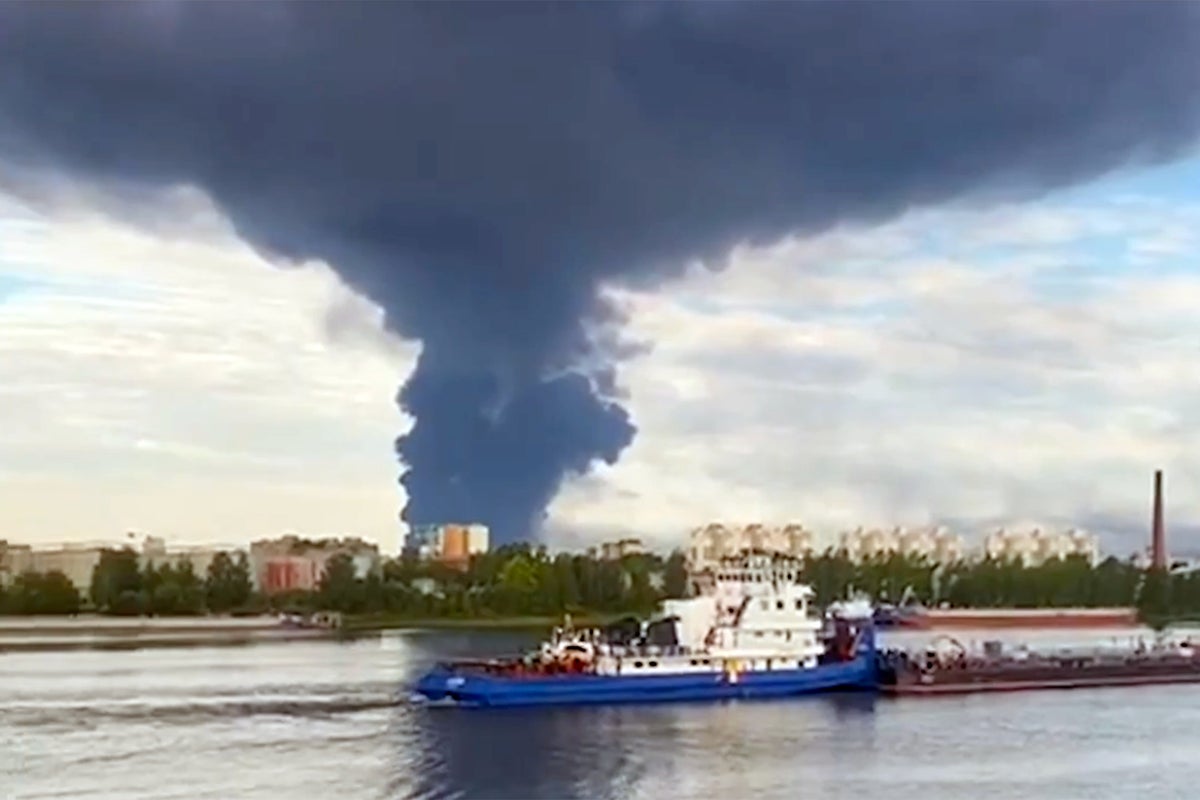
When headlines flash across screens announcing that a drone has flown over a thousand kilometers deep into Russian territory to strike an oil refinery, the armchair strategists cheer. The narrative writes itself: technology triumphs, geography shrinks, and the underdog lands a Hollywood blow against the Goliath. It feeds an immediate emotional craving for poetic justice.
It is also a profound strategic distraction.
I have spent years watching defense analysts, military planners, and media pundits obsess over distance metrics as if war were a long-drive golf competition. They track kilometers like fanboys tracking smartphone specs. Every time a drone hits a target thirteen hundred kilometers behind the frontline, the consensus goes wild. We are told this is the shift. We are told the deep strike is rewriting the rules of modern warfare.
They are missing the forest for a very expensive burning bush.
Let us dismantle the lazy consensus right now. Strategic impact is not measured by how far a projectile travels; it is measured by how permanently it alters the enemy's capacity to wage war. A theatrical fireball a thousand kilometers away feels monumental. Economically and logistically? It is often a mosquito bite on an elephant.
The Arithmetic of Inconvenience
To understand why extreme long-range strikes against distant refineries are largely tactical theater rather than strategic paralysis, you have to look at the cold, hard balance sheet of the Russian energy sector.
Russia is not a corner store running out of inventory. It is an energy superpower with vast, decentralized refining infrastructure. When a distillation column takes a hit thirteen hundred kilometers inside Russia, what actually happens?
Let us be precise. Refineries are industrial mazes of pipes, catalytic crackers, and control systems. Hitting them causes fires. Fires generate smoke, dramatic photography, and repair bills. But modern industrial plants are modular. Critical components can be patched, bypassed, or replaced. More importantly, Russia possesses excess primary distillation capacity. A drop in output at Plant Alpha simply shifts the crude allocation load to Plant Beta, or redirects crude exports directly to alternative buyers who do not care about Western sanctions.
Compare this to the expenditure required. Building, programming, and launching autonomous long-range platforms capable of navigating GPS spoofing, electronic warfare jamming, and air defense corridors over massive distances is an expensive proposition. Every dollar, microchip, and man-hour poured into building a super-long-range drone is a resource diverted from the immediate, grinding, existential battle playing out along the actual contact line.
We are witnessing a dangerous substitution effect. Planners choose the psychological satisfaction of a distant strike over the brutal, unglamorous math of artillery shell production, electronic warfare hardening, and trench-level attrition management. It is easier to sell a spectacular video of a burning refinery to domestic and international audiences than it is to account for the slow, bloody attrition of a mechanized brigade five kilometers from a contested railhead.
The Geography Fallacy
The fundamental flaw in the 1,300-kilometer obsession is a fundamental misunderstanding of geographic scale.
In a compact European nation, a strike deep behind enemy lines severs the nervous system of the state. Distance equals vulnerability. But Russia operates on a continental scale that defies standard European historical analogies. Depth is not a weakness for Moscow; it is an administrative sponge.
When you strike a target far to the east, you are attacking a system with immense strategic depth and redundancy. The logistics lines stretch, yes, but they also disperse. Centralized hubs can decentralize. Refineries can stockpile critical spares. Meanwhile, the political effect inside Russia is frequently the opposite of what Western observers hope for.
Instead of sparking a popular revolt or panicking the Kremlin into surrender, long-range civilian infrastructure strikes provide the Russian state apparatus with a gift-wrapped justification for total mobilization and internal security clampdowns. It shifts the public narrative from an unprovoked war of choice to a patriotic defense of the motherland against foreign-backed sabotage.
History is littered with the wreckage of strategists who believed that bombing civilians or industrial infrastructure far from the front would break national will. The Blitz didn't break Britain. The strategic bombing campaigns of World War II didn't collapse German war production until armies physically overran the factories on the ground. Airpower theorists have been promising cheap, bloodless victory from the skies for a century. It has never worked, and it is not working now.
What the Data Actually Shows
Let us look at the actual attrition metrics.
Fuel prices fluctuate locally. Refineries experience temporary downtime. But look at the macro-level export revenues and state budget resilience over the past few years. Despite waves of spectacular deep strikes, energy revenues continue to fund military procurement at a sustainable baseline. Why? Because global oil markets are fluid, fungible, and indifferent to where a barrel of crude was refined.
If a domestic refinery loses throughput, the crude simply seeks out export terminals that remain fully operational. The market reroutes. The state collects its tax. The war machine continues to grind forward.
Meanwhile, the defender is burning through finite foreign aid, specialized engineering talent, and electronic components that could have been used to manufacture thousands of first-person-view drones or electronic countermeasures for the frontlines where soldiers are actually dying by the thousands.
This is the dirty secret of asymmetrical warfare: sometimes asymmetry is just a fancy word for inefficiency.
The Real War is Close Up
If you want to understand where this conflict will actually be decided, stop looking at the horizon thirteen hundred kilometers away. Look three kilometers ahead of the trench line.
The real bottlenecks of modern high-intensity warfare are not found in distant industrial cities. They are found in the electromagnetic spectrum, supply chain security for basic propellants, barrel wear on artillery pieces, and the ability to train infantry faster than you lose them.
Every time military leadership diverts attention, funding, and talent toward high-profile stunts for the evening news, they are playing a PR game with tactical lives. Wars are won by logistics, mass, and staying power at the point of friction, not by Instagram-friendly explosions in remote oblasts.
The obsession with distance is a coping mechanism for people who cannot stomach the brutal reality of proximity.
Stop cheering for the fireworks. Start counting the shells that actually matter.