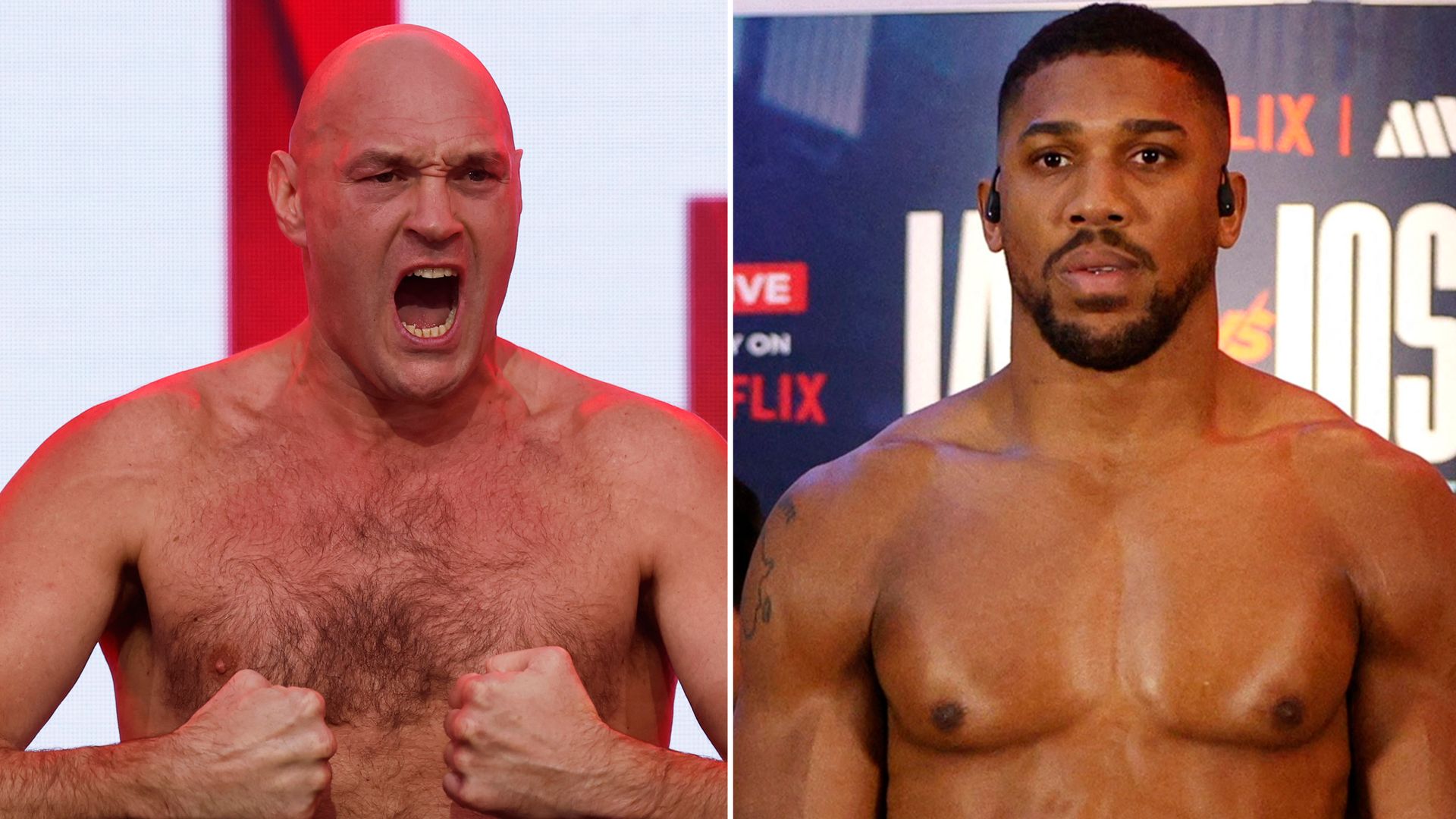
Commercial sports properties derive their enterprise valuation from scarcity, stylistic contrast, and prolonged narrative tension. When Tyson Fury and Anthony Joshua step into the ring at Cardiff's Principality Stadium on December 11, 2026, the event represents the delayed monetization of a decade-long promotional asset. Standard boxing analysis treats this matchup through the emotional lens of national pride or athletic redemption. A rigorous market evaluation requires stripping away promoter hyperbole to examine the economic architectures, distribution shifts, and physiological trade-offs governing a two-hundred-million-dollar enterprise.
The structural delay of this encounter over the past six years created a unique financial paradox. Ordinarily, elite combat sports assets depreciate rapidly past thirty-five years of age due to declining reflexes and accumulated neurological damage. However, the successive interventions of undisputed-class disruptions—specifically the dominance of Oleksandr Usyk—re-calibrated the division. By neutralizing both fighters' claims to pound-for-pound supremacy, losses to Usyk did not destroy their market value; rather, they compressed their competitive trajectories into a single high-stakes binary outcome. The market no longer prices an undisputed championship unification, but instead trades on terminal-value liquidity: a domestic grudge match insulated from belt politics.
The Distribution Arbitrage and Platform Economics
The transition of this bout to Netflix marks a foundational shift in live-event economics. Traditional pay-per-view distribution relies on a high-friction consumer purchase funnel designed to extract maximum upfront transaction fees from a niche audience. By embedding the broadcast into an existing subscription tier at no marginal cost to global members, the distribution model alters the revenue equation.
Mass-market streaming platforms optimize for subscriber acquisition, retention, and advertising inventory monetization rather than direct per-event ticket yields. This structural reality explains how promoters and corporate backers engineered a financial package exceeding historical benchmarks for British boxing. The economics depend on volume-driven engagement metrics. When a platform absorbs the distribution cost across hundreds of millions of global accounts, the financial floor for the fighters' purses is guaranteed by subscription amortization rather than volatile domestic purchase rates.
This shift also resolves a recurring friction point in modern fight promotion: piracy and market fragmentation. Traditional models penalize high-intent viewers with prohibitive pricing, which suppresses total addressable audience conversion. Netflix removes that barrier, turning a specialized sporting spectacle into a culturally inescapable consumer event. The platform buys cultural attention at scale, trading immediate transactional margin for long-term ecosystem lock-in.
Geographic Localization Versus Global Yield Optimization
A central tension in finalizing this fixture involved geographic placement. Corporate stakeholders, including Saudi Arabia's Sela and platform executives, initially modeled higher-yield returns in alternative markets such as Madison Square Garden in New York. Financial projections for foreign hosting rights typically outperform domestic box offices due to sovereign underwriting and luxury-tier ticket pricing.
Yet, Anthony Joshua and his promotional team forced a localized UK venue structure, accepting a lower absolute gross return to protect the integrity of the domestic asset. This decision highlights a core principle of sports strategy: audience proximity influences long-term brand equity. Staging the event under the closed roof of the Principality Stadium in Cardiff secures a captive, high-density live gate of eighty thousand spectators. The atmospheric amplification generated by an entirely partisan British crowd creates a superior media product. The visual and acoustic feedback loops of a packed Welsh stadium translate directly into higher engagement metrics for the streaming broadcast, proving that localized cultural authenticity can outweigh short-term geographic yield maximization.
Tactical Divergence and the Aging Kinetic Profile
Evaluating the athletic matchup requires analyzing the physical decline curves of both heavyweights. Tyson Fury at thirty-eight years old and Anthony Joshua approaching thirty-seven are operating past their peak physiological velocity. Anaerobic recovery times lengthen, and lateral mobility degrades. Consequently, the tactical parameters of the fight are dictated by damage mitigation and energy conservation.
Fury’s career architecture relies on spatial control, feints, and unorthodox rhythm disruption. In his recent outings, such as the tactical encounter against Arslanbek Makhmudov, Fury demonstrated an increasing reliance on upper-body movement and clinch-work to neutralize younger, explosive pressure fighters. His efficiency metrics rely on micro-adjustments in distance management. Against a conventional puncher like Joshua, Fury's objective will be to suppress the early-round tempo, turning the contest into a suffocating battle of attrition.
Joshua, conversely, operates under a reconstructed tactical framework established under recent training camp iterations. Moving away from the cautious, safety-first parameters that characterized his post-Ruiz career phases, Joshua's recent stoppage of Jake Paul and physical conditioning emphasize compact, heavy-handed punch delivery. His kinetic output is optimized for maximum damage within shorter offensive bursts.
The structural collision point occurs in the mid-rounds. If Joshua fails to establish a persistent jab to disrupt Fury's lateral entries, Fury will exploit the operational gaps in Joshua's defensive shell. However, if Joshua successfully cuts the ring and forces exchanges at close quarters, Fury's defensive liabilities against straight right hands will become acute. Both fighters carry the burden of past concussive losses, meaning defensive lapses will trigger immediate terminal consequences.
Operational Execution and Risk Management
Promoting an event of this magnitude involves complex risk mitigation across regulatory, legal, and operational vectors. The inclusion of a robust undercard—featuring cross-divisional bouts such as Deontay Wilder versus Jai Opetaia—serves a specific risk-management function for the broadcaster. By insulating the main event with high-variance championship contests, the promoters protect against audience churn in the event of an early tactical stalemate or a controversial decision in the headline act.
The regulatory environment in the United Kingdom imposes strict medical and licensing oversight, reducing the variable risks associated with poorly regulated international jurisdictions. Event logistics at the Principality Stadium require precise crowd-flow engineering, given the concentration of eighty thousand attendees entering a confined urban footprint under December weather conditions. Transport bottlenecks, security staffing ratios, and broadcast fail-safes form an intricate operational matrix that must execute without friction.
The strategic play for stakeholders is clear. The fight succeeds not because it arrives at the absolute zenith of both athletes' athletic primes, but because market exhaustion has driven demand to a tipping point where the financial return outweighs the competitive risk. Execution relies on maintaining narrative momentum through the final countdown, ensuring that the global streaming infrastructure handles concurrent load without latency spikes. The commercial machinery is primed; the outcome remains bound by the fragile physics of heavyweight combat.