Geopolitical chess games aren't supposed to cost the lives of innocent merchants. Yet, that's exactly what happened this week when three Indian mariners were killed in a US military strike in the Gulf of Oman. The incident has sent shockwaves through New Delhi, triggering a swift and uncharacteristically blunt diplomatic backlash.
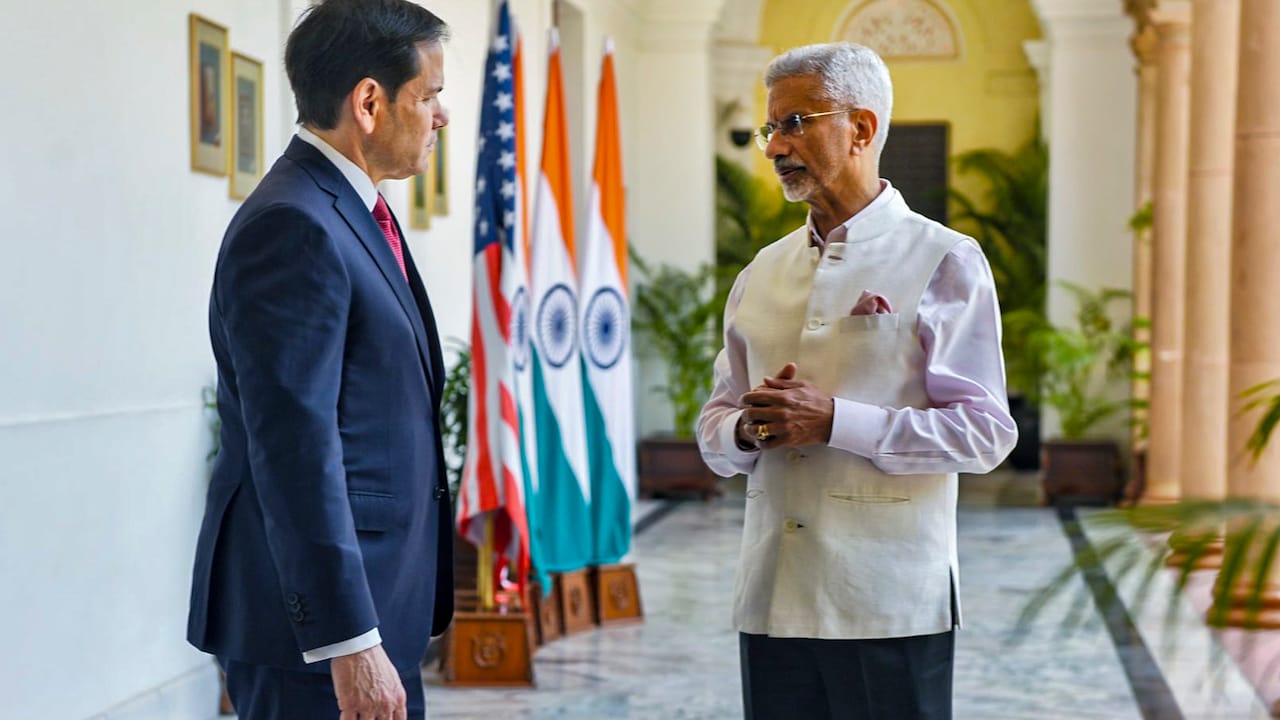
India's External Affairs Minister S. Jaishankar didn't pull his punches. In a direct phone call with US Secretary of State Marco Rubio, Jaishankar lodged a fierce protest, telling Washington plainly that such lethal actions against commercial shipping are just not justified.
This isn't just a minor diplomatic bump. It's a massive friction point between two close strategic allies. When the US Navy opens fire on a civilian oil tanker, killing citizens of a country it actively courts as a key defense partner, something is broken in the operational rulebook. For India, which supplies a massive chunk of the global seafaring workforce, this tragedy hits too close to home. It exposes the terrifying reality that innocent sailors are being treated as collateral damage in Washington's aggressive campaign to choke off Iranian ports.
The Chaos on MT Settebello
Let's look at what actually went down. The primary target was the MT Settebello, a Palau-flagged commercial tanker operating off the coast of Oman. The US military claimed the vessel breached a naval blockade imposed on Iranian shipping routes. Acting on those allegations, a US aircraft launched a strike on the tanker.
The ship carried 24 Indian nationals. While Omani armed forces and local rescue operations managed to save 21 of them, three mariners didn't make it. Deck cadet Aditya Sharma, engine fitter Shivanand Chaurasiya, and chief engineer Patnala Suresh were initially reported missing. Their bodies were later located and identified. Shivanand Chaurasiya, an engine fitter from Surauli village in Uttar Pradesh's Deoria district, was just doing his job for a foreign shipping firm. Now, his village is in mourning.
This wasn't an isolated mishap either. The maritime corridor has turned into a shooting gallery. Within the same week, three merchant vessels carrying Indian crew members came under fire in the Gulf region. Just a day after the Settebello tragedy, another commercial ship with 20 Indian crew members was targeted.
The sheer frequency of these attacks forced the Ministry of External Affairs to summon US Charge d'Affaires Jason Meeks in New Delhi twice in short succession. India wants answers, and more importantly, it wants the shooting to stop.
Washington's Blame Game and the Reality of Blockades
The diplomatic fallout got weirder when the White House weighed in. US President Donald Trump jumped on Truth Social to point the finger at Tehran, claiming an Iranian drone attack hit Indian ships leaving the Strait of Hormuz, calling it totally unacceptable. He warned Iran to get its act together fast.
But there's a glaring disconnect here. US Central Command had already confirmed that the lethal strike on the MT Settebello was executed by American naval forces enforcing their blockade.
While Washington tries to control the narrative by highlighting Iranian aggression, New Delhi isn't buying the misdirection. MEA Spokesperson Randhir Jaiswal confirmed from the podium that these specific lethal strikes came directly from the US Navy stationed in the area.
Enforcing a maritime blockade against a hostile state like Iran is one thing. Bombing foreign-flagged civilian vessels manned by neutral mariners is an entirely different story. Under international law, using lethal military force against commercial shipping without verifying the safety of non-combatant crews is deeply problematic. For India, the excuse of regulatory enforcement doesn't hold water when its citizens are returning home in coffins.
The High Cost of the Global Merchant Fleet
This crisis spotlights a huge vulnerability that the Indian government has to manage every single day. India is one of the top suppliers of seafaring talent to the global merchant fleet. Go onto almost any large cargo ship, oil tanker, or bulk carrier in international waters, and you'll find Indian captains, engineers, and deck hands. They don't control where the ship is registered, who owns the cargo, or what geopolitical blockades are active. They just navigate the routes.
When the US decides to turn busy commercial lanes like the Gulf of Oman or the Strait of Hormuz into active combat zones, Indian workers are on the front lines. The Indian government faces severe domestic pressure to protect these workers. Shipping Minister Sarbananda Sonowal labeled the deaths a profound loss to the maritime family and fast-tracked the repatriation of the bodies, but emergency response can't replace preventive security.
Navigating the Geopolitical Tightrope
What makes this situation incredibly delicate is the timing. Just weeks before this crisis, Marco Rubio was in India celebrating the strength of the US-India Comprehensive Global Strategic Partnership. He stood alongside Jaishankar talking up trade deals, critical minerals, and cooperation in the Indo-Pacific. Jaishankar even looked Rubio in the eye and stated that much like the "America First" doctrine, New Delhi operates on an "India First" policy.
That policy is now being tested. India has spent years balancing a complex web of ties. It maintains strong energy and diplomatic relationships with Iran while simultaneously anchoring the Quad alliance with the United States to counter balance threats in the Indo-Pacific.
When US-Iran tensions boil over into open warfare, India's balancing act gets pushed to the brink. New Delhi cannot allow the US Navy to operate with total impunity in corridors vital to global energy trade, especially when Indian lives are on the line.
Iran has already seized on the tragedy, quickly labeling the US military actions as state piracy and armed robbery. India won't echo Tehran's extreme rhetoric, but Jaishankar's public dressing down of Rubio proves that New Delhi will not give Washington a free pass in the name of shared strategic goals.
Protecting Mariners in Contested Waters
For shipping companies, cargo owners, and maritime operators, the rules of engagement in the Gulf have fundamentally changed. You can't assume a commercial flag or a neutral crew provides safety anymore. If you're managing vessels transiting through the Gulf of Oman, active risk mitigation needs a total overhaul.
- Audit Crew Nationalities and Route Flags: Ensure comprehensive tracking of all crew assignments on high-risk transits. Shipping companies must demand clearer real-time updates from naval coalitions operating in the area to avoid entering overlapping blockade zones.
- Establish Direct Emergency Channels: Relying on standard maritime distress frequencies isn't enough when high-altitude aircraft or naval vessels strike quickly. Operators need immediate lines of communication with both regional ports and neutral naval escorts.
- Enforce Strict Compliance Protocol: If a vessel receives commands from US Central Command or any regional navy enforcing a blockade, compliance must be instantaneous. The Settebello tragedy shows that foreign-flagged vessels ignoring instructions face immediate, lethal military force.
The Indian government has placed its maritime agencies and the Indian Navy on high alert, coordinating with international shipping bodies to prevent further escalations. If the US wants to keep India as an anchor partner in global security, Washington needs to rein in its naval triggers. Securing global trade lanes loses all meaning if you destroy the very civilian ships and mariners that keep the world moving.