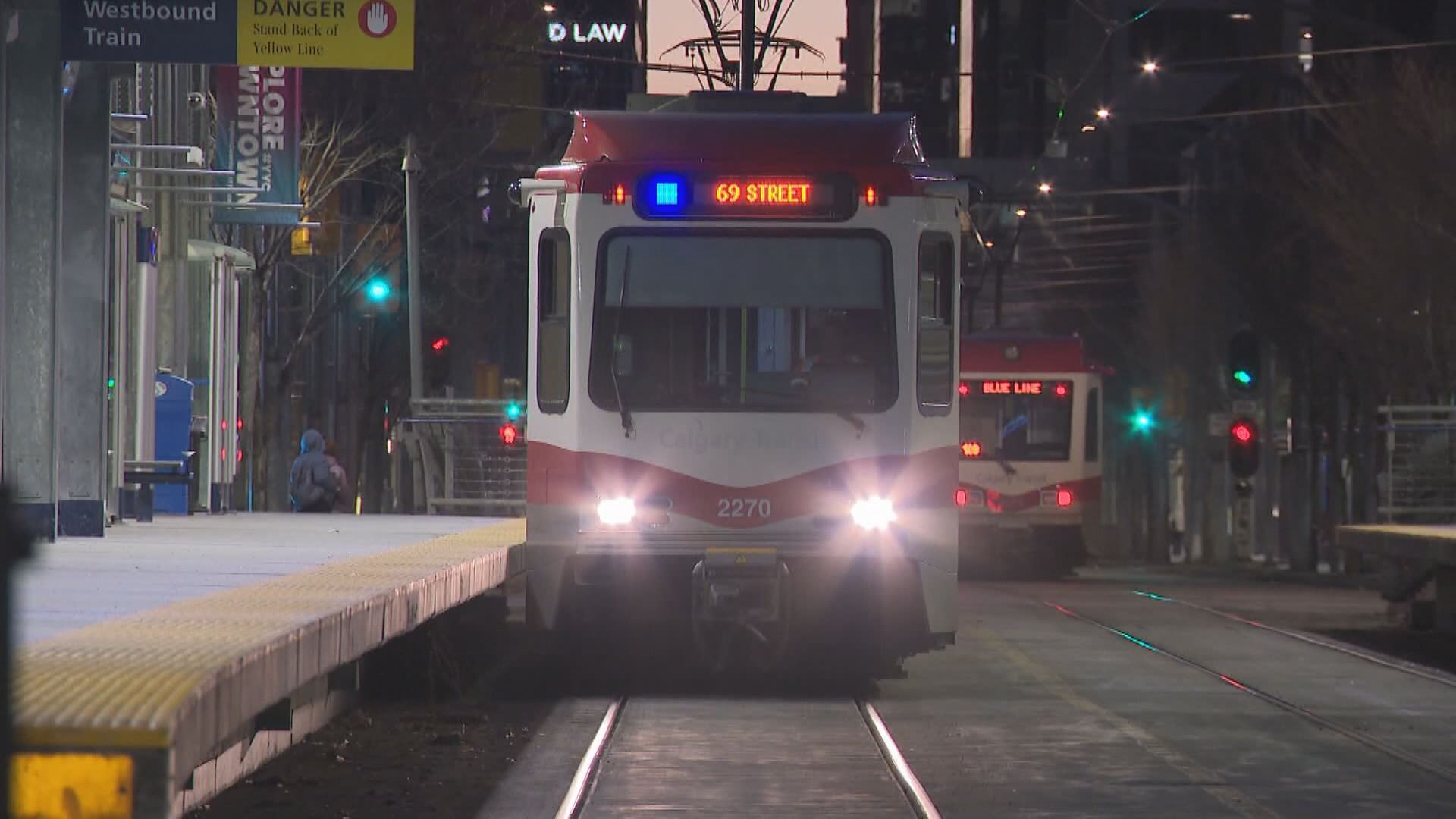
The air in downtown Calgary has a specific bite to it in November. It’s a dry, aggressive cold that tunnels through the glass canyons of 7th Avenue, catching you between the ribs even if you’re only walking half a block from your office to the coffee shop. For three decades, there was a sanctuary against that wind. It wasn't a building. It was a rule.
You could step onto a CTrain at City Hall and step off at 8th Street SW without ever reaching for your wallet. It was the "Free Fare Zone," a seven-block stretch of tracks that functioned as the city’s circulatory system. But the heart is skipping a beat.
A city committee recently moved to endorse the end of this era. The recommendation to council is simple: scrap the free zone. Make everyone pay. On paper, it is a line item intended to solve a budget gap and address "safety concerns." In reality, it is the dismantling of a social contract that has defined the core of Calgary since 1981.
The ghost in the passenger seat
Consider a man we will call Elias. Elias works in one of the towers, maybe in compliance or geological data. He’s the kind of guy who uses the free fare zone exactly as the city intended back in the eighties. He grabs his coat at noon, walks to the platform, and hops on a train to meet a former colleague four stops down for a sandwich.
He doesn’t think about the cost. He doesn’t think about "transit equity." He just thinks about getting out of the wind. To Elias, the train is a horizontal elevator. It is a convenience that makes the downtown core feel like a unified neighborhood rather than a series of isolated fortresses.
Now, consider a woman we will call Sarah. Sarah isn't heading to a lunch meeting. She is moving between a social service agency and a library. She uses the free zone because it is the only place in the city where she isn't asked for something she doesn't have. For those ten minutes on the tracks, she is just a passenger. She isn't a "vulnerable population." She isn't a "statistic." She is a person in transit.
When the committee votes to kill the free zone, they aren't just looking for Elias’s three dollars. They are trying to solve a problem that the train didn't create, but has inherited: the visible manifestation of a city's crisis.
The logic of the ledger
The arguments for ending the zone are draped in the language of pragmatism. Proponents say the free zone has become a magnet for "disorder." They argue that by requiring a fare, the city creates a barrier to entry that prevents people from loitering on the trains. They talk about the "perception of safety."
There is a financial gravity here, too. Calgary Transit is staring down the barrel of a massive infrastructure bill. Every dollar counts. If the city can capture the fares of the thousands of "Eliases" who use the zone for short hops, that revenue could, theoretically, be funneled back into hiring more transit officers or cleaning the stations.
But the math of a city is never just addition and subtraction. It is alchemy.
When you remove the free fare zone, you don't magically remove the people who were using it for warmth or shelter. You simply push them onto the sidewalk, or into the +15 skywalk system, or into the doorways of the very businesses the free zone was designed to support. You trade a transit problem for a sidewalk problem.
Moreover, you kill the "short-trip" economy. If a quick three-stop ride costs the same as a cross-city trek, Elias stays in his building. He orders SkipTheDishes. He doesn't go to the sandwich shop four blocks away. The downtown core becomes slightly more static. Slightly colder. Slightly more dead.
The myth of the barrier
We often tell ourselves that a price tag is a filter. We believe that if we charge for something, we ensure that only those with "legitimate" business will use it. It’s a comforting thought for a committee sitting in a climate-controlled room. It suggests that social disorder is a choice made by people who are just looking for a free ride.
It ignores the reality of how a city breathes.
The "disorder" people complain about—the drug use, the mental health crises, the shivering bodies on plastic seats—is not a product of a free train zone. It is a product of a housing shortage, a toxic drug supply, and a healthcare system that has more holes than a net. Ending the free fare zone is like trying to fix a leaking roof by painting the ceiling. It looks better for a week, but the rot is still there, and now you've spent your ladder money on paint.
There is a psychological cost to this transition as well. For forty-three years, the free zone has been a gesture of hospitality. It said to visitors and residents alike: The heart of this city belongs to you. It encouraged people to leave their cars in the parkade and engage with the street.
When you put up the paywall, you change the vibe of the street from "public square" to "controlled corridor." You tell the citizens that the city is no longer a host, but a vendor.
A tale of two platforms
If you stand on the platform at 3rd Street SW today, you see a cross-section of a city in tension. You see the lawyers in charcoal overcoats checking their watches. You see the students with oversized headphones. You see the grandmother heading to the shopping mall. And yes, you see the people for whom the train is the only warm place left.
The committee’s endorsement suggests that the charcoal overcoats will feel safer if the person in the tattered jacket isn't there. Maybe they will. But safety is a complex emotion. True safety comes from a vibrant, crowded, busy downtown where everyone has a reason to be there. Safety comes from "eyes on the street."
By ending the free zone, the city risks thinning out the crowds. When the "casual" riders—the lunch-goers, the shoppers, the tourists—disappear because they don't want to fumble with an app or a ticket machine for a two-minute ride, the platforms don't become safer. They just become emptier. And in an empty space, the remaining "disorder" becomes even more visible, even more concentrated.
The invisible stakes
We are living in an age of enclosure. Public spaces are being fenced off, monetized, or "optimized" until the joy is squeezed out of them. We see it in the way parks are managed, the way libraries are funded, and now, the way we move.
The free fare zone was a small, perhaps inefficient, piece of magic. It was a recognition that some things are more valuable when they are shared without friction. It recognized that a vibrant downtown requires movement, and movement shouldn't always require a transaction.
The committee’s decision feels like a retreat. It is an admission that we don't know how to handle the complexities of our streets, so we will simply start charging admission. We are choosing the ledger over the legacy.
Logically, the city can point to other municipalities that don't have free zones. They can show you the projected revenue. They can show you the survey results from frustrated commuters who want "something to be done." They aren't lying about the data. But data is a poor storyteller. It misses the way a city feels when you're walking through it.
It misses the moment when a tourist realizes they can just jump on the train to get to the museum. It misses the small relief of a worker who realizes they can make it to their appointment on time because they didn't have to wait in line at a kiosk. It misses the dignity of a person who has nowhere to go, but for a few minutes, is headed somewhere.
The final decision rests with the full city council. They will look at the same spreadsheets. They will hear the same pleas for safety. But they should also look at the tracks.
Those tracks have carried more than just steel cars for forty years; they’ve carried an idea. The idea was that Calgary was a place where the gates were open, at least for a few blocks in the center of it all. Once those gates are closed, they rarely open again. The wind on 7th Avenue is going to feel a lot colder this winter.
The Seven Block Stretch is more than a zone. It is a mirror. And right now, the reflection looking back at us is one that has forgotten how to be generous.