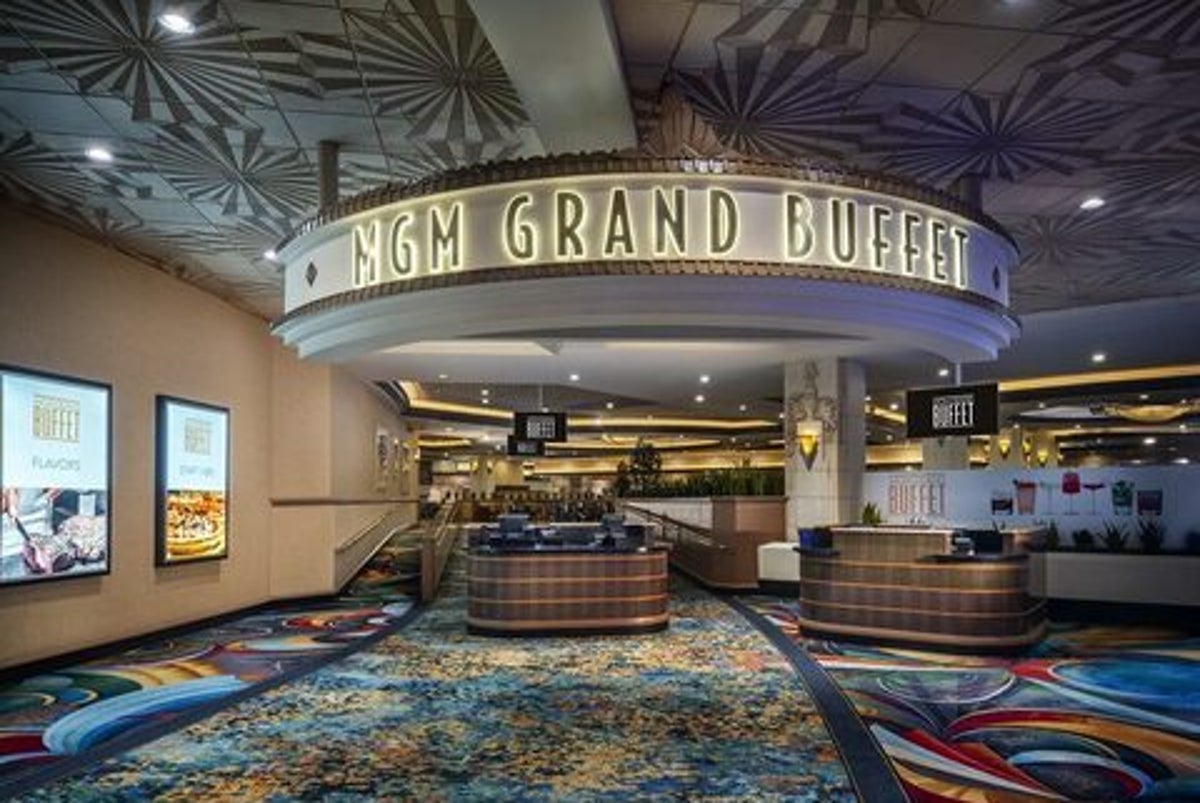
The mourning period for the grand Las Vegas buffet needs to end. If you are currently weeping over the closure of another MGM trough, you aren't mourning culinary excellence. You are mourning a logistics miracle that overstayed its welcome.
The standard narrative is predictable. It's "the end of an era." It’s a "loss of Vegas culture." It’s "corporate greed killing the value play."
That narrative is wrong.
The "grand buffet" was never about the food. It was about the illusion of abundance in a desert. It was a 1950s solution to a 21st-century problem. The reality is that the Vegas buffet became a bloated, inefficient, and frankly insulting way to feed human beings. Its decline isn't a tragedy; it’s a long-overdue market correction.
The Myth of the Value Play
People love to claim the buffet was the last bastion of the "cheap Vegas" experience. This is a nostalgic delusion.
By the time the major Strip properties started pulling the plug, a weekend brunch at a "grand" buffet was pushing $60 to $80 per person. Add in the mandatory tip and the overpriced mimosa, and you were clearing $100 before noon.
For that same $100, you can sit at a Michelin-starred chef’s casual bistro, eat food prepared to order, and not have to navigate a sneeze-guarded minefield of lukewarm crab legs.
The math stopped working years ago. The house realized that the overhead of maintaining a 500-item spread—where 40% of the food ends up in a dumpster—was a financial sinkhole. But more importantly, the consumer realized they were paying premium prices for a cafeteria experience.
If you think a $75 ticket for mass-produced prime rib is a "deal," your internal price-to-quality compass is broken.
The Logistics of Mediocrity
Let’s talk about the physics of a buffet.
Food is at its peak the moment it leaves the heat source. In a buffet, food is subjected to the "holding cycle."
- Evaporation: Heat lamps act as moisture vampires. Your scrambled eggs turn into rubber sponges within six minutes.
- Oxidation: That beautiful tuna poke turns a depressing shade of grey the longer it sits in the open air.
- Cross-Contamination: This isn't just about germs. It's about the guy who uses the shrimp tongs to grab a slice of cake.
When a kitchen has to produce 5,000 covers a day across 15 different cuisines, "quality control" is a polite fiction. The executive chef isn't tasting your plate. They are managing a supply chain. They are looking at spreadsheets of "shrinkage" and "batch turnover."
I have spent enough time behind the scenes of high-volume hospitality to tell you this: you cannot mass-produce soul. When you eat at a buffet, you are eating a mathematical average. You are eating the result of a cost-per-ounce calculation.
The Psychology of the Trough
The buffet relied on a specific psychological trigger: the Fear of Missing Out (FOMO).
The goal wasn't to enjoy a meal; it was to "beat the house." You see it in the way people stack their plates. They eat until they are physically uncomfortable because they want to ensure they got their money's worth.
This is a broken relationship with food.
The closure of these massive dining halls signals a shift toward intentionality. The modern Vegas visitor—the one actually spending money on the Strip—doesn't want to spend two hours in a coma because they felt obligated to eat fourteen types of dumplings. They want a "vibe." They want "Instagrammable" plates. They want a story to tell that isn't about how many trips they made to the carving station.
The Rise of the Food Hall (And Why It’s Superior)
The "lazy consensus" says that food halls are just buffets with more steps and higher prices.
This is objectively false.
A food hall, like the ones you now see at Aria or Resorts World, operates on a decentralized model. Each stall is a specialist. One group does yakitori. Another does street tacos. Another does high-end donuts.
Because they are specialists, they can manage their inventory with surgical precision. They cook to order. The turnover is high, and the waste is low.
From a business perspective, the food hall is a masterpiece. It shifts the labor burden. It creates a competitive environment where the bad stalls die and the good ones thrive. From a consumer perspective, you get the variety of a buffet with the quality of a standalone restaurant.
You pay for what you eat. Imagine that. No more subsidizing the guy at the next table who is single-handedly trying to bankrupt the resort by eating five pounds of Alaskan King Crab.
The Sustainability Lie
We love to talk about "green" initiatives and "sustainable" travel. The Vegas buffet is the antithesis of these concepts.
The sheer volume of food waste generated by a single Strip buffet in one day would turn your stomach. Because of health codes, anything that sits out must be tossed.
- Scenario: A tray of lasagna has three portions left. It looks messy. The attendant swaps it for a fresh tray. Those three portions go in the trash.
- Scale: Multiply that by 200 items, 18 hours a day, 365 days a year.
The industry is moving away from this not just because it’s expensive, but because it’s indefensible in 2026. Properties are shifting toward "tasting menus" and "small plates" because it allows for better portion control and significantly less environmental impact. If you care about the planet but mourn the buffet, you are a hypocrite.
The "Grand" Buffet Was a Trap
The buffet was designed to keep you inside the building. It was a gravity well. If you’re full and tired, you aren't leaving the property to see a rival’s show or gamble at a different casino.
But the "New Vegas" isn't about confinement. It’s about movement. The modern Strip is a playground of interconnected experiences. The monolithic buffet acted as a roadblock to that flow.
When MGM closes a buffet, they aren't just saving money on shrimp. They are freeing up thousands of square feet of prime real estate. They are replacing a stagnant, low-margin dining room with dynamic, high-margin concepts: lounges, boutique retail, or "eat-ertainment" venues that actually drive brand loyalty.
The Hard Truth for Traditionalists
If you are angry about the buffet's demise, ask yourself why.
Is it because the food was world-class? No.
Is it because the atmosphere was elegant? Certainly not.
It’s because the buffet allowed you to feel like royalty for a flat fee. It was a shortcut to a sense of "winning" in a city designed to make you lose.
But that version of Vegas is dead. The city has matured. It is now a global culinary destination that competes with Paris, Tokyo, and New York. In that league, "all-you-can-eat" is a gimmick for cruise ships and suburbs.
The closure of the MGM buffets is an admission that the Strip no longer needs to bribe people with quantity to hide a lack of quality.
Stop looking for the carving station and start looking for a menu. Your stomach, your wallet, and the city itself will be better for it.
The era of the trough is over. Good riddance.