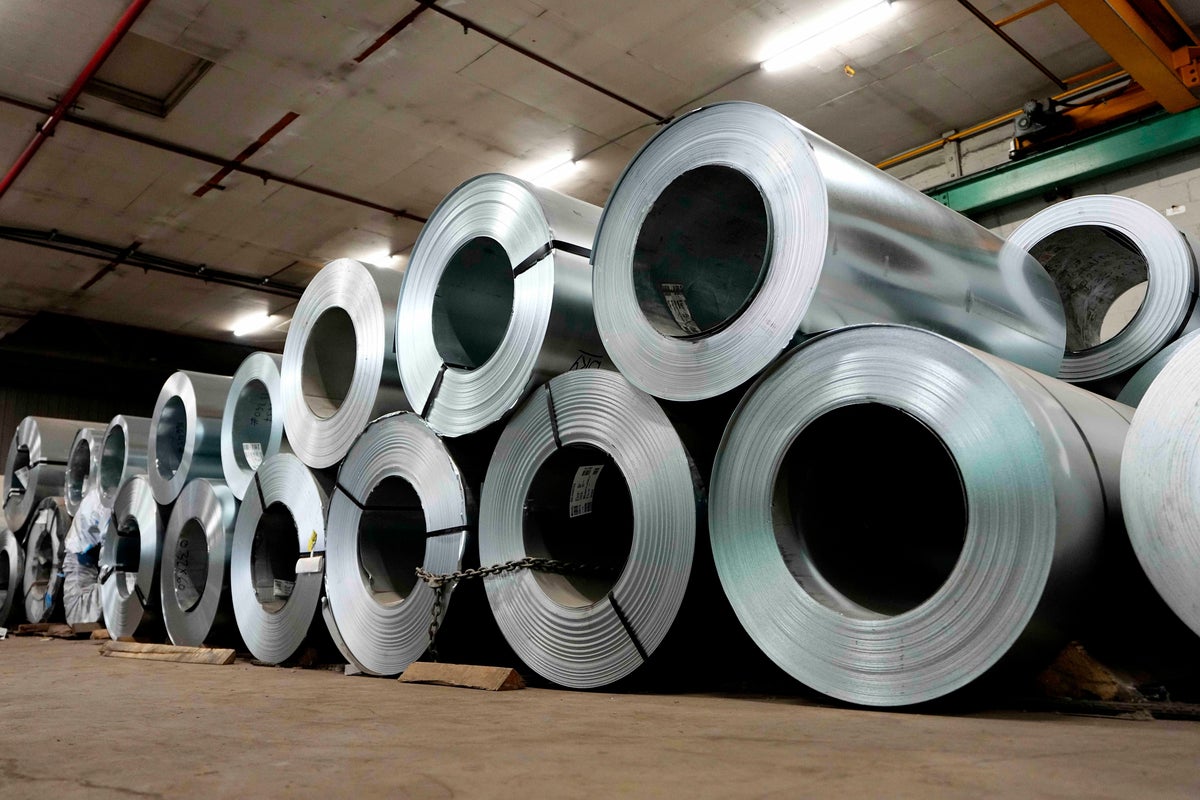
The architecture of North American commerce is collapsing under the weight of executive decrees, retaliatory threats, and a profound breakdown in political trust. When Washington slapped a punishing 50 percent tariff on twenty billion dollars worth of Canadian goods, it did more than raise the price of imported electronics, steel, and regional manufacturing inputs. It signaled the final burial of an economic partnership that had spent decades assuming borders were administrative inconveniences rather than trade barriers. Decades of integrated supply chains, where a single automotive component might cross the international boundary half a dozen times before final assembly, are being systematically unpicked by structural protectionism.
Understanding this fracture requires looking past the daily social media declarations and examining the cold mechanics of modern trade coercion. The White House has increasingly relied on emergency powers, national security justifications, and targeted levies to reshape cross-border manufacturing. When talks aimed at lowering these automotive and material barriers abruptly collapsed, the friction transformed into an open industrial cold war. Ottawa faces a structural dilemma. With roughly three-quarters of its goods exports destined for the United States, retaliation carries severe domestic costs, yet failing to respond invites total economic subjugation.
The Anatomy of a Fifty Percent Escalation
The mechanics of these latest tariffs operate through straightforward tax transmission, yet their downstream consequences ripple across complex logistics networks. Importers shoulder the initial burden of a 50 percent levy, passing those costs upward to regional distributors, assembly plants, and eventually retail consumers. For sectors like commercial construction, specialized electronics, and hockey equipment, margins evaporate almost overnight.
Consider a hypothetical component manufacturer in Ontario supplying specialized wiring harnesses to an assembly plant in Michigan. Under historical trade pacts, that transit was frictionless. Under the current enforcement regime, sudden price spikes force procurement managers to re-evaluate vendor lists entirely. Yet domestic American alternatives do not materialize simply because an executive order is signed. Tooling up a replacement manufacturing facility takes years, not weeks. Factories cannot be conjured out of empty acreage without immense capital expenditure, specialized labor pools, and regulatory approvals.
The strategy relies on using market size as a blunt instrument. Because the United States economy dwarfs its northern neighbor by a factor of ten, Washington operates under the assumption that Ottawa will ultimately bend to structural demands regarding industrial policy, resource pricing, and domestic subsidies. Yet this ignores the political calculus in Ottawa. Prime Minister Mark Carney has pivoted toward an aggressive diversification strategy, explicitly aiming to double non-U.S. trade and secure vast international investments to insulate the Canadian economy from future political shocks.
Strategic Vulnerabilities Across the Border
The narrative that trade dependency flows entirely in one direction is an analytical error frequently repeated in populist rhetoric. While Canada relies heavily on American consumer markets for finished goods, the United States depends critically on Canadian raw inputs to keep its own heavy industries humming.
- Energy Security: Canada supplies the vast majority of U.S. imported crude oil, natural gas, and hydroelectricity, serving as the quiet engine behind much of the Upper Midwest and Northeast power grids.
- Critical Minerals: Aerospace, defense, and green technology manufacturing states rely on northern aluminum, nickel, and uranium.
- Agricultural Retaliation: Ottawa's targeted counter-tariffs are surgically designed to strike politically sensitive regions in the U.S. heartland, aiming directly at agricultural and manufacturing exporters in key swing states.
When Canada implements dollar-for-dollar retaliatory duties on items ranging from dairy products to industrial machinery, the political pain is exported directly to American constituencies. This dynamic turns commercial policy into a game of domestic political attrition. Lawmakers from agricultural states find themselves answering to dairy farmers and soybean producers who suddenly discover their international markets choked off by retaliatory friction.
The Permanent Shift in Cross-Border Diplomacy
The most damaging aspect of the current trade war is not the financial cost of the tariffs themselves, but the evaporation of institutional predictability. For generations, corporate boards made multi-decade capital investments based on the legal certainty of treaties like NAFTA and its successor. That era is finished. When rules can be rewritten overnight via executive decree or abandoned because of a televised political dispute, long-term planning becomes an exercise in risk mitigation rather than growth optimization.
Canadian firms are actively altering their operational footprints. Energy producers are advancing plans for Pacific Coast export terminals to send crude tankers directly to Asian markets, explicitly reducing their reliance on U.S. pipeline networks. Travel numbers across the border have plummeted as public sentiment sours and ordinary citizens rethink cross-border tourism and business travel. This social decoupling compounds the economic separation, ensuring that even if future administrations attempt to restore historical norms, the psychological baseline has permanently shifted.
The friction will likely outlive the current political cycle because protectionist sentiment has taken deep root across the American political spectrum. Supply chains are permanently bifurcating into regional blocs. Companies that fail to adapt their logistics networks to this hostile environment will find themselves absorbing unsustainable compliance costs while competitors build resilience through geographic diversification. The border is no longer just a line on a map; it is rapidly hardening into a structural wall.