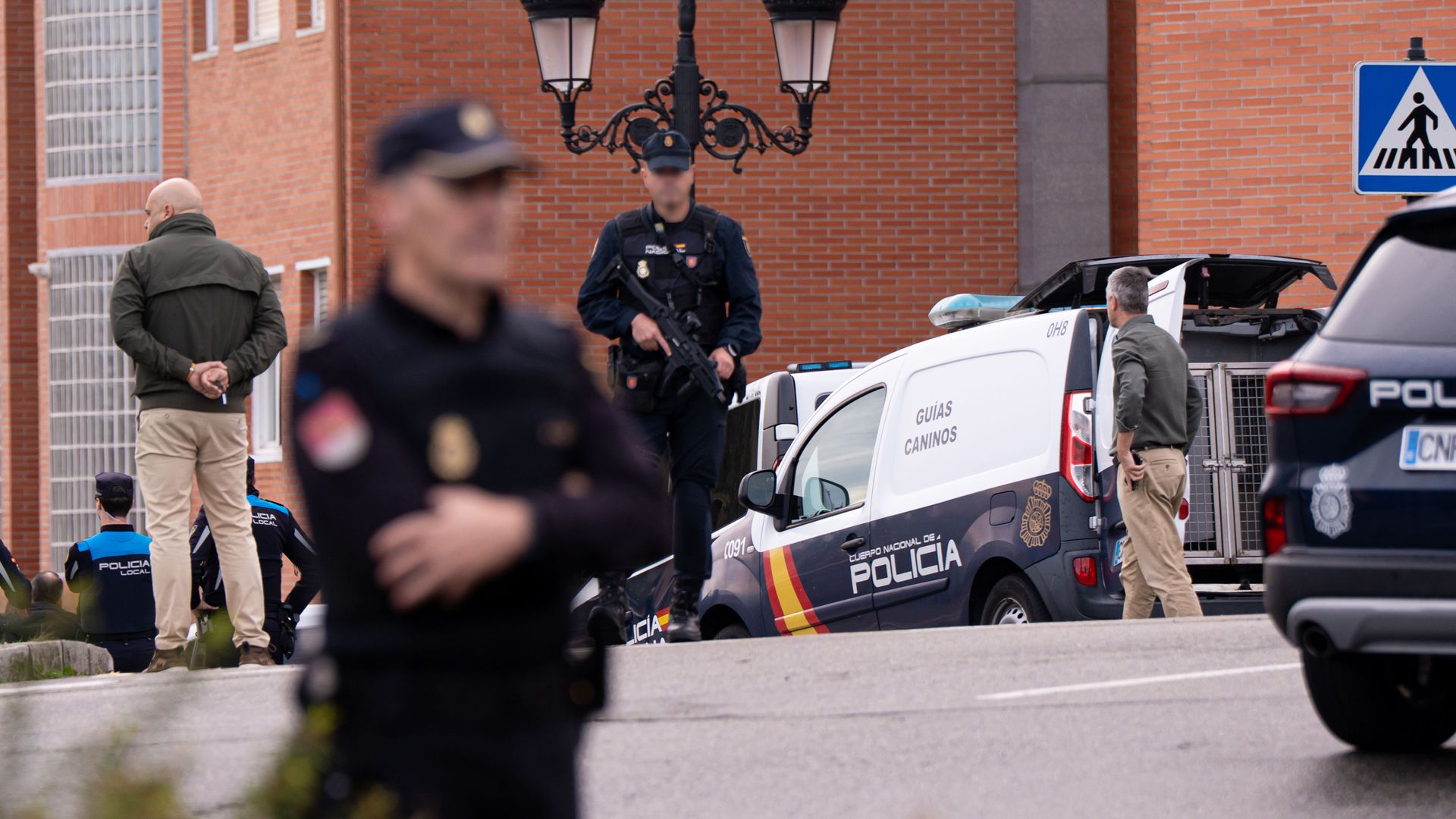
A fatal explosion in northern Spain has killed one police officer and left a second critically injured, instantly transforming a localized emergency response into a national reckoning over frontline hazard protocols. While initial dispatches treat the blast as an isolated tactical tragedy, an examination of emergency response mechanics in Spain reveals a much deeper vulnerability. Municipal and regional officers across northern provinces routinely serve as the absolute first barrier against volatile industrial, domestic, and legacy explosive threats—often arriving on scene long before specialized bomb disposal or hazardous materials units can mobilize.
The math of emergency dispatch is unforgiving. When a distress call hits a regional switchboard in northern Spain, the nearest patrol car is dispatched immediately to secure the perimeter, evacuate civilians, and assess the threat. That window—the critical ten to twenty minutes between the arrival of general patrol officers and the deployment of specialized technical teams—is where the highest mortality risk resides. If you found value in this post, you should check out: this related article.
The Frontline Reality of Northern Spain Emergencies
Northern Spain is defined by a distinct geographical and industrial profile that complicates emergency policing. From the rugged, fragmented terrain of Galicia, Asturias, and Cantabria to the dense industrial corridors of the Basque Country and Navarre, response logistics face constant friction. Mountainous topography slows down centralized specialist units, while aging infrastructure, legacy mining networks, and dispersed rural housing create unpredictable hazard environments.
When an explosion occurs in this region, standard reporting focuses on the immediate human toll and the cordoning off of the blast radius. What gets missed is the operational sequence leading up to detonation. Patrol officers are trained to run toward chaos. Whether responding to a suspected gas leak in an older residential block, an industrial accident at a chemical storage facility, or an illicit explosive device, the first uniformed personnel on the ground operate with limited diagnostic equipment. For another angle on this development, refer to the latest update from The New York Times.
A standard patrol vehicle carries basic crowd-control gear, first-aid kits, and standard sidearms. It does not carry multi-gas detectors capable of identifying invisible, odorless explosive atmospheres, nor does it carry blast-suppression blankets or thermal imaging cameras designed to spot imminent structural ignition. Officers rely on sensory observation—smell, sight, and sound—to make split-second decisions about how close to approach a volatile scene.
The Anatomy of a Fatal Blast
To understand why an officer dies in an explosion while a partner survives with severe injuries, one must look at the physics of blast waves and the standard two-officer patrol formation.
In Spanish policing protocols, patrol pairs operate on a dynamic contact-and-cover model. One officer takes the primary lead—approaching the door, inspecting the vehicle, or entering the basement—while the second maintains a slightly staggered distance to observe the broader environment and provide backup.
When a detonation occurs, the blast wave radiates outward in milliseconds, governed by the inverse-square law. The difference of just two or three meters between the lead officer and the cover officer often marks the exact boundary between fatal overpressure trauma and survivable, albeit devastating, shrapnel and concussive injuries. The primary blast wave crushes air-filled organs—lungs, ears, and the gastrointestinal tract—before secondary fragmentation and structural collapse inflict blunt-force and penetrating wounds.
Structural Gaps in Hazard Detection and Dispatch
The tragedy in northern Spain highlights a systemic disconnect between emergency call intake and field deployment. Dispatch centers operate under intense pressure to categorize threats rapidly, yet callers in panic rarely provide accurate technical descriptions. A report of a "strange smell," "smoke," or a "suspicious package" triggers a routine verification call rather than a full-scale hazardous materials lockdown.
Consider a hypothetical scenario common to older urban centers across northern Spain. A neighbor reports a strong odor in a stairwell. Two municipal officers arrive within four minutes. Without calibrated electronic sniffers, they cannot know whether they are walking into a benign sewer backup or a residential apartment where an unventilated gas line has created a stoichiometric fuel-air mixture. Turning on a flashlight, keying a shoulder-mounted radio, or simply knocking on a metal door can generate the microscopic spark required to trigger a catastrophic deflagration.
This is not a failure of individual bravery; it is a failure of sensory instrumentation at the tier-one level. While Spain maintains some of Europe's most elite specialized units—such as the Guardia Civil's GEDEX (Explosive Ordnance Disposal) and the National Police's TEDAX-NRBQ—these teams are regional assets. They cannot be on every street corner in every northern municipality.
Jurisdiction and Coordination Friction
Spain's policing architecture is uniquely layered, creating both strengths and vulnerabilities during acute crises. Depending on the exact province in northern Spain, emergency authority is divided among:
- Policía Local: Municipal forces controlled by town halls, usually the fastest to arrive at urban and suburban incidents.
- Guardia Civil: A national gendarmerie with primary jurisdiction over rural areas, highways, and specialized weapons and explosives control.
- Policía Nacional: Urban national policing handling major criminal investigations and specialized tactical responses.
- Regional Forces: Autonomous police bodies such as the Ertzaintza in the Basque Country and the Policía Foral in Navarre, which hold comprehensive public safety mandates within their territories.
When an explosion strikes, the transition of command from the first-arriving municipal patrol to national or regional forensic and bomb disposal investigators must happen seamlessly. Yet disparities in radio encryption, equipment budgets, and tactical training between a small northern town's local police force and a national specialist unit remain substantial. A wealthy municipality may equip its patrols with advanced protective gear and gas monitors, while a neighboring town twenty kilometers away operates on a shoestring budget.
Three Overlooked Blast Vectors in the North
Media coverage of explosions in Spain frequently defaults to historical anxieties, immediately questioning whether a blast is tied to organized crime or political violence. While criminal explosive use—such as blowing up ATMs or settling narcotics disputes—remains an active threat vector, veteran investigators look at three broader realities across the northern provinces.
Aging Residential and Industrial Gas Infrastructure
Many towns across northern Spain feature historic stone and timber architecture retrofitted decades ago with piped gas or reliant on portable butane and propane canisters (bombonas). Improper maintenance, corroded valves, and unventilated basements turn ordinary buildings into pressure cookers. When structural failures occur, the resulting explosions easily level load-bearing walls and trap first responders beneath heavy masonry.
Clandestine Manufacturing and Chemical Hazards
Isolated rural properties and abandoned industrial warehouses in the north offer privacy for illicit operations. Whether involving illegal fireworks manufacturing, improvised pyrotechnics, or synthetic drug laboratories utilizing volatile solvents like ether and acetone, these sites are entirely unregulated. Officers executing routine wellness checks, noise complaints, or property inspections walk blindly into unstable chemical environments.
Legacy Ordnance and Mining Remnants
Northern Spain bears the physical scars of both the Spanish Civil War and centuries of intensive coal and mineral mining. Unexploded artillery shells, grenades, and forgotten caches of industrial mining dynamite still surface regularly during construction work, agricultural plowing, or home renovations. Well-meaning citizens frequently handle these unstable devices or transport them to local police stations, placing patrol officers directly in the lethal zone of degraded, shock-sensitive explosives.
The Forensic Aftermath and Investigation Protocol
Once the smoke clears and the injured officer is evacuated to a regional trauma center, the scene transforms into one of the most complex forensic environments in law enforcement. Investigating a fatal police explosion requires parallel tracks that often compete for physical evidence.
First comes structural stabilization. Urban search and rescue teams and firefighters must shore up compromised walls and clear live electrical or gas lines before investigators can step inside. Every shifted beam risks destroying crucial blast-seat evidence.
Second is the blast-seat analysis. Bomb technicians and forensic chemists sift through debris to locate the exact point of detonation. By measuring cratering, metal pitting, and thermal scorching, specialists determine the velocity of detonation. A low-order explosion—such as a natural gas ignition—pushes walls outward and leaves distinct soot patterns. A high-order detonation—caused by military or commercial high explosives—shatters materials into microscopic fragments and leaves chemical residues that must be swabbed before environmental moisture degrades them.
Simultaneously, internal affairs and judicial investigators reconstruct the timeline of the police response. Under Spanish judicial procedure, an investigating magistrate (Juez de Instrucción) oversees the inquiry into any on-duty death. The court examines dispatch recordings, body-worn camera footage if available, vehicle GPS logs, and department safety manuals to determine whether the officers followed established tactical protocols or were placed in an untenable position by flawed dispatch data.
The Silent Cost of Tactical Vulnerability
Beyond the immediate grief of a fallen officer's family and the grueling rehabilitation facing the surviving partner, fatal explosions inflict lasting institutional damage on police departments. Patrol officers across northern Spain watch these events unfold and immediately recognize themselves in the victims. They know how often they walk up dark stairwells or approach smoking vehicles without specialized sensors.
Reforming frontline safety does not require reinventing policing, but it does demand shifting resources downward to the first point of contact. Equipping standard patrol vehicles with compact, multi-gas and radiation detectors costs a fraction of specialized tactical vehicles, yet provides an immediate electronic warning before officers cross a lethal threshold. Updating dispatch triage scripts to automatically hold back non-specialized patrols when callers report chemical odors, hissing pipes, or suspicious containers saves lives—even if it adds five minutes to perimeter containment.
Every patrol shift begins with the unspoken assumption that routine calls remain routine until proven otherwise. In northern Spain, the rubble of a shattered scene serves as a brutal reminder that by the time an explosive hazard proves itself, the officers standing closest to it have already run out of time.