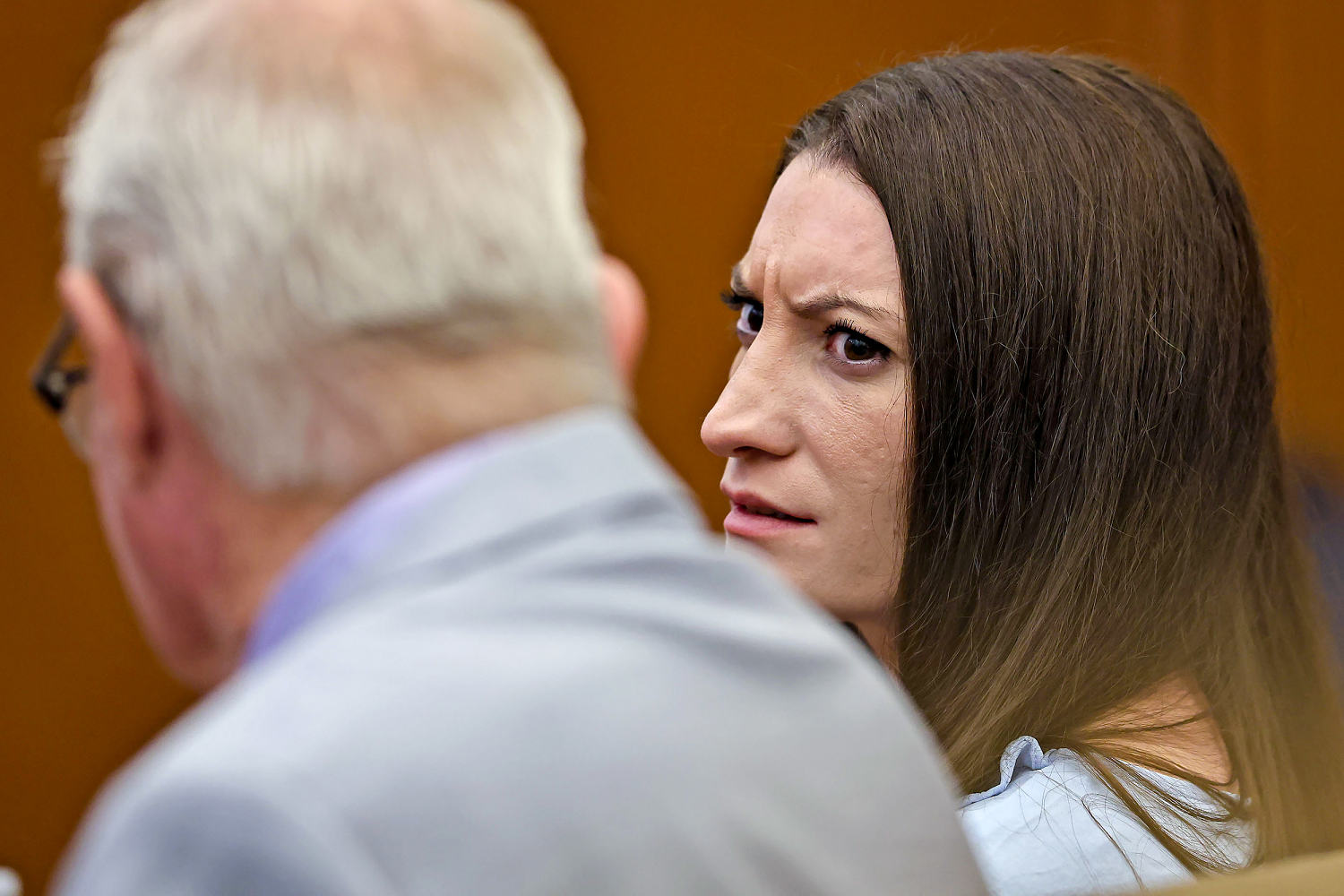
Five days into deliberations, the jury in Plymouth Superior Court hit a wall. Nine women and three men spent roughly 25 hours trying to decide the fate of Lindsay Clancy, the former labor and delivery nurse who admits to strangling her three young children in January 2023. When they sent a note to Judge William Sullivan declaring they couldn't reach a unanimous decision, it laid bare the terrifying gray area where severe mental illness collides with the criminal justice system.
Clancy isn't denying the physical acts. Cora, Dawson, and Callan—ages 5, 3, and 8 months—died from strangulation in the basement of their Duxbury, Massachusetts home while their father was out picking up dinner and medicine. Afterward, Clancy jumped from a second-floor window, an attempt on her own life that left her paralyzed.
The entire trial comes down to a single, brutal question: Was she suffering from postpartum psychosis so severe that she lacked criminal responsibility, or did she execute a calculated, premeditated crime?
The Divide Over Postpartum Psychosis
Medical experts offered completely contradictory views during the multi-week trial. The defense, led by attorney Kevin Reddington, argued that a cocktail of psychiatric medications and acute postpartum psychosis completely detached Clancy from reality. Witnesses testified about her crashing mental state in the weeks leading up to the tragedy, including a brief psychiatric hospitalization.
Prosecutors countered with a starkly different narrative. They pointed to evidence suggesting she planned the killings, knew right from wrong, and acted out of a desire to end her own life without leaving her kids behind. A forensic psychologist for the state argued that her actions showed purposeful intent rather than a psychotic break.
This dichotomy is precisely why the jury is struggling. Jurors aren't just deciding between guilty and not guilty. They face multiple paths:
- First-degree murder
- Second-degree murder
- Manslaughter
- Not guilty by reason of insanity (lack of criminal responsibility)
When a jury stalls this long, it often means they are divided over intent or grappling with the precise legal definition of insanity when a defendant experienced a rapid psychiatric decline.
What Happens When a Jury Deadlocks
Judge Sullivan did what judges typically do when a panel hits an impasse. He sent them back to keep talking. Defense attorneys view a working, grinding jury as a hopeful sign that consensus is still possible, but the specter of a mistrial looms large.
If the judge ultimately has to declare a mistrial due to a hung jury, the legal slate doesn't get wiped clean. Prosecutors would face the heavy burden of deciding whether to mount an entirely new trial, negotiate a plea, or drop the charges—though dropping them entirely remains unlikely given the severity of the case. If jurors ultimately choose a verdict of not guilty by reason of insanity, Clancy won't walk free; she faces mandatory confinement and periodic reviews at a state psychiatric hospital like Tewksbury State Hospital.
The public obsession with this case goes far beyond standard true-crime curiosity. It forces a harsh spotlight onto maternal mental health, the failures of outpatient psychiatric care, and how courts evaluate invisible illnesses that hijack a parent's mind. As deliberations stretch forward, the jury remains inside the room, wrestling with a tragedy that defies easy answers.