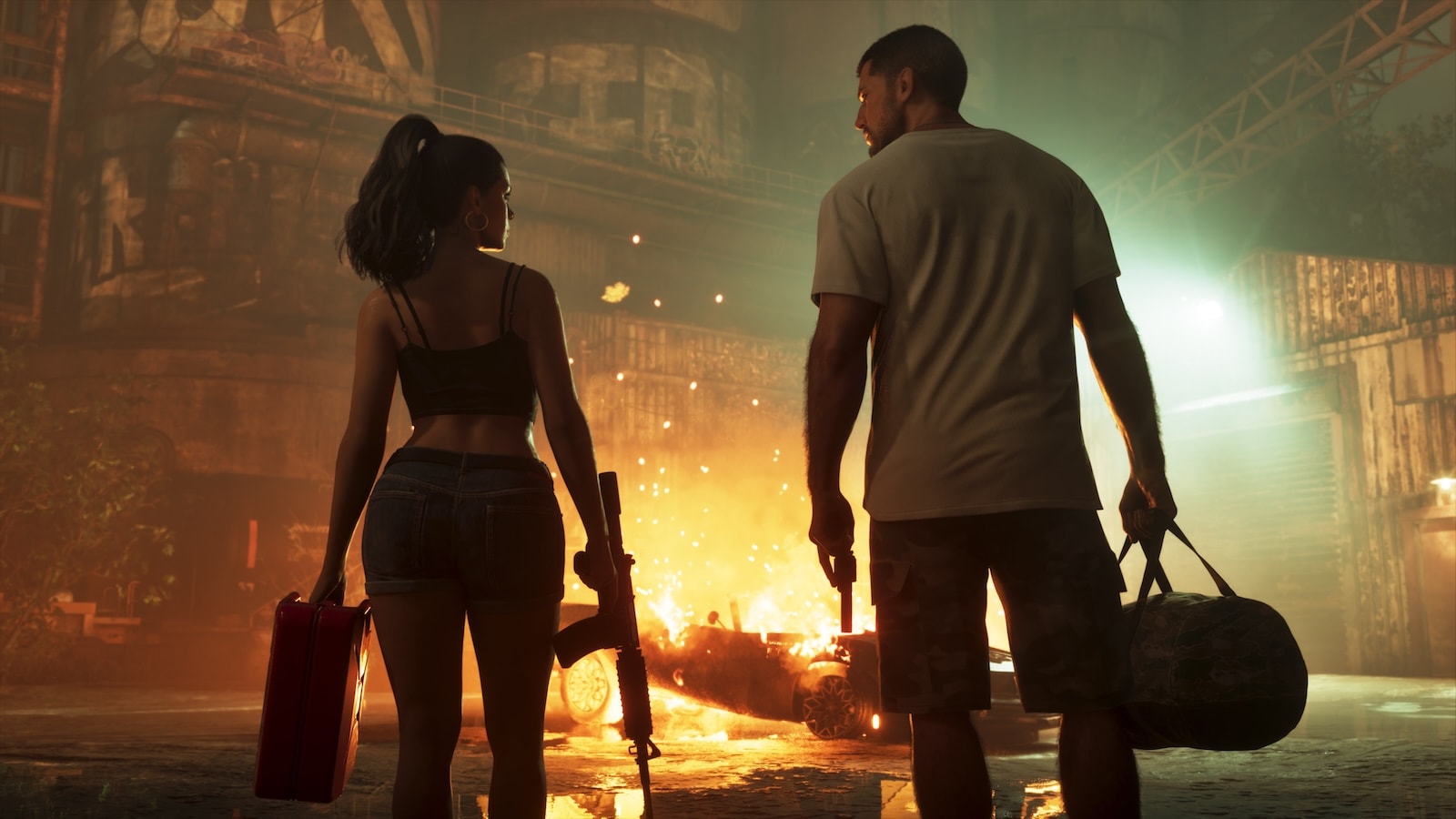
The calendar invite arrives on a Tuesday afternoon, disguised as a routine dental appointment or an urgent family obligation. Across the hall, a junior developer quietly submits a request for four consecutive days of personal leave, carefully timed to bridge a long weekend. Nobody says the three letters out loud in the Slack channels, yet everyone in the open-plan office knows exactly what is happening.
A cultural earthquake is scheduled to hit, and the tremors are already rattling the floorboards of global commerce.
For more than a decade, Rockstar Games has held a peculiar, almost hypnotic power over modern entertainment. When Grand Theft Auto V launched in September 2013, it did not merely break sales records; it bent the trajectory of media consumption, generating $800 million in its first twenty-four hours and $1 billion within three days. Now, with Grand Theft Auto VI arriving on the scene, we are witnessing something far larger than a video game release. We are watching a synchronized global pause button get pressed in real time.
To understand what happens when a single piece of software commands the collective attention of hundreds of millions of people, you have to look past the neon-drenched trailers and the corporate earnings calls. You have to look at the quiet, invisible ways our daily routines bend around the gravity of a shared obsession.
The Anatomy of a Mass Absence
Consider a hypothetical scenario playing out inside a mid-sized logistics firm in Chicago, or a design agency in London, or a software startup in Johannesburg. Let us call the protagonist Marcus. He is thirty-two, a senior project manager who prides himself on never missing a deadline, and he has been hoarding his paid time off since January like a squirrel storing acorns for a brutal winter.
Marcus is not alone. Millions of workers across North America, Europe, and beyond have been quietly treating their annual leave balances as a strategic reserve for this exact launch window. Human resources departments at major tech firms and creative agencies have noticed an unmistakable spike in leave requests clustered around the release date—a phenomenon labor analysts have half-jokingly dubbed the "Rockstar Flu."
Wait. Is a video game really capable of denting national productivity?
Look at the precedent. In 2013, when GTA V hit store shelves, UK retailers reported unprecedented midnight queues, and workplace absenteeism spiked noticeably in the days immediately following. In 2018, when Rockstar released Red Dead Redemption 2, Pornhub famously published traffic data showing a sharp, immediate drop in global viewership during the game's opening weekend as millions of users traded their browser tabs for a controller. When GTA VI drops, the sheer scale of the installed console base—tens of millions of PlayStation 5 and Xbox Series X|S machines humming in living rooms worldwide—means the economic ripple effect is orders of magnitude larger.
Employers face a quiet dilemma. Do you fight the tide, enforcing strict blackout dates on vacation requests only to watch remote workers move their mouse cursors every ten minutes while exploring Vice City on a second monitor? Or do you lean into the reality of modern work culture? Several progressive studios and tech companies have already chosen the latter, declaring an official "mental health day" or a company-wide "wellness Friday" to coincide with the launch, recognizing that fighting an unstoppable cultural wave only breeds resentment.
I remember the launch night of GTA V vividly. Standing outside a fluorescent-lit game shop at midnight, shoulder to shoulder with a neurosurgeon in scrubs, a barista still wearing her apron, and a retiree buying a copy for his grandson, the air buzzed with an electricity usually reserved for World Cup finals or lunar landings. You could smell the stale coffee, feel the cold autumn wind biting through cheap jackets, and hear the low murmur of strangers bonding over map leaks and radio station rumors. That physical ritual of waiting in line has largely migrated to digital pre-loads and countdown timers ticking down in dark bedrooms, yet the emotional charge remains identical. We crave shared moments in an era where algorithms fracture our attention into a million isolated silos.
The Great Streaming Gold Rush
While office managers brace for empty chairs, an entirely different kind of frenzy is unfolding in soundproofed bedrooms and warehouse studios across the internet. For the creator economy, a new Grand Theft Auto is not just a game; it is a once-in-a-decade liquidity event.
Think of the live-streaming ecosystem—platforms like Twitch, YouTube Gaming, and Kick—as a vast, sprawling metropolis built on digital attention. For years, GTA V roleplay servers have acted as the beating heart of that city, consistently ranking among the most-watched categories on Twitch more than a decade after the game's original release. Streamers have built multi-million-dollar media empires simply by inhabiting virtual police officers, street racers, and nightclub owners inside Rockstar's sandbox.
Now, imagine the entire population of that digital metropolis suddenly packing their bags and moving to a brand-new, hyper-detailed coastline overnight.
For a mid-tier streamer—let us imagine a creator named Elena, who averages four hundred concurrent viewers playing tactical shooters—the launch of GTA VI represents a terrifying, exhilarating roll of the dice. If she streams her usual game during launch week, her viewership could evaporate by seventy percent overnight as her audience flocks to Vice City. If she pivots to GTA VI alongside ten thousand other creators, she enters a brutal coliseum where discoverability is nearly zero unless she captures lightning in a bottle—a hilarious unscripted moment, an absurd physics glitch, or an unforgettable character interaction that clips well on TikTok and YouTube Shorts.
The numbers behind this migration are staggering. During major gaming events, concurrent viewership on Twitch routinely surges past four or five million viewers, pushing server infrastructure to its absolute limit. Advertisers, sensing where the eyeballs are migrating, hold back Q3 and Q4 marketing budgets specifically to sponsor launch-week marathons. Subathons—where streamers stay live for days or weeks on end as viewers donate subscriptions to keep a timer running—explode in frequency.
Yet beneath the glittering surface of record-breaking viewership sits a quiet anxiety. Creators know that the GTA VI boom will temporarily inflate their metrics, creating a sugar high of ad revenue and new subscribers that will inevitably crash once the initial hype subsides. Navigating that spike without burning out—or losing your core identity in a sea of identical gameplay streams—is the ultimate tightrope walk of modern digital entertainment.
Hollywood’s Quiet Panic
Step outside the gaming bubble, and you will find executives in Los Angeles and New York staring at release calendars with a mixture of awe and dread.
For decades, Hollywood operated under the assumption that blockbuster cinema sat at the top of the entertainment food chain, with video games serving as a lucrative, slightly nerdy cousin. That hierarchy did not just shift; it inverted. When GTA V crossed $8 billion in lifetime revenue, it dwarfed the box-office haul of Avatar, Avengers: Endgame, and Star Wars: The Force Awakens combined.
Movie studios, record labels, and streaming platforms treat a Rockstar release window the way coastal towns treat a Category 5 hurricane. Nobody wants to launch a flagship television series, drop a major studio tentpole film, or release a surprise album during the fortnight surrounding GTA VI. Why? Because attention is a zero-sum game, and there are only twenty-four hours in a day.
When a consumer spends fifty or sixty hours over two weeks immersed in the sun-bleached highways and neon swamps of Leonida, those are fifty or sixty hours they are not spending scrolling through Netflix, buying movie tickets on a Friday night, or listening to podcasts during their commute. Even the music industry has been reshaped by Rockstar's gravitational pull. Getting a track featured on one of GTA VI's in-game radio stations is no longer a quirky licensing deal; it is one of the most potent music discovery engines on the planet, capable of catapulting an obscure indie artist or a forgotten 1980s synth-pop track onto the global Spotify Viral 50 overnight.
Consider the ripple effect on rival game publishers, too. In the months leading up to Rockstar's release window, competing studios quietly reshuffle their schedules like chess pieces fleeing a queen. Mid-sized titles get pushed forward into spring or delayed into the following year. Nobody wants their five-year passion project to launch in the shadow of a titan that absorbs ninety percent of gaming journalism, social media discourse, and consumer disposable income.
The Architecture of Obsession
Why does this single franchise provoke such an extreme behavioral response compared to every other blockbuster in entertainment?
To answer that, you have to understand what Rockstar actually builds. Most video games are amusement park rides: carefully curated tracks where you are ushered from one explosive set piece to the next until the credits roll. Rockstar builds living ecosystems—digital terrariums governed by thousands of interlocking systems that collide in unpredictable ways.
Think of it like the difference between watching a play and walking into a bustling, unpredictable city square where every bystander has a schedule, a mood, and a threshold for chaos. You might log in intending to complete a structured story mission, only to get distracted by a street preacher, a high-speed police chase unfolding two blocks over, or a sudden tropical downpour that changes how your car handles on slick asphalt.
That emergent storytelling—the magic that happens between the scripted missions—is the secret sauce. It turns every player into a director and every play session into a unique anecdote you want to text your friends about at two in the morning. When millions of people experience that sense of boundless agency simultaneously, it creates a cultural feedback loop. Memes erupt within hours. Secret locations are crowd-sourced by thousands of amateur detectives on Reddit. The boundary between playing the game and participating in global pop culture dissolves completely.
The Heavy Crown of Expectations
Still, standing at the center of this hurricane carries its own invisible weight. For the thousands of developers, artists, writers, and testers who spent years crafting every blade of grass and line of satirical dialogue, the pressure is unimaginable.
In an industry plagued by rocky launches, broken promises, and aggressive monetization, Rockstar occupies a precarious pedestal. Fans do not merely hope GTA VI will be good; they expect it to redefine the medium itself, to justify a decade of waiting, and to validate the vacation days they burned to play it. Any technical hiccup, any server queue on launch night, any creative choice that rubs a vocal faction the wrong way will be dissected under a microscope by millions of people simultaneously.
And what about the rest of us? There is a strange, bittersweet vulnerability in investing so much anticipation into a piece of digital escapism. We schedule our lives around it because, for a few uninterrupted days, it offers something increasingly rare in modern adulthood: pure, unfiltered wonder. A chance to step outside the grind of spreadsheets, mortgages, and endless news cycles, and lose ourselves in a world crafted with obsessive, lunatic precision.
Somewhere right now, a server rack is humming quietly in a climate-controlled facility, holding the encrypted files that will soon trigger a million out-of-office auto-replies. Somewhere, a streamer is testing their microphone levels, hoping tomorrow changes their life. Somewhere, a tired project manager is staring at the clock on a Thursday afternoon, watching the minutes crawl toward five o'clock, their controller already charged and waiting on the coffee table.
The streets outside will be a little quieter tomorrow morning, the trains a little emptier, the morning stand-up meetings suspiciously brief—because half the world has already packed its bags for Vice City.