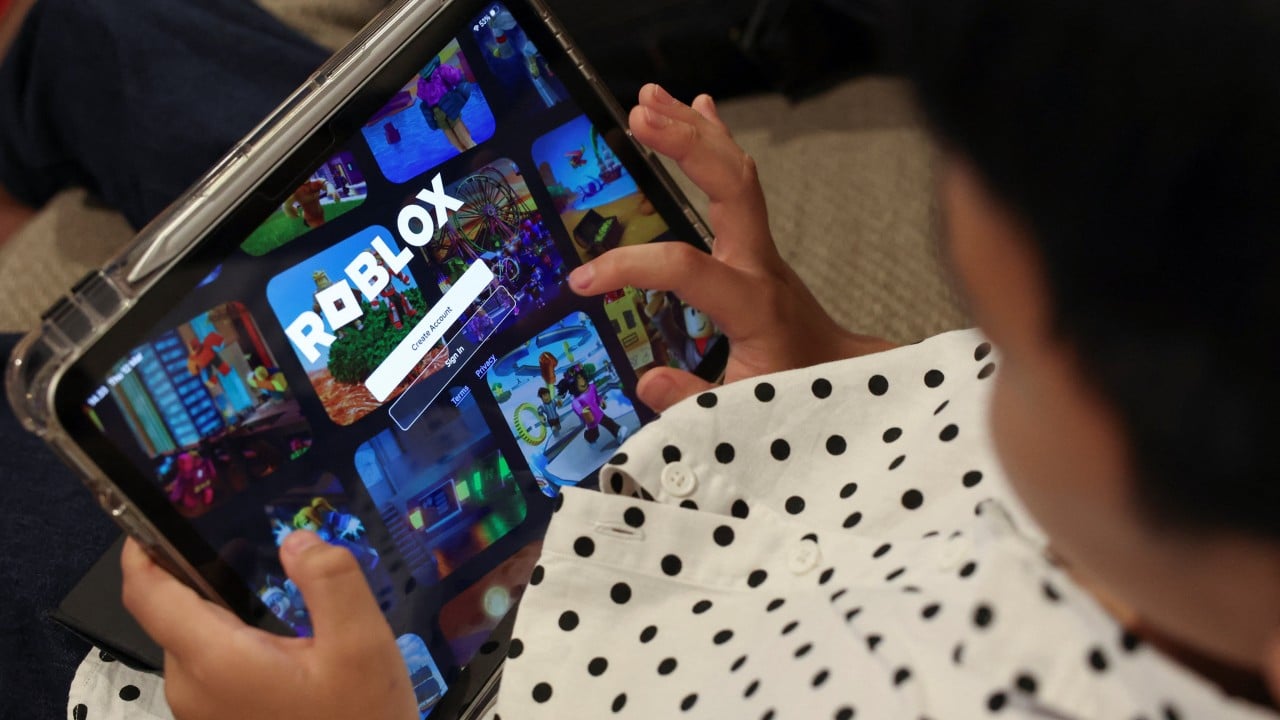
The silence in the apartment was the first warning sign.
For months, the background radiation of the Smirnov household in suburban Moscow had been a chaotic symphony of digital noise. The repetitive, cheerful chimes of blocky avatars jumping off platforms. The frantic tapping of a ten-year-old’s thumbs on a cracked smartphone screen. The occasional burst of pre-teen laughter echoing from the bedroom where Ilya and his younger sister, Sofia, spent their afternoons.
Then, on a dreary Tuesday, the soundtrack of their childhood simply vanished.
When Elena Smirnova walked into the kitchen, she found her children sitting on the sofa, staring blankly at a glowing error screen. It wasn't a standard connection glitch. It was the digital equivalent of a concrete wall. Russia’s state media censor, Roskomnadzor, had just pulled the plug on Roblox.
To the bureaucrats in their sterile offices, it was a routine administrative action. A line item on a spreadsheet dedicated to scrubbing the domestic internet of unregulated foreign influence. They viewed the platform as a frivolous Western toy, a luxury easily discarded in the name of digital sovereignty.
They completely miscalculated the fury of a generation of parents who had just lost their only peace and quiet.
The Digital Playground in a Cold Climate
To understand why a block-building video game became a geopolitical flashpoint, you have to understand what the platform actually represents to the modern family. It is not just a game. It is a sprawling, user-generated universe where kids don’t just play—they hang out, build businesses, create art, and maintain friendships across massive geographic divides.
Consider a hypothetical, yet entirely representative, scenario. A child living in an isolated, snow-locked town in Siberia uses the platform to build a virtual replica of a tropical island. For two hours every evening, they meet up with classmates and cousins living thousands of miles away in St. Petersburg. They aren't just controlling digital puppets; they are sharing a collective cultural space that their physical reality cannot provide.
When the government blocked access, they didn’t just ban software. They effectively padlocked the entrance to the largest, most vibrant youth club in the country.
The immediate aftermath was a collective shockwave through millions of households. Within hours, tech-savvy teenagers began deploying Virtual Private Networks (VPNs) to bypass the digital blockade. But VPNs cost money, slow down connection speeds, and exist in a constant legal gray area within Russia. For the vast majority of ordinary families, the barrier to entry suddenly became too high.
The living rooms grew loud again, but not with laughter. Bored, frustrated, and suddenly severed from their social circles, millions of children turned their angst outward. Parents, already navigating the intense economic and social pressures of contemporary Russian life, found themselves trapped in domestic pressure cookers.
The Anatomy of an Accidental Rebellion
What happened next defied the conventional wisdom of how modern state censorship functions. Usually, when a foreign tech platform is restricted, the public response is a mix of quiet resignation and a migration to domestic alternatives. When authorities cracked down on mainstream Western social media apps, the population largely shrugged and shifted to state-sanctioned lookalikes.
Roblox was different. You cannot easily replicate a global ecosystem of millions of user-created games overnight. The domestic clones felt hollow, sterile, and lonely.
The resistance did not start with political dissidents or organized street protests. It began in the most mundane, fiercely protected corners of the internet: parenting forums, neighborhood chat groups on Telegram, and comment sections of municipal news blogs.
Mothers who usually discussed school curriculums and soup recipes began trading tips on how to flood government feedback portals with complaints. Fathers who typically avoided any interaction with state bureaucracy started signing petitions. The messaging was uniform, pragmatic, and entirely devoid of grand political ideology: Give our children their sandbox back.
The sheer volume of the backlash caught the regulators completely off guard. Bureaucracy is built to handle organized opposition; it is profoundly ill-equipped to deal with a decentralized, spontaneous wave of angry parents demanding a return to domestic tranquility. The state’s feedback channels were paralyzed by an avalanche of digital rage from demographics they traditionally counted on for stability.
The Irony of the Digital Firewall
The official pretext for the ban had been the standard justification used by regulators worldwide: child safety and content moderation. Authorities pointed to the unvetted nature of user-generated content, arguing that the platform exposed minors to inappropriate material and unregulated financial transactions.
It is a danger that every parent recognizes. The internet is a wild, often hostile place for a developing mind. The anxieties of regulators are not entirely fabricated; managing a platform where anyone can code a game requires monumental oversight.
But the blunt-force trauma of a total ban revealed a deeper ignorance of how modern youth interact with technology. By severing access to a mainstream, relatively transparent platform, the state didn't make children safer. Instead, it pushed tech-literate kids further into the digital underground.
Deprived of their primary hub, older children began seeking out unregulated, peer-to-peer gaming networks and obscure forums where the guardrails were non-existent. Parents realized that the ban was achieving the exact opposite of its stated goal. The cure was infinitely more dangerous than the ailment.
The realization sparked an even fiercer wave of advocacy. The narrative shifted from a complaint about bored children to a profound critique of regulatory incompetence. The state had marched into the digital sanctuary of the home and clumsy broken the fragile systems parents used to keep their families sane and connected.
The Backtrack heard Round the Web
Power, particularly the centralized variety, hates to admit a mistake. It requires immense, undeniable pressure for a state apparatus to reverse a public decree.
Yet, as the days ticked by, the domestic friction showed no signs of abating. The complaints didn't fade into the background noise of daily life; they intensified. The economic reality also began to bite. Local digital entrepreneurs, content creators, and developers who made a living designing virtual items within the ecosystem found their livelihoods erased overnight.
Then came the quiet capitulation.
Without a grand press conference or a sweeping declaration of error, the restrictions began to soften. Roskomnadzor quietly adjusted its filters. The concrete wall was dismantled just as abruptly as it had been erected. The blocky avatars returned to the screens of Moscow, St. Petersburg, and Novosibirsk.
It was a staggering victory, not because it changed the political landscape of the nation, but because it demonstrated the hard limits of state control over the private, domestic lives of its citizens. There are certain cultural touchstones so deeply embedded in the daily fabric of the modern family that they cannot be excised by administrative decree without causing a systemic shudder.
The Echoes in the Screen
On a Thursday afternoon, the Smirnov apartment returned to its familiar rhythm.
Ilya sat on the edge of the sofa, his thumbs moving with practiced, lightning speed. From the tiny speaker of his device, the familiar, lo-fi soundtrack of his favorite virtual world filled the room once more. Sofia watched over his shoulder, occasionally shouting instructions on where to place a virtual block.
Elena stood by the kitchen doorway, watching the glow of the screen illuminate her children’s faces. The house was noisy again, chaotic, and entirely normal.
The bureaucrats had retreated to their offices, perhaps realizing that some battles are lost before they even begin. They had tried to redraw the boundaries of a child's imagination, only to find that the parents guarding those boundaries were far more formidable than any firewall they could ever build.


