You sit down at your desk on a Tuesday morning, mug of coffee still steaming, ready to clear your inbox. You type in your password. Red text flashes across the screen: Access Denied.
You try again. Slow down. Precision. Access Denied.
You check your phone to ask a colleague if Slack is down. Your corporate email account on your phone has vanished. Your calendar is blank. Your badge doesn't scan at the turnstile when you go down to the lobby to ask security what happened. Within forty minutes, your entire digital footprint at the company you poured six years into has been scrubbed clean.
No exit interview. No empathetic manager sitting across a mahogany table. No awkward severance package offer.
Just a quiet, mathematical erasure.
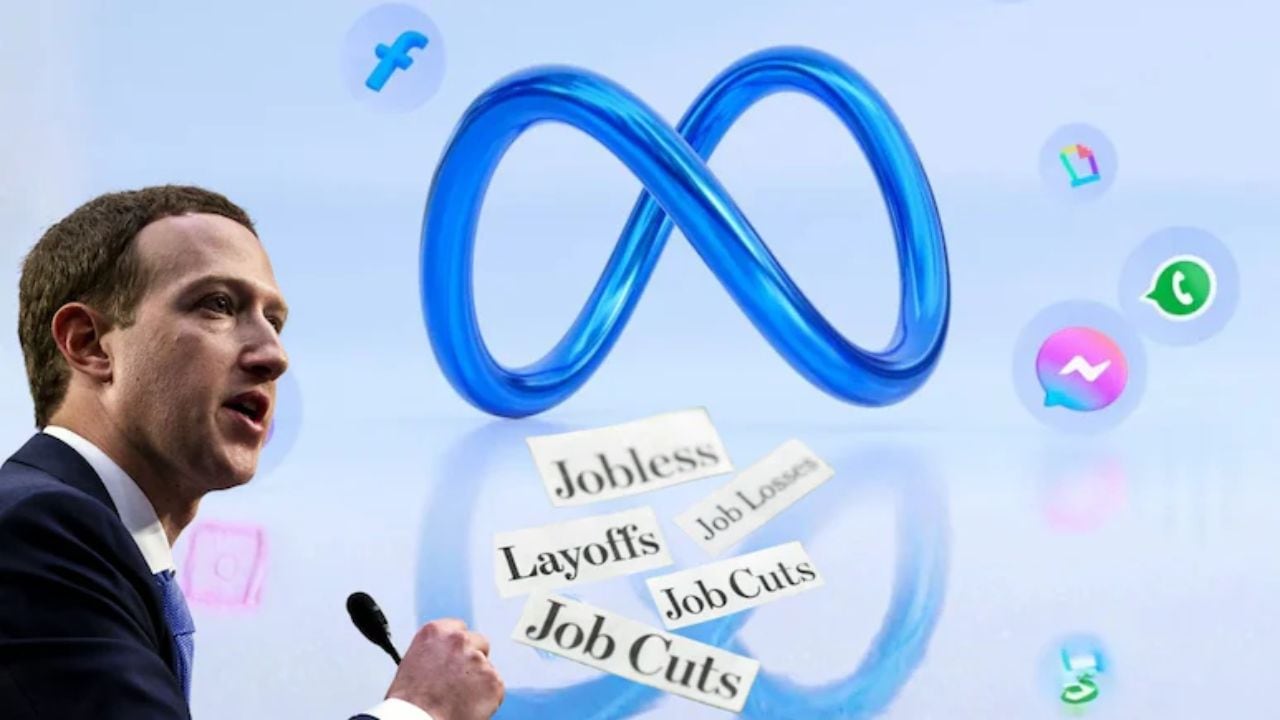
When Meta made headlines after former employees filed lawsuits alleging that automated systems and algorithmic metrics effectively cost them their jobs, the headline wasn't just about corporate downsizing. It was about a brand-new, terrifying legal twilight zone.
If an algorithm decides you aren't performing, tracks your keystrokes, flags your low productivity score, and quietly triggers your termination, who actually fired you? And more importantly, how do you prove in a court of law that the code was wrong?
The Black Box on the Wall
Imagine trying to sue a ghost.
In a traditional wrongful termination suit, you look for a paper trail. You subpoena emails where a manager made biased remarks. You print out performance reviews that contradict sudden disciplinary actions. You gather human evidence.
Algorithms don't leave passive aggressive notes. They don't send emails to HR saying, "I just don't think she's a culture fit."
Instead, they process millions of data points every second. They track idle time, sentence length in customer support chats, repository commits, mouse movements, and response latency. They cross-reference your output with an aggregate average calculated across thousands of workers worldwide.
When the system flags you as an underperformer, it doesn't hold a grudge. It simply updates a status column from Active to Terminated.
When workers challenged Meta's automated processes, their lawyers hit a brick wall almost instantly: the discovery process. To prove that an AI system targeted you unfairly, or that its underlying training data was skewed against older workers or parents who needed flexible hours, you need the algorithm's code.
You need the training weights. You need the raw telemetry logs.
Try asking a tech giant to turn over its proprietary neural network architecture in court. They will wrap it in three layers of trade secret protections, deploy a legion of defense attorneys, and argue that disclosing how their software functions would cause irreparable commercial harm.
The burden of proof rests on the employee. But the evidence is locked inside the company's vault.
The Illusion of the Human in the Loop
Companies often defend these systems by pointing to human oversight. They insist that the software merely provides recommendations—that a manager, a real person, ultimately makes the call.
It sounds comforting on paper. In practice, it is a legal shield.
Consider what happens next: a manager receives a weekly automated dashboard. Out of fifty direct reports, three names are highlighted in red, flagged by the system as bottom-tier performers. The system suggests non-renewal or termination.
The manager has five minutes between meetings. They don't know how the neural net calculated that risk score. They don't know that the worker spent three days fixing a critical backend architecture bug that doesn't show up on standard commit counters.
The manager clicks Approve.
In court, the company points to that click. "See?" they argue. "A human made the decision. The AI was just a productivity tool."
Yet if you ask that manager why they clicked it, they will tell you they trusted the data. The human wasn't an auditor; they were a rubber stamp.
This creates a perfect circle of non-accountability. The engineers say they only built the tool. The executives say they only bought the software. The managers say they only followed the software's recommendations. The software says nothing at all.
The Math of Exclusion
The problem goes deeper than accidental errors. It lives in the fundamental architecture of predictive systems.
Artificial intelligence does not understand context. It understands patterns.
If an automated monitoring tool is trained on historical company data from a period when working eighty hours a week was the unwritten rule, it learns that working eighty hours a week is what a good employee looks like.
A mid-level developer who suddenly takes time off to care for a sick child will see their productivity metrics drop. The algorithm doesn't know about the sick child. It sees a anomaly. A downward vector. A threat to team efficiency.
When that worker attempts to challenge their firing, they aren't just arguing against a bad decision. They are arguing against a statistical model that defines normalcy in a way that excludes human reality.
How do you demonstrate that a model's feature weighting created a systemic bias against people in your demographic when the model itself updates its parameters dynamically every single day?
You can't snapshot the mind of a machine that shifts while you look at it.
The Cold Horizon
The lawsuits moving through the legal system against companies using automated termination systems are not merely labor disputes. They are the initial skirmishes of a fundamental shift in human agency.
For centuries, employment was a social contract between people. It was messy, imperfect, and frequently unfair. But it was fundamentally human. You could look your boss in the eye. You could explain your context. You could negotiate.
Now, workers find themselves appealing to HR representatives who themselves do not understand why the software flagged a specific worker for removal. They are reading from a script generated by the same platform that locked the door.
You pack your desk items into a cardboard box. You walk past the lobby turnstiles that no longer recognize your presence.
Outside, the street is noisy and indifferent. You look back up at the glass tower, where thousands of parameters are adjusting themselves in real time, already filling the gap you left behind, silently optimizing for a world where nobody has to explain anything to anyone ever again.