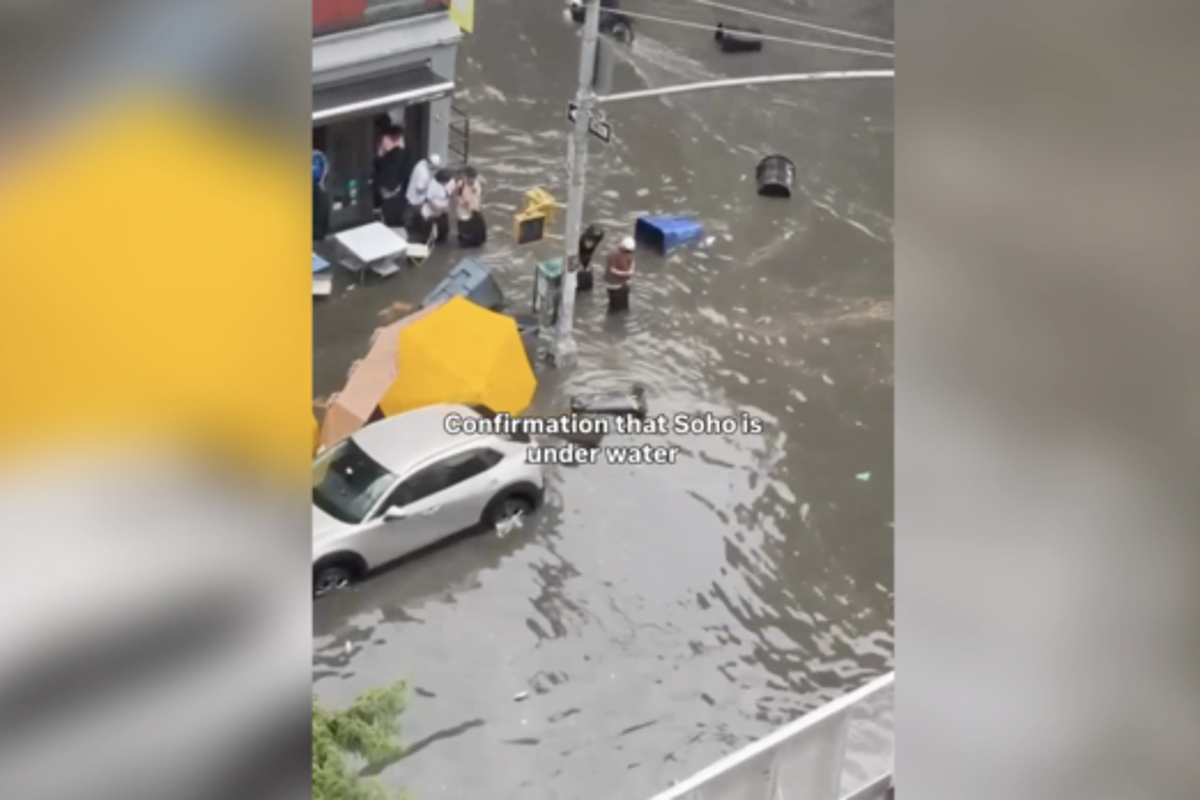
The water did not fall. It arrived.
It did not begin with the gentle, rhythmic patter that invites you to curl up with a book. It started with a sudden, violent transformation of the air, a shifting pressure that turned the atmosphere above Manhattan into an ocean suspended upside down. When it dropped, it bypassed the gutters entirely. It ignored the storm drains. Within twenty minutes, the city we built to conquer nature became an aquarium.
We like to pretend our cities are solid. We lay down asphalt, stack steel, and pour billions of tons of concrete, creating a grand illusion of permanence. But New York is an island grid laid over a forgotten network of hills, creeks, and salt marshes. On a normal day, the engineered veneer holds. On a Friday morning in late September, the veneer cracked.
Consider Sarah. She is a composite of the three different women I watched from a third-story window in Brooklyn, but her choices that morning belonged to millions. She was wearing her favorite suede boots because the morning forecast had predicted a standard autumn shower. She had a 9:00 AM presentation. By 8:45 AM, she was standing on a subway platform where the air smelled of ozone and wet rust, watching a brown waterfall cascade down the steps from the street above.
The water didn’t trickle. It roared.
It swept past the turnstiles, carrying discarded coffee cups, plastic bags, and the collective illusion of morning routines. Sarah watched a man in a tailored suit attempt to wade through the concourse. Within three steps, the water was at his knees. Within five, it reached his thighs. He didn't turn back because of the ruined fabric; he turned back because the current under the street was strong enough to sweep him into the dark of the tunnels.
This is the hidden tax of the modern metropolis: the fragility of our underground arteries.
Our grandparents built the subway system over a century ago. They dug trenches, laid iron, and calculated water runoff based on the historic weather patterns of the early 1900s. They did not plan for a world where a single storm could dump three inches of water in sixty minutes. They did not foresee a sky that could hold forty percent more moisture than it did when the first shovel hit the dirt.
When three inches of rain hits an acre of forest, the soil drinks it. The roots hold it. When three inches of rain hits an acre of Brooklyn asphalt, it has nowhere to go but forward. It races along the pitch of the road, gathers speed, and hunts for the lowest point available. In New York, the lowest point is always the transit system.
By 10:00 AM, the paralysis was total.
The emergency alerts on our phones stopped sounding like warnings and began to sound like a ambient soundtrack to disaster. Flash Flood Warning. Seek higher ground. But where is higher ground when you are trapped in a basement apartment in Queens?
For thousands of New Yorkers living in converted garden flats, the storm wasn't an inconvenience or a delayed commute. It was an existential threat. Water doesn't respect building codes or illegal leases. It pushes through floorboards. It erupts from toilets as the sewer mains back up under the pressure of a million flooded streets.
I remember the sound of the sirens that morning. They didn't have their usual urgent, piercing rhythm. They sounded muffled, exhausted, as if the ambulances and fire engines were choking on the very air they were driving through. Vehicles were abandoned in the middle of major thoroughfares, their hazard lights blinking lazily beneath the surface of sudden, muddy lakes. Central Park recorded over seven inches of rain before the day was half over. That is more than the city usually sees in the entire month of September, delivered in the span of a morning coffee break.
The question everyone asked afterward—over pints in dry bars, on social media, in the hallways of flooded apartment buildings—was simple: Why weren't we ready?
The answer is uncomfortable because it exposes the limits of human foresight. To engineer a city that can withstand a five-inch deluge in three hours requires a complete dismantling of the world we see. It means ripping up the streets to install drainage pipes the size of subway cars. It means turning parking lots into sunken parks designed to flood. It means accepting that our current infrastructure is a relic of a climate that no longer exists.
We live in the gap between the world we built and the world that is arriving.
But human beings are stubborn creatures. As the afternoon wore on and the sky thinned from an angry charcoal to a bruised purple, the narrative shifted from survival to adaptation. You saw it in the way strangers formed human chains to help elderly neighbors cross streets that had become rivers. You saw it in the delivery drivers who, remarkably, kept pedaling their e-bikes through knee-deep water, plastic bags tied around their sneakers, determined to deliver lukewarm takeout to people who refused to step outside.
There is a specific kind of dark humor that emerges when a city stops working. I watched two teenagers inflate a pool raft and paddle down a flooded avenue in Williamsburg, waving at onlookers as if they were on a Caribbean holiday. It was a ridiculous sight, a piece of bright blue plastic floating past submerged BMWs.
Yet, beneath the laughter, there was a quiet, collective realization. This wasn't a freak occurrence. It wasn't a "once-in-a-century" anomaly. We have used that phrase three times in the last decade. The extraordinary has become ordinary, and our infrastructure is failing the test.
The water eventually receded, as it always does. It left behind a gray, silty residue on the sidewalks, a tideline of mud that marked exactly how high the river had risen before the city's pumps could catch their breath. By Saturday morning, the sun was out. The air was crisp, smelling faintly of damp earth and exhaust fumes.
Sarah went back to the subway. Her suede boots were ruined, sitting in a trash can in her apartment, replaced by a pair of heavy rubber rain gear she had bought at a premium from a hardware store that stayed open during the worst of the deluge. The trains were running late, their electronic signs flashing warnings about residual delays and track maintenance.
Everyone on the platform looked at the tracks. We looked at the dark tunnels where the water had been less than twenty-four hours ago. No one spoke about it. We plugged in our headphones, adjusted our bags, and waited for the screech of the metal wheels against the iron rails.
We stepped onto the train because we had to. But as the doors slid shut and the car plunged into the subterranean darkness, every person in that car knew that the next storm was already gathering somewhere over the ocean, waiting to see if we had learned anything at all from the day the sky came down.