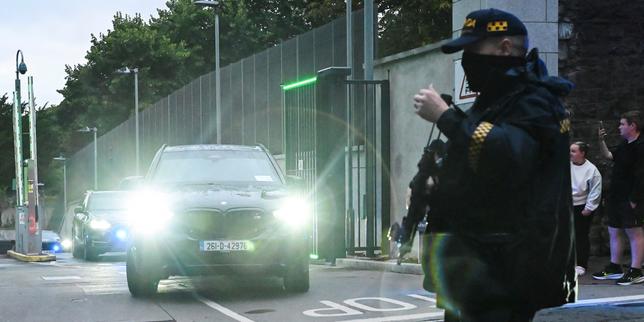
For about a decade, Daniel Kinahan lived openly under the desert sun of Dubai. He posed for photographs with boxing champions and tried to rebrand himself as a legitimate sports mogul. That luxury bubble burst when an Irish Air Corps flight touched down at Casement Aerodrome near Dublin, carrying a man international authorities spent years trying to corner.
Kinahan, 49, is now sitting inside the high-security Portlaoise Prison. He faces a charge of directing an organized crime group before Dublin's Special Criminal Court. This move isn't just another routine arrest. It signals a brutal reality check for white-collar fugitives who thought the United Arab Emirates was an untouchable sanctuary. For another look, consider: this related article.
How the Safe Haven Crumbled
Dubai used to be the ultimate escape hatch for international underworld figures. If you had enough cash and kept a low profile, you could buy villas, sip expensive drinks, and ignore extradition requests. But international pressure changed the math. The UAE courts ultimately refused to block the legal transfer after a formal request and an extradition treaty between Dublin and Abu Dhabi locked into place.
When police detained Kinahan in Dubai back in April, the writing was on the wall. He tried defending himself in recent interviews, claiming he's a scapegoat caught up in a massive conspiracy. Courts don't care about podcast PR tours. They care about warrants, evidence, and state treaties. Similar coverage on the subject has been provided by BBC News.
The mechanics of his return involved a military-grade security operation. We are talking about armed forces, specialized prison units, and a convoy designed to deter any high-risk interruptions. Ireland's Special Criminal Court operates without a jury using a three-judge panel specifically to handle major organized crime and terrorism cases where ordinary courts face intimidation risks.
The Scale of the Kinahan Empire
To understand why this extradition matters, you have to look at the sprawling network prosecutors are targeting. The U.S. Treasury Department didn't slap sanctions on the Kinahan Organized Crime Group for petty theft. Back in 2022, Washington put a five million dollar bounty on key family members, detailing an operation stretching from South American cocaine cartels down to local European street distribution.
Investigators claim the group brought in billions over the years, masking illicit drug and weapon smuggling behind a façade of front companies, real estate, and boxing promotions. From pubs on the Costa del Sol to shipping containers moving through English ports, the infrastructure was massive.
When key lieutenant Thomas "Bomber" Kavanagh got hit with a 21-year prison sentence in Britain after authorities found massive drug loads hidden inside industrial equipment, the pressure mounted. Another top associate, Sean McGovern, was pulled out of Dubai and handed a lengthy prison sentence. Kinahan was the last major pillar standing overseas.
What Happens Next in Dublin
The legal battle is only beginning. Kinahan’s next formal court appearance is scheduled for October. His defense will likely poke holes in the state's definition of "directing" an organization from thousands of miles away. Yet, prosecutors have spent over a decade building a paper and digital trail linking communications, financial transactions, and operational orders directly back to him.
This case sets a heavy precedent. If Dubai can hand over a high-value target like Kinahan under bilateral agreements, other luxury safe havens are going to look a lot less secure for global kingpins. The era of running a transnational cartel from a high-rise balcony in the Persian Gulf is officially coming to a close.


