Paper.
In a world of encrypted satellites, hypersonic missiles, and silent cyberwarfare, the fate of the Middle East can still hinge on a few sheets of heavy stationery carried across a desert in the briefcase of a diplomatic courier.
Consider what happens in a small apartment in central Tehran when a rumor like this breaks. Let us invent a character to see it clearly, a composite of the millions of ordinary people living beneath the weight of high-stakes geopolitics. Call her Maryam. She is forty-two, teaches high school chemistry, and keeps three different currency-tracking apps open on her phone while she grades papers at her kitchen table. The fluorescent bulb above her sink flickers with a low, persistent hum. Outside her window, the exhaust of aging sedans hangs thick against the Alborz mountains.
When Maryam hears on the evening broadcast that Washington has sent a letter to Tehran—and that senior officials are calling its softer tone a victory—her first instinct is not patriotic pride. It is math. She immediately calculates what a shift in diplomatic temperature might do to the rial before morning, whether the price of imported insulin for her father will stabilize, or whether the quiet dread she feels every time an air-defense siren tests the night sky might finally ease.
For Maryam, the distance between a "softer tone" in Washington and a "warning of retaliation" in Tehran is not an academic debate. It is the exact width of the tightrope she walks every single day.
The Architecture of a Diplomatic Illusion
To understand why a single piece of correspondence can simultaneously spark triumphalism and threats of war, you have to understand the theater of survival in the Islamic Republic.
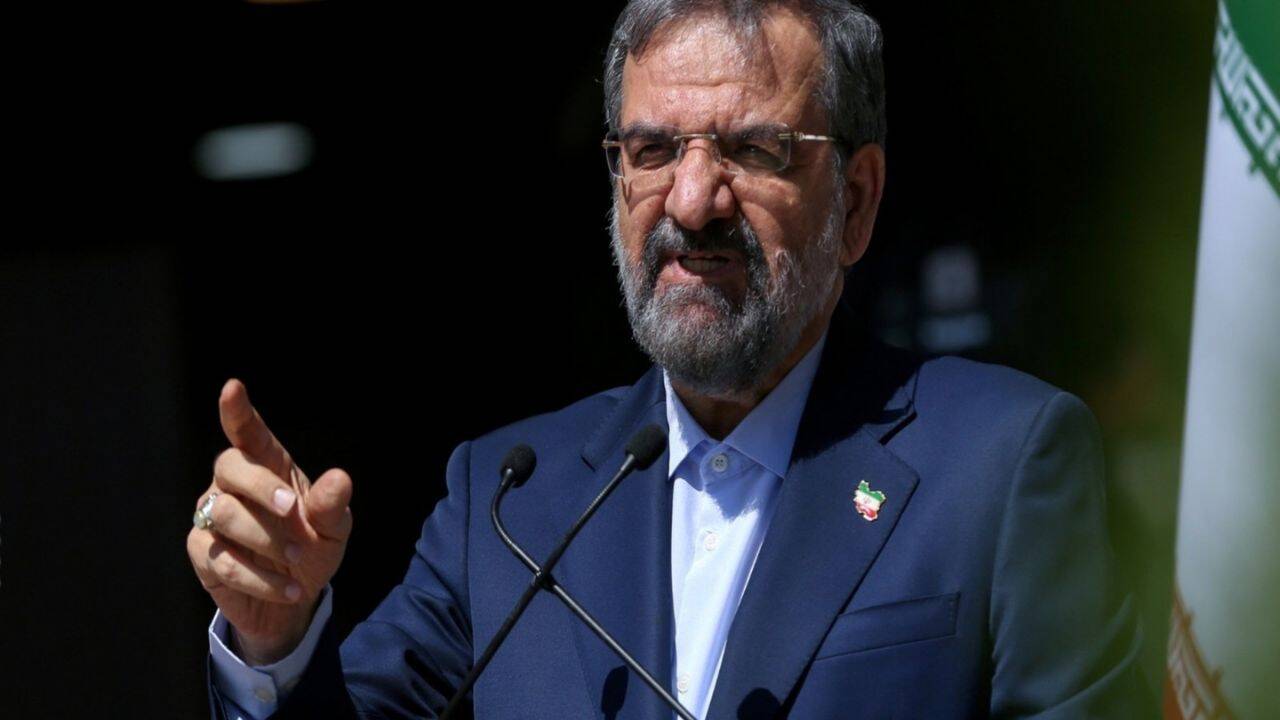
When news surfaced that the United States had dispatched a message to Iran's leadership, the reaction from Mohsen Rezaei—a seasoned political insider, former commander of the Islamic Revolutionary Guard Corps, and a man who has spent four decades surviving the treacherous currents of Tehran’s power structure—was swift and deliberate. He framed the letter's noticeably softer tone not as an olive branch, nor as a neutral diplomatic feeler, but as a capitulation. A victory. Proof that American pressure had buckled against Iranian endurance.
At almost the exact same moment, Supreme Leader Ayatollah Ali Khamenei stood before his audience and drew a line in the sand with a sharpened stick. Any miscalculation, any strike, any attempt to coerce Iran through force or trickery would be met with devastating retaliation.
To an outside observer sitting in a comfortable café in London or Chicago, this looks like sheer schizophrenia. How can a nation claim its adversary is backing down while simultaneously preparing its bunkers for an imminent strike?
I have spent years watching how statecraft functions under siege, and the answer is simpler—and far more chilling—than Western analysts often admit. Think of it like two men locked in a cramped room where both are holding open cans of gasoline, and one of them suddenly lowers his voice to ask if they can crack a window. The other man cannot afford to look relieved. If he drops his guard, he loses his leverage. So he shouts to the crowd outside the door that the other guy is begging for mercy, while keeping his thumb firmly pressed against the flint of his lighter.
In Tehran, admitting that you need a deal is political suicide. Claiming that the enemy has finally come to their senses and softened their posture, however, is currency. It allows hardliners to sell potential diplomacy to their own fiercely ideological base without ever using the forbidden word: compromise.
The Weight of Words in a Sanctioned Economy
Strip away the press releases and the televised speeches, and you find the invisible machinery driving this sudden sensitivity to tone.
Sanctions are often discussed in sterile macroeconomic terms—percentage drops in gross domestic product, barrels per day of restricted crude exports, frozen central bank assets. Those numbers are real, and they are staggering. Over the past decade, waves of financial restrictions have hollowed out Iran's middle class, driven inflation routinely past the thirty and forty percent marks, and turned basic international banking into an underground obstacle course of front companies and barter agreements.
When you live inside that reality, you develop an acute, almost supernatural ear for nuance.
I remember sitting in a cramped currency exchange office in Dubai years ago, watching brokers stare at three television screens muted to different news channels. Nobody cared about the official policy papers. They watched the body language of diplomats walking into hotels in Vienna and Muscat. A furrowed brow meant the dirham-to-rial rate ticked upward within ninety seconds. A half-smile on a tarmac sent traders scrambling for their phones to buy local equities.
This is the unspoken truth behind Mohsen Rezaei's eagerness to declare a softer American tone as a victory. The Iranian political establishment knows that the domestic pressure cooker is nearing its limits. Every month of economic isolation erodes the silent social contract between the state and the street. Yet the leadership is trapped by its own forty-five-year mythology of "heroic resistance."
By framing Washington’s outreach as a sign of American weakness—a realization by the White House that sanctions and military threats have failed—men like Rezaei attempt to square an impossible circle. They are trying to open the door to de-escalation while keeping the padlock firmly bolted on the outside so nobody accuses them of surrender.
Why the Supreme Leader Cannot Afford to Smile
If Rezaei’s role is to signal to the domestic audience that their endurance is paying off, Khamenei’s role is to ensure that nobody—neither Washington, nor Tel Aviv, nor the restless factions inside his own government—mistakes a diplomatic opening for vulnerability.
History haunts every decision made in the Supreme Leader’s compound. To understand Khamenei’s reflexive warning of retaliation, you have to look back at how Tehran views its own modern timeline. They look at Muammar Gaddafi in Libya, who surrendered his nuclear program in 2003 in exchange for diplomatic normalization, only to be dragged from a drainage pipe and killed during a NATO-backed uprising eight years later. They look at Saddam Hussein in Iraq. They look at the 2015 nuclear deal—the Joint Comprehensive Plan of Action—which Iran signed after years of grueling negotiations, only to watch Washington tear it up unilaterally three years later and impose "maximum pressure."
From the perspective of Tehran’s security apparatus, softening your posture when an adversary speaks gently is how regimes die.
Let us be brutally honest about the psychology at play here. When you have spent nearly half a century defining your legitimacy through defiance, trust is not merely absent; it is viewed as a fatal pathology. Every letter from Washington is examined under a microscope for invisible ink. Is the softer tone a genuine search for an off-ramp from regional conflict? Or is it a lullaby designed to put Iran’s air defenses to sleep before a coordinated strike on its nuclear infrastructure?
Because Khamenei cannot know for certain which is true, he defaults to the only doctrine that has kept his government intact since 1979: deterrence through absolute unpredictability. He accepts the letter, allows his lieutenants to celebrate its polite phrasing, and then immediately reminds the world that Iran’s missile silos are fueled and ready.
The Human Toll of Strategic Ambiguity
While statesmen parse adjectives and intelligence agencies dissect courier routes, the people on the ground absorb the shockwaves.
Go back to Maryam at her kitchen table in Tehran. She is not naive. She knows Rezaei’s political playbook by heart, and she has heard the Supreme Leader’s warnings of retaliation since she was a girl wearing a mandatory headscarf in primary school. She does not trust Washington to save her, and she does not trust her own government to prioritize her standard of living over its regional ambitions.
What exhausts Maryam—and millions like her across Iran, Iraq, Lebanon, and the broader Persian Gulf—is the purgatory of permanent suspense.
Strategic ambiguity is a beloved tool of diplomats. Professors at elite universities write thick books praising its elegance. By keeping your intentions slightly blurred, you prevent your adversary from making a decisive move. You buy time. You preserve options.
On the street, however, strategic ambiguity feels like living inside a house where someone is constantly flicking a lighter next to a leaking gas pipe. You cannot plan a wedding. You cannot decide whether to take out a loan to fix a leaking roof. Young engineers and doctors pack their bags and leave for Toronto, Berlin, or Sydney not because bombs are falling today, but because they cannot bear another decade of wondering whether bombs will fall next Tuesday.
A single letter from Washington briefly cracks open a window in that suffocating room. For a few hours, the air feels slightly cooler. People dare to whisper that maybe, just maybe, the adults in both capitals have realized that a full-scale war would burn the entire neighborhood to ash.
Then comes the speech about retaliation, and the window slams shut again.
The Trap Hidden Inside a "Victory"
There is a profound danger in declaring victory before the ink on an actual agreement is even wet.
When Iranian officials frame a softer American tone as a triumph, they create an immediate expectation gap. If Washington’s letter was merely an opening gambit—a polite way of saying, "Let’s talk before this spirals out of control, though our core demands remain unchanged"—then Tehran’s public celebration sets the stage for catastrophic disappointment.
Imagine a poker game where one player nods politely across the table, and the other player immediately stands up, sweeps his arms over the pot, and announces to the room that his opponent is folding. When the first player calmly stays in the hand and raises the bet, the man who prematurely claimed victory is now cornered. To save face in front of the crowd, he has to go all-in with a hand he never wanted to play.
This is the razor's edge on which American and Iranian diplomacy currently balances.
Washington sends a calibrated message hoping to lower the temperature in a volatile region, perhaps seeking guardrails against direct military confrontation or miscalculation at sea. Tehran receives that message through a prism of deep historical paranoia and acute domestic fragility. To digest it without choking on their own rhetoric, Iranian officials spin the tone as a concession. Meanwhile, the Supreme Leader ensures that the military threat remains front and center so that nobody mistakes political spin for military weakness.
Both sides are speaking to multiple audiences at once—foreign intelligence services, domestic hardliners, nervous regional allies, and restless populations—using the exact same sentences to convey completely opposite meanings.
The Silence After the Courier Leaves
Late at night in Tehran, the traffic finally thins out. The smog settles low over the concrete apartment blocks, and the temperature drops as cold air rolls down off the snow-dusted peaks of Mount Tochal.
Maryam finishes grading her last stack of chemistry exams. She turns off the flickering fluorescent light above her sink, walks into her living room, and checks her phone one final time before setting it on the charger. The news ticker at the bottom of the screen is still running the same split-screen narrative: an official praising the respectful tone of the American message on the left, a commander inspecting missile batteries on the right.
She locks the screen, plunging the room into darkness, and listens to the distant, muffled hum of the city—waiting, like everyone else between the Mediterranean and the Strait of Hormuz, to find out whether the next message between Washington and Tehran will arrive on paper, or in the sky.