The belief that modern creativity operates independently of historical context ignores the fundamental unit economics of cultural capital. Cultural institutions do not generate future concepts by erasing their lineage; they generate them by utilizing the material and symbolic infrastructure of the past as a structural multiplier. The tension between historical preservation and forward-looking creation is not a philosophical paradox, but an optimization problem. Institutional longevity depends on the capacity to transform physical heritage into an incubator for contemporary intellectual output.
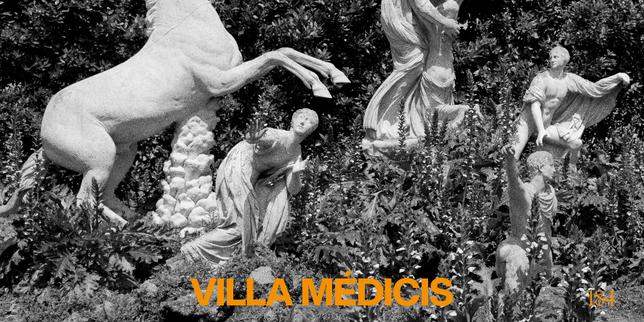
To understand this dynamic, one must look at the operational framework of elite cultural residencies, such as the Académie de France à Rome at the Villa Medici. These entities function as long-term capital allocators where the primary assets are historical prestige, physical space, and cross-disciplinary density. The objective is to convert static heritage—the "well-built houses"—into a dynamic engine for systemic innovation.
The Architecture of Intellectual Leverage
Historical infrastructure provides a non-monetary subsidy that lowers the barrier to high-risk creative experimentation. In a standard market environment, contemporary creators face significant friction: high overhead costs, short-term commercial pressure, and siloed operating environments. A capitalized heritage asset eliminates these barriers through a structured three-part framework.
- The Baseline Subsidy (Spatial Capital): The physical preservation of historic sites provides zero-marginal-cost space for long-term project development. When an institution provides historical grounds to current researchers, it removes real estate cost from the innovation equation.
- The Credibility Multiplier (Symbolic Capital): Affiliation with an institution built across centuries accelerates a creator's access to external networks, funding, and distribution channels. The historical brand acts as a risk-mitigation mechanism for third-party investors.
- The Frictional Intersect (Cross-Disciplinary Density): By grouping diverse specialists—architects, historic restorers, visual artists, and digital designers—within a single footprint, the institution forces cross-pollination. This structural proximity accelerates knowledge transfer faster than modern, hyper-specialized digital networks.
This model shows that innovation is a process of recombination. New concepts are rarely entirely novel; they are reconfigurations of existing knowledge applied to contemporary constraints.
The Operational Mechanics of the "Reenchantment" Strategy
A clear example of this framework in action is the systemic updating of interior spaces within historic monuments. Rather than treating a Renaissance structure as a static museum, an effective strategy treats the physical space as an active laboratory for living craftsmanship.
This approach addresses two distinct structural needs simultaneously. First, it solves the depreciation problem of aging infrastructure by introducing modern utilities and aesthetics. Second, it serves as a direct procurement mechanism for local master artisans and contemporary industrial designers.
[Static Heritage Asset] ➔ [Infusion of Contemporary Design & Master Craftsmanship] ➔ [Modernized High-Value Infrastructure + Validated Living Traditions]
When an institution commissions contemporary designers to work with historic textile weavers, plasterers, or cabinetmakers, the result is a measurable upgrade to the asset's utility. This integration establishes a clear cause-and-effect loop: the historical asset gains relevance and durability, while the contemporary practitioners acquire verified institutional validation that increases their market valuation.
The Limits of Heritage-Driven Incubation
This model contains specific operational bottlenecks. The primary risk is institutional inertia, where the preservation of symbolic capital overrides the mandate for innovation.
- The Preservation Trap: Excessive regulatory or bureaucratic focus on structural preservation can paralyze functional utility, turning a living laboratory into an inaccessible archive.
- The Access Bottleneck: The reliance on high symbolic capital can create an insular ecosystem, restricting the entry pipeline to a homogeneous cohort and limiting the diversity of inputs required for disruptive innovation.
- The Commercialization Deficit: Ideas generated within subsidized environments often struggle to transition into self-sustaining market models, creating a permanent dependency on external philanthropic or state capital.
To counter these structural risks, cultural institutions must diversify their input pipelines. Programs that integrate regional vocational students, technical apprentices, and agricultural specialists alongside traditional fine artists convert an elite residency into a scalable educational platform. This broadens the labor supply for specialized industries while modernizing old techniques through exposure to new perspectives.
Systemic Recommendations for Cultural Asset Optimization
To maximize the return on historical assets, administrators must view their properties through an operational lens.
First, treat physical square footage as a venture fund portfolio. Allocate a fixed percentage to pure historical preservation, a portion to active cross-disciplinary production, and a final segment to high-risk, experimental initiatives. This balance ensures the foundational asset remains stable while actively supporting future growth.
Second, establish explicit feedback loops between historical research and technical execution. The integration of modern technology—such as using advanced digital modeling to replicate or adapt centuries-old architectural patterns—ensures that historical knowledge becomes an active input for modern industry rather than a forgotten artifact. Longevity belongs to institutions that treat heritage not as a finished monument, but as a permanent, functional foundation for continuous production.