The Feel-Good Trap of Cetacean Rescue
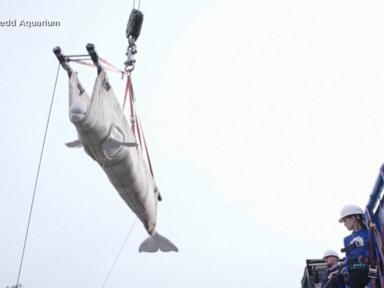
The media loves a tear-jerker rescue narrative. CAMERA PAN: A massive crane, custom-built sling, dripping salt water, and a chorus of teary-eyed activists watching a beluga whale hoist through the air toward a "sanctuary." The headlines scream heroics. The public donates millions. The narrative is tidy, moral, and completely brain-dead.
What the mainstream media paints as a triumphant act of mercy is often nothing more than a high-stakes, eco-branded vanity project. Moving captive cetaceans from a defunct marine park to an ocean pen doesn't solve a systemic crisis. It trades an ugly concrete prison for a prettier, infinitely more volatile marine cage while the root mechanics of captivity remain entirely unaddressed.
I’ve watched well-meaning organizations burn through astronomical budgets—tens of millions of dollars—to move individual animals into sea pens, while ignoring the cold biological realities of captive marine mammals. We are prioritizing human emotional catharsis over actual animal welfare.
We need to stop celebrating logistics operations disguised as moral victories.
The Biological Fallacy of the Open-Ocean Pen
Here is the inconvenient truth about captive-born or long-term captive belugas: their natural instincts are gone. Atrophied. Replaced by decades of total reliance on human trainers, fixed feeding schedules, and sterile, acoustic environments.
The public imagines that placing a beluga into a netted ocean bay restores its freedom. That is a fantasy.
[Concrete Tank] ----(Human Transfer)----> [Net Pen Sanctuary]
   | Direct Control                         | Environmental Volatility
   | Fixed Acoustics                        | Unfiltered Pathogens
   | Zero Wild Instincts Required           | High Stress & Acoustic Noise
When you transfer an animal accustomed to chemically treated, temperature-controlled concrete tanks into a coastal pen, you introduce a gauntlet of stressors that their immune systems are uniquely ill-equipped to handle:
- Pathogen Exposure: Open sea water carries wild bacterial strains, parasites, and run-off contaminants that indoor facilities filter out.
- Acoustic Trauma: Concrete tanks reflect sound in predictable patterns. Coastal bays subject sensitive echolocating mammals to unpredictable shipping noise, naval sonar, and storm surges.
- Thermal Shock: Natural coastal waters fluctuate wildly in temperature compared to regulated park pools, taxing the animal's metabolism.
Sanctuaries aren't rewilding programs. They are outdoor hospices with better public relations.
Follow the Money: The Unaffordable Cost per Tail
Let's talk about the math that animal welfare non-profits refuse to put in their fundraising emails.
Relocating two beluga whales to a sea sanctuary costs upwards of $15 million in upfront capital expenditure, with recurring annual maintenance costs pushing $2 million. That is $2 million per year for two individuals.
Imagine a scenario where that same $15 million is directed toward primary ocean conservation:
| Investment Strategy | Financial Commitment | Measurable Impact |
|---|---|---|
| Relocation Sanctuary | $15M + $2M/yr | Sustains 2 captive individuals with low survival odds. |
| Habitat Protection | $15M baseline | Protects thousands of square miles of wild Arctic marine habitat. |
| Acoustic Mitigation | $2M/yr recurring | Funds real-time shipping rerouting to prevent wild beluga vessel strikes. |
By obsessing over individual captive stars made famous by viral videos, we starve the front lines of wild conservation. We sacrifice entire wild populations to buy peace of mind for suburban donors who want to feel like they saved Willy.
The "Rescue" Fallacy: Dismantling the FAQs
Aren't sea sanctuaries always better than concrete tanks?
No. This is a false binary. A high-quality, controlled facility with expert veterinary care, established social groups, and routine health checks routinely yields lower mortality rates than immediate, high-stress transfers to coastal net pens. If an animal is geriatric, immune-compromised, or chronically ill, the physical strain of transport and the unpredictable nature of an open-sea environment can be a death sentence disguised as liberation.
Can't these belugas eventually be released into the wild?
Zero chance. Long-term captive belugas lack the social structure, hunting techniques, and immune resistance required to survive in a wild pod. Releasing them directly into the wild isn't freedom; it is slow, guaranteed starvation.
Stop Funding Moral Posing
If we want to fix our relationship with marine life, we have to abandon the theater.
Stop donating to high-profile, single-animal transport circuses that burn eight figures to drop a captive whale into an offshore cage for a photo op. Demand that regulatory bodies ban captive breeding programs outright, force defunct parks to maintain lifetime veterinary care on-site, and direct public funds toward aggressive habitat protection in the Arctic.
Anything less is just buying yourself a ticket to an expensive emotional cover-up.


