The delivery did not arrive with a flash of sirens or the theatrical flourish of a late-night breakthrough. It showed up as a stack of cold, metallic hard drives. Terabytes of data, heavy with the weight of things hidden for half a year.
When the federal government finally handed over the evidence to Hennepin County prosecutors on a humid Monday morning, it felt less like a triumph of justice and more like the opening of a tomb. Inside those drives lay the digital ghosts of Operation Metro Surge—the frantic, wintertime federal immigration blitz that left two American citizens dead, a neighborhood fractured, and a sovereign state locked in a bitter legal mutiny against Washington.
For six months, the state of Minnesota was told to look away.
Local detectives who knocked on federal doors were met with polite stonewalling and administrative lockouts. The Department of Homeland Security issued sweeping, pre-emptive exonerations, painting the deceased as immediate, violent threats to federal officers. But reality has a stubborn way of leaking through the seams of an official narrative.
Now, the state finally has the keys to the vault. They have the body-worn camera footage. They have the raw audio. Most importantly, the Minnesota Bureau of Criminal Apprehension has a bullet-riddled SUV towed into a secure garage, its metal skin waiting to be read like a ledger.
The Watchers in the Cold
To understand how a Midwestern city became a jurisdictional war zone, you have to go back to January, when the air in Minneapolis was cold enough to crack glass.
Operation Metro Surge had descended on the city like an occupying army. Masked tactical units in unmarked vans hummed on residential street corners. The terror among the city’s immigrant population was immediate, dense, and quiet. In response, a loose network of locals did what citizens do when they feel their home is being altered by force: they began to watch.
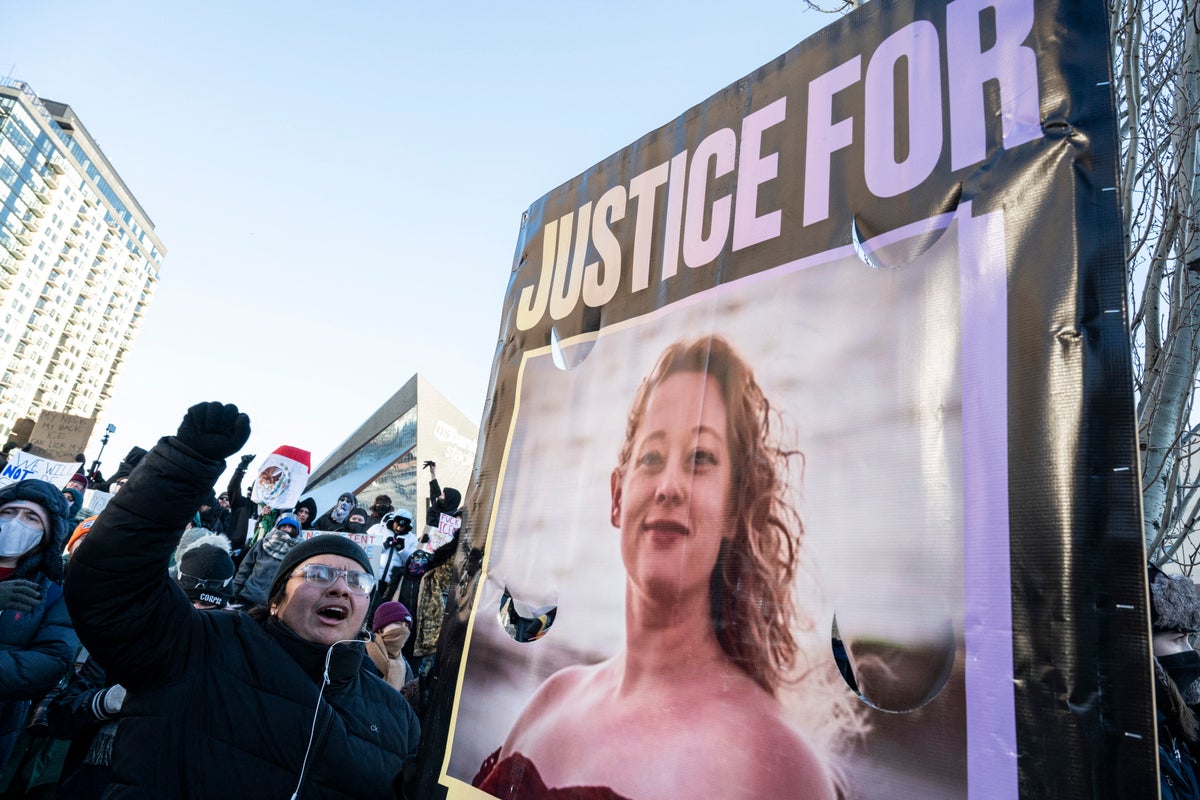
Renee Good was a 37-year-old writer and a mother of three. Alex Pretti was an intensive care nurse, a man whose entire professional life was calibrated toward keeping fragile bodies alive. Neither of them was a fugitive. Neither was undocumented. They were citizen observers, standing on sidewalks, recording encounters, acting as human speed bumps against the excesses of unchecked federal authority.
On January 7, Renee Good pulled her SUV off East 34th Street and Portland Avenue. There was a verbal encounter with an ICE agent named Jonathan Ross. Minutes later, she was dead in the driver's seat. The official report claimed she used her vehicle as a weapon. A private autopsy later revealed three bullet wounds, including one to her head, delivered while she was trying to drive away.
Seventeen days later, Alex Pretti stood near the intersection of West 26th Street and Nicollet Avenue South. He was watching Border Patrol agents execute a sweep. Gunshots tore through the winter evening. Pretti fell to the asphalt, killed by unidentified federal officers who vanished back into their administrative sanctuary before local police could even secure the perimeter.
Then came Julio Cesar Sosa-Celis. He survived, but only after an ICE officer allegedly fired through his front door while his young children cowered inside.
Consider the terrifying math of those three weeks. Three shootings. Two deaths. Zero local oversight.
The Friction of Sovereignty
When local police departments shoot someone, a highly public, deeply scrutinized machinery grinds into motion. Dashcams are released. Press conferences are held. Chief prosecutors review the files.
But when a federal agent pulls a trigger on a local street, a legal iron curtain drops.
Hennepin County Attorney Mary Moriarty and Minnesota Attorney General Keith Ellison spent months begging, then demanding, and finally suing the federal government just to see the evidence of crimes committed within their own zip codes. The FBI flatly refused to share its files. The Department of Justice acted as a legal shield, claiming federal supremacy protected its agents from the meddling of local district attorneys.
Imagine the terrifying precedent that sets. A federal badge becomes a license to operate in total darkness, insulated from the laws of the very community the officers are occupying.
"I remain deeply troubled that the federal government spent more than half a year attempting to conceal this evidence from state investigators," Keith Ellison said, his voice carrying the exhaustion of a man who had to fight a civil war via legal briefs just to find out why a nurse died on a Minneapolis sidewalk.
The breakthrough did not come from sudden altruism in Washington. It came because Minnesota prosecutors did something rare in modern politics: they refused to blink. They sued the Trump administration in March. They began filing state-level assault charges against the agents they could identify, locking up one ICE officer, Christian Castro, for lying about his encounter with Sosa-Celis. They made the withholding of evidence a political liability too heavy for the U.S. Attorney’s Office to bear.
Reading the Metal
The hard drives are now plugging into county servers. Technicians are sorting through millions of lines of code, stabilizing body-worn camera angles, and syncing audio tracks.
But the real investigation is happening in a quiet room at the Bureau of Criminal Apprehension. There sits Renee Good’s SUV.
Vehicles do not lie. Ballistics is an exact science of entry angles, shatter patterns, and kinetic energy. If Good was charging an officer, the metal will say so. If she was shot from behind while fleeing in terror, the trajectory paths will lay that truth bare with geometric precision.
The federal government’s sudden decision to cooperate is a calculated move to lower the temperature. They want a return to normalcy. They want the joint task forces back up and running. They want local cops to start taking their phone calls again.
But normalcy is a luxury the families of Renee Good and Alex Pretti can no longer afford. For them, the arrival of these hard drives isn't the end of a tragedy; it is the agonizingly delayed commencement of a reckoning.
Steve Schleicher, the attorney representing the Pretti family, watched the announcement with a grim, practiced skepticism. He noted that while the hard drives have arrived, the U.S. Attorney’s Office has still refused to publicly confirm a formal, binding cooperation agreement with state authorities.
The handoff was a concession, not a promise.
The coming weeks will not be defined by press releases or political posturing. They will be defined by the quiet hum of computer fans in the Hennepin County Attorney’s office, where prosecutors are finally watching the tape, listening to the screams, and looking at the bullet holes that Washington tried for six months to erase from the record.
The silence has been broken, but the air in Minneapolis remains very, very cold.