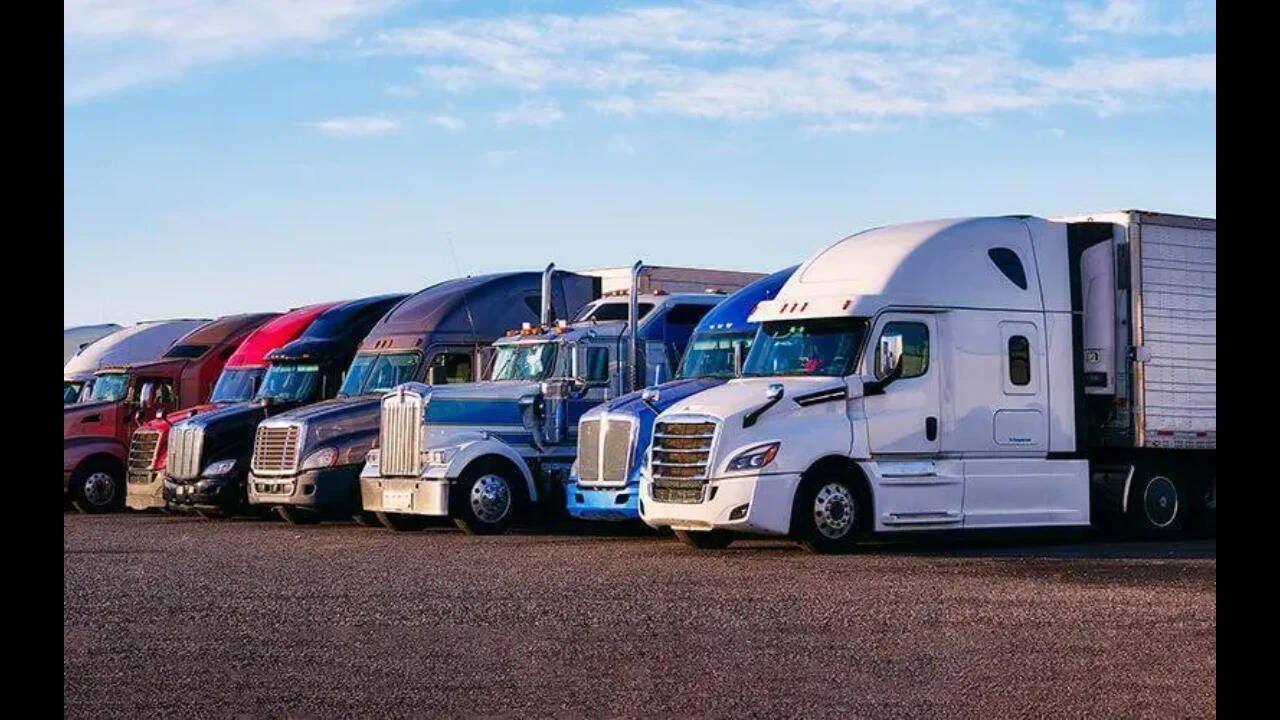
You cannot pilot an eighty-thousand-pound semi-truck across interstate highways if you cannot read a bridge clearance sign. Sounds basic, right? Apparently, federal regulators had to remind the commercial driving industry of that exact reality.
The federal government just dropped the hammer on the commercial driving sector. Officials ordered an immediate, emergency shutdown of 110 commercial truck-driving schools. Why? These institutions racked up over 5,000 distinct violations tied directly to federal English-language proficiency mandates. Transportation Secretary Sean Duffy and Homeland Security Secretary Markwayne Mullin didn't mince words during the announcement, pointing out that public safety on American roadways was traded away for lax oversight and rushed licensing.
If you work in logistics or rely on the highway system, this massive shift hits close to home. Let's break down what actually happened, why investigators targeted these specific training providers, and what it means for the future of commercial driving licenses.
Inside the Massive Federal Enforcement Sweep
Federal investigators didn't just pull these numbers out of thin air. The Federal Motor Carrier Safety Administration, working alongside the Department of Justice and the White House fraud task force, audited roughly 400 commercial driver training schools.
The findings were staggering. Out of those 400 inspected facilities, forty percent failed to meet basic federal requirements. The 110 worst offenders were immediately stripped of their authority to operate. These specific schools collectively pushed at least 5,000 drivers through testing who later failed roadside English proficiency evaluations conducted by law enforcement.
And the problem went beyond language tests. An additional 160 facilities were shut down due to severe operational violations, including missing required training space, failing to maintain proper documentation, and utilizing completely unlicensed instructors.
FMCSA Administrator Derek Barrs highlighted roadside operations where dozens of heavy commercial vehicles were immediately placed out of service because drivers could not communicate with inspectors or understand basic traffic controls. In some extreme cases flagged during interagency enforcement, drivers possessed commercial licenses that listed administrative placeholder text instead of proper identification.
The Real Cost of Looking the Other Way
For years, critics argued that shortcuts in commercial driver training were creating ticking time bombs on major freight corridors. Operating a semi-truck demands absolute clarity. Drivers must interpret dynamic electronic warning signs, hazardous material placards, bridge height restrictions, and weight station directions in real time.
When a driver misses a warning about a low clearance or fails to understand a detour instruction because of a language barrier, catastrophe follows. Homeland Security officials stressed that the breakdown in entry-level driver training oversight over past years contributed directly to preventable highway accidents, injuries, and fatalities.
The administration's stance is blunt. Safety regulations aren't bureaucratic red tape you can bypass to speed up driver production. They are non-negotiable baselines designed to protect families traveling the same asphalt.
What Happens Next for CDL Holders and Training Providers
The crackdown doesn't end with shuttering those 110 schools. The federal government has launched an expansive, nationwide audit targeting state-authorized third-party skills testers. Thousands of active commercial drivers are currently under scrutiny, with tens of thousands already flagged or pulled off the road during targeted roadside sweeps for failing basic language and qualification checks.
If you run a legitimate training program, expect intense federal oversight. Corners can no longer be cut. Compliance checks will be frequent, strict, and unannounced. For aspiring truckers, this means vetting your training provider is more critical than ever. Make sure the school you choose follows every line of federal curriculum guidelines, employs certified instructors, and holds valid credentials within the Training Provider Registry.
Standards are tightening across the board. If you want a commercial driver's license in this country, you have to prove you can handle the responsibility safely.