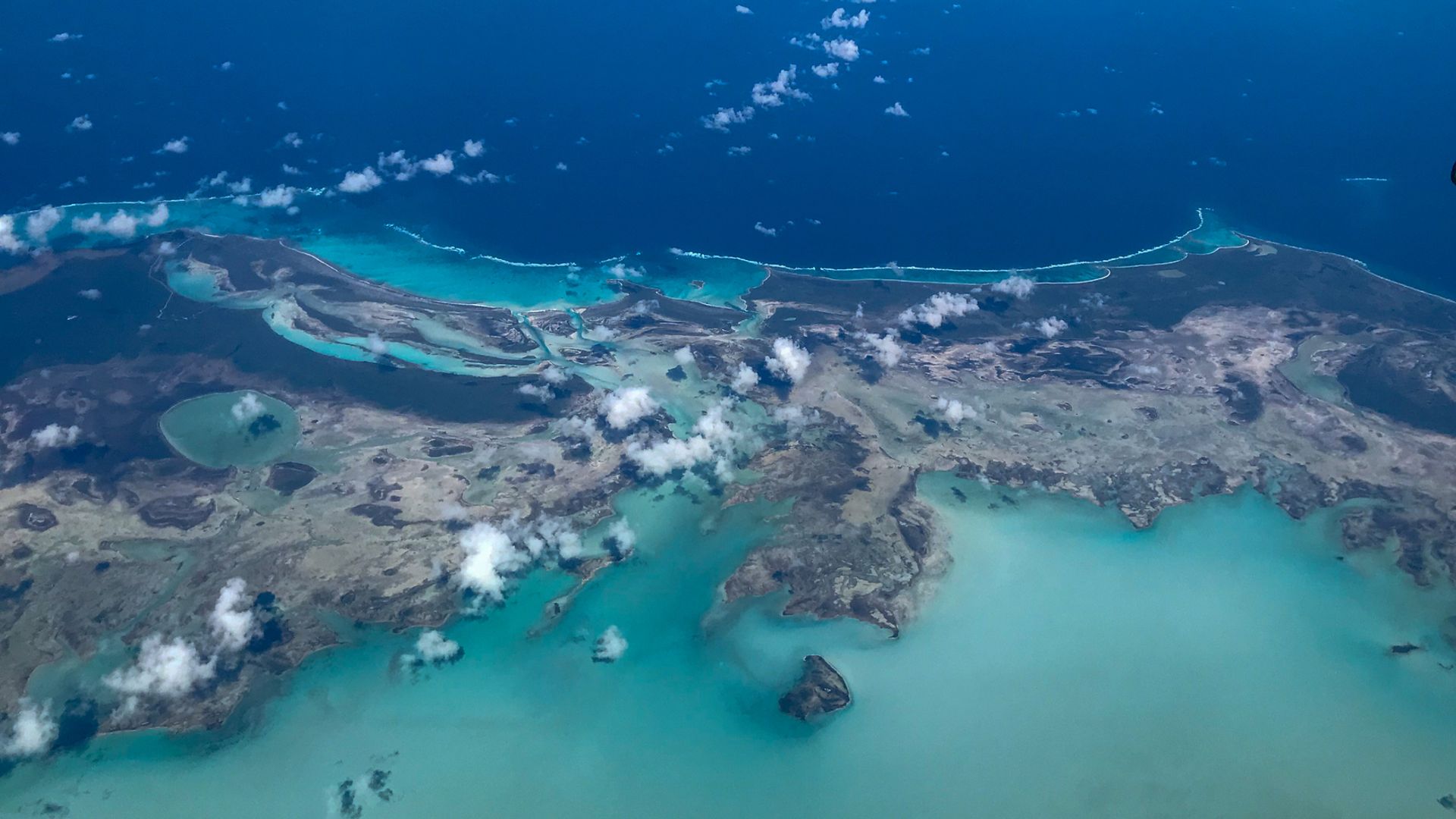
A family holiday in the Bahamas ended in tragedy when a British mother died trying to save her sons from the water, prompting an active investigation by the Royal Bahamas Police Force. The headlines give you the heartbreak in twelve words. They rarely give you the context that keeps another family from facing the exact same nightmare.
I've spent years covering international travel safety and coastal rescue operations, and one pattern shows up in almost every tourist drowning report. People treat tropical resort beaches like oversized swimming pools. They aren't. Even when the water looks calm and clear from your lounge chair, ocean dynamics shift fast, and local emergency infrastructure operates on a completely different clock than what British travelers expect back home. In other updates, read about: The Indian-American Donor Class Isn’t Defecting to the GOP.
What Police Are Actually Looking Into
When a tourist dies in Bahamian waters, the Royal Bahamas Police Force doesn't just file a basic accident report and close the folder. Their Marine Support Unit and local district detectives immediately open a formal sudden-death inquiry, which later feeds into a Coroner's Court inquest.
Investigators focus on a strict checklist of physical and operational factors. First, they establish the exact location—whether the family was at a private resort beachfront, a public beach like Cable Beach or Cabbage Beach, or an unpatrolled stretch of coastline on one of the Out Islands. Second, they check if lifeguards were on duty, whether warning flags were posted, and what the sea conditions looked like at that exact hour. Associated Press has also covered this critical topic in great detail.
Third, police look at the rescue response itself. How long did it take for someone to spot the boys in trouble? Who reached them first—bystanders, hotel staff, or emergency responders? When an adult enters rough water to rescue children without a flotation device, the physical toll is immediate. Investigators reconstruct that timeline minute by minute, taking statements from witnesses, resort security, and the medical staff who treated the victims.
Every sudden death of a foreign national also triggers diplomatic protocol. The British High Commission in Nassau steps in to provide consular assistance to the surviving family members, including the two sons, and coordinates with local authorities on medical care, victim support, and eventual repatriation.
Why Rescuing Your Own Kids Is So Dangerous
Every parent reading this story has the exact same gut reaction. I would jump in too. Of course you would. Nobody stands on the sand watching their kids struggle in the surf.
Here's the brutal reality that water-safety instructors drill into lifeguards every single day. An untrained rescuer swimming out without flotation almost always becomes a second victim.
Children panic fast when they lose their footing or get pulled past the sandbar. Once panic sets in, instinct takes over. A frightened child will climb onto the nearest floating object—and if that object is their mother, they'll push her head underwater just to keep their own mouth above the surface. Even strong pool swimmers burn through their energy in under two minutes when fighting a current while trying to hold another person up.
Cold shock isn't the issue in the Bahamas, where sea temperatures sit around 26 to 29 degrees Celsius year-round. Exhaustion and aspiration are. You swallow a mouthful of saltwater, your airway spasms, and your muscles lose oxygen while you're still thirty yards from shore.
The Mechanics of a Rip Current
Most beachfront rescues in the Atlantic and Caribbean come down to rip currents. People call them "undertows," which is dead wrong. A rip current doesn't pull you under the water. It pulls you away from the beach like a fast-moving treadmill.
When waves push water over a sandbar toward the shore, that water has to find a way back out to sea. It funnels through a narrow gap in the sandbar, creating a channel moving at up to two meters per second—faster than an Olympic swimmer can sprint.
If you try to swim straight back toward the beach against that flow, you're fighting the ocean head-on. You won't win. You'll burn every ounce of strength you have and go under.
The Reality of Beach Safety on Tropical Holidays
British travelers get used to the Royal National Lifeboat Institution (RNLI) patrolling popular beaches back home with clear red-and-yellow flags, rescue boards, and fast response boats. You can't assume that same system exists abroad.
Across the Bahamas, beach supervision varies wildly depending on where you stay. Major resorts on New Providence or Paradise Island often employ private beach attendants, though many of those staff members are there to hand out towels and set up umbrellas, not perform open-water surf rescues. Public beaches and quieter islands like Eleuthera, Exuma, or Abaco frequently have zero lifeguards on duty and minimal warning signage.
Even at high-end properties, red warning flags sometimes go up late, or guests ignore them because the sun is shining and the water looks turquoise and inviting. Visual calm is deceptive. Swells generated by storms hundreds of miles out in the Atlantic can create dangerous shore breaks and strong lateral currents under a completely blue sky.
What You Need to Do Before Your Family Enters the Water
You don't need to cancel beach holidays or keep your kids locked inside the hotel. You just need a hard set of rules before anyone steps onto the sand.
- Identify the lifeguard before you unpack your bag. Walk down to the shoreline and look for an actual rescue tower, a rescue tube, and a trained guard watching the water. If nobody is actively scanning the sea, treat the beach as unpatrolled and keep kids in waist-deep water maximum.
- Never enter the water for a rescue empty-handed. If someone is in trouble, grab anything that floats—a boogie board, an inflatable mattress, a cooler lid, even a bundled-up beach towel or a hotel chair cushion. Put that object between you and the person panicking so they grab the gear instead of your neck.
- Teach your kids the parallel escape. Make sure every child in your family knows that if the water pulls them away from the beach, they shouldn't fight it. Float on their back to conserve energy, wave one arm for help, and swim parallel to the shoreline until they exit the current.
- Check the tide and swell, not just the weather app. A sunny forecast tells you nothing about surf conditions. Ask the front desk or local boat captains about currents that morning, especially after windy nights or passing offshore weather systems.
- Save local emergency numbers in your phone before leaving the airport. In the Bahamas, 911 or 919 connects you to police and emergency services, and the Royal Bahamas Defence Force handles maritime rescues. Relying on hotel switchboards wastes precious minutes when someone is in the water.
Tragedies like this stick with us because the love behind the mother's decision is universal, and the outcome feels horribly unfair. Respecting what the ocean can do—even on a postcard-perfect afternoon—is the only real protection a family has.