The Sound of Dry Mud
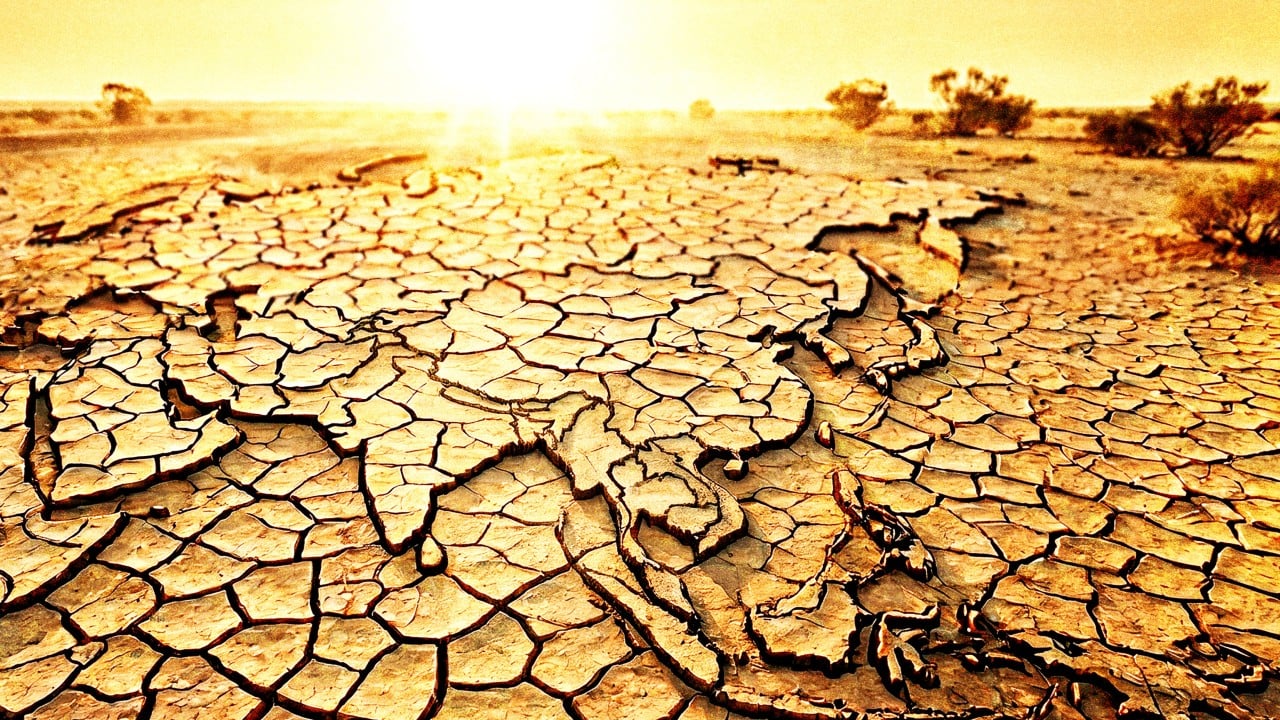
When clay bakes under a relentless sun, it does not just dry out. It cracks. The sound it makes is a faint, brittle pop, like a small bone snapping underfoot. To a farmer in the Mekong Delta, that sound means the bank is coming due.
For decades, the rhythm of life across Southeast and South Asia was dictated by a predictable sky. The monsoons arrived, the rivers swelled, the paddies flooded, and the world ate. But the Pacific Ocean is shifting. Thousands of miles away, near the equator, the water temperature has climbed. This warming triggers a climate phenomenon known as El Niño. When it becomes severe, meteorologists label it a "Super El Niño."
To a commodity trader in Chicago, El Niño is a variable on a spreadsheet, a justification for a spike in rice futures. But on the ground, it is a visceral, terrifying transformation of daily life. The rains simply vanish. The heat settles over the land like a heavy, suffocating wet blanket.
Consider a hypothetical farmer named Than. He is forty-two, living in a small village outside of Hanoi. For generations, his family has grown jasmine rice. He knows the exact color the water should be when the seedlings are transplanted. He knows the smell of a healthy harvest. This year, the water never came. The local canal, usually a vibrant, muddy artery feeding hundreds of plots, has shrunk to a series of stagnant, green puddles.
Than stands in the middle of his field, his bare feet sinking into dirt that should be mud but is instead coarse dust. His entire financial survival depends on three thin inches of standing water. If the water does not return within two weeks, the crop dies. If the crop dies, the loan he took out for fertilizer cannot be repaid. If the loan is defaulted on, the land belongs to the bank.
This is how a global climate anomaly breaks a human life.
The Empty Bowls of the Continent
The problem is one of scale. Asia produces and consumes roughly ninety percent of the world’s rice. It is not just a side dish; it is the fundamental foundation of food security for billions of people. When El Niño suppresses the monsoon rains, production drops precipitously.
During previous intense El Niño cycles, the ripple effects were felt instantly across global markets. India, the world’s largest exporter of rice, frequently bans or heavily restricts exports of non-basmati white rice to protect its domestic supply and keep local prices stable. When India closes its borders, the global supply shrinks by nearly forty percent overnight.
Imagine a market in Manila. A mother named Maria is trying to buy enough food to last her family through the week. She stands before a massive burlap sack of grain. The price tag has changed three times in the last month. Rice that once cost forty pesos a kilogram now costs sixty.
To a wealthy consumer, a twenty-peso increase is negligible. To Maria, whose husband earns a daily wage driving a jeepney, it is a catastrophic mathematical equation. It means cutting out protein. It means buying less milk for her youngest child. It means a dull, constant ache in the pit of her stomach as she calculates how to stretch a single meal across an entire day.
Governments across the region are acutely aware of this vulnerability. Hunger breeds instability. When food prices spike, history shows that social unrest quickly follows. Stocks are hoarded. Nations scramble to secure shipments from anyone willing to sell. Indonesia, Vietnam, and the Philippines enter a high-stakes game of economic musical chairs, trying to buy up remaining surpluses before the shelves go bare.
The Invisible Network
We like to think of our food system as a modern marvel of logistics, an unbreakable chain of cargo ships, automated mills, and pristine supermarkets. It is actually incredibly fragile. It relies entirely on the predictability of the weather.
When the heat peaks during a Super El Niño, it isn't just the fields that suffer. The infrastructure itself begins to buckle. Rivers that serve as transport highways become too shallow for barges to navigate. Hydroelectric dams, which power the very mills that process the grain, see their water levels plummet. Power grids fail under the demand of millions of air conditioners running simultaneously to combat the freakish heat.
The economic engine slows down. A factory worker in Bangkok loses hours because of rolling blackouts. With less income, he spends less at the local market. The market vendor, seeing fewer customers, buys less produce from the rural truck drivers. The truck driver stops buying fuel.
Every single piece of the economy is tethered to that single, warm patch of water in the distant Pacific. It is a haunting demonstration of chaos theory made real: an ocean warms by two degrees Celsius, and a family in a suburban apartment block loses their electricity and their dinner.
The Mirage of the Technical Fix
There is a temptation to look at this crisis through the lens of modern technological optimism. Surely, we are told, science will save us. Drought-resistant seeds, drip irrigation, satellite tracking, and AI-driven weather modeling are frequently touted as the ultimate solutions to climate volatility.
But technology requires capital. It requires infrastructure, education, and time—luxuries that the people on the front lines of this crisis do not possess. A high-tech, drought-resistant strain of rice is useless to a farmer who cannot afford the premium price for the seeds. An advanced irrigation system is meaningless if there is no water left in the aquifer to pump.
The reality on the ground is far more primitive and desperate. People adapt not through innovation, but through sacrifice.
They sell off their livestock for a fraction of its value because they can no longer afford feed. They pull their older children out of school to work odd jobs in the city. They migrate, abandoning ancestral lands to crowd into urban slums, trading the quiet desperation of a dying farm for the frantic anxiety of an overpopulated city.
The true cost of a food shortage is not measured in lost gross domestic product or falling export volumes. It is measured in the quiet erosion of human potential. It is the generation of children whose physical and cognitive growth is permanently stunted by malnutrition during these lean years. It is the destruction of communities that have held together for centuries, fractured by the sudden, brutal necessity of survival.
The Long Horizon
The sky eventually changes. El Niño always yields to its counterpart, La Niña, or fades back into neutrality. The rains will return, the rivers will rise again, and the cracked earth will soften into mud.
But each cycle leaves the system weaker than it was before. The topsoil has eroded. The debts have accumulated. The savings accounts have been emptied. The buffer that allowed communities to withstand a bad season is gone, worn away by the increasing frequency and intensity of these climate shocks.
We live in a world that prides itself on connectivity, on the seamless flow of information and capital across borders. Yet we remain entirely dependent on a few inches of topsoil and the fickle benevolence of the clouds.
Than sits on the porch of his home as the evening settles. The air is still hot, thick with dust and the smell of dry vegetation. There are no clouds on the horizon, only a vast, deep purple expanse that offers no promises. He holds a handful of dry earth in his palm, letting the dust slip through his fingers like sand through an hourglass, waiting for a rain that may not come until it is far too late.