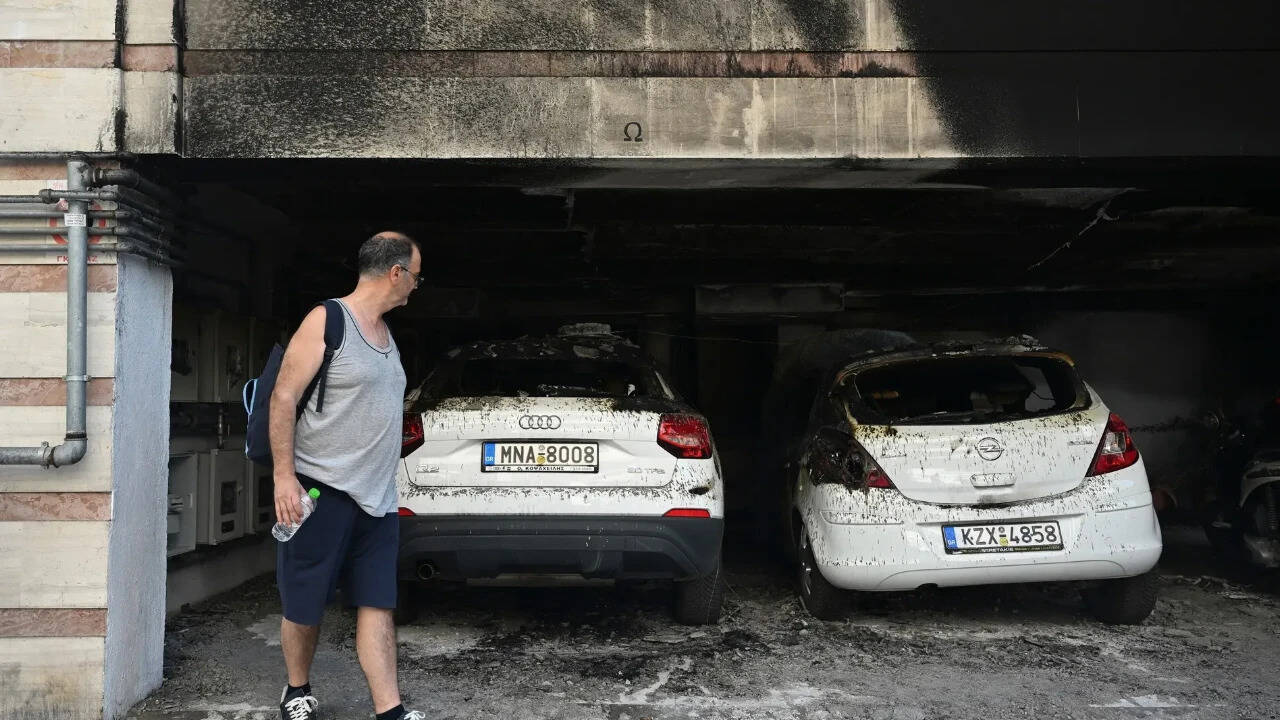
The air at 4:30 in the morning possesses a specific, fragile stillness. It is the hour when the city of Thessaloniki sleeps deepest, the warmth of the July night heavy over the pavement. For decades, this stillness has occasionally been broken by a familiar, ugly sound. The hiss of a puncture. The sudden, orange flash of a makeshift device.
In Greece, the domestic political firebomb is an old, grim tradition. For a generation, it has functioned almost like a violent piece of theater. Left-wing or anarchist groups construct crude devices out of small butane camping gas canisters, tape them to containers of flammable liquid, and leave them outside the homes of politicians, judges, or banks. The targets know the drill. The public knows the drill. The explosions rattle the windows, scorch the stone facades, and incinerate the targeted sedans parked on the curb. They are meant to terrify, to send a symbolic message, but rarely to kill. You might also find this similar article insightful: The Real Reason Spain's Wildfires Are Becoming Fatal Death Traps.
Then the theater collapsed.
When three coordinated pre-dawn attacks struck the residences of members of Greece’s ruling New Democracy party, the script changed forever. The first two blasts did exactly what the perpetrators likely intended. They shattered glass, blackened concrete, and left behind the charred, hollowed-out metal frames of vehicles belonging to local party officials. But the third device, planted outside an apartment building in the city's northern sector, tore through the silence with a different kind of malice. As extensively documented in detailed reports by The Washington Post, the implications are significant.
Consider what happens when abstract political rage meets a physical space where families sleep. The bomb didn’t just scorch a wall; it set a row of vehicles in the building's garage instantly ablaze.
Among those waking up to the smoke was Afroditi Nestora, a local parliamentary candidate for the governing party. She ran toward the danger, trying desperately to combat the spreading fire. Her mother, 72-year-old Vagia Nestora, was right there with her.
Fire is indiscriminate. It does not care about political ideology, party platforms, or symbolic statements. The explosion that followed ripped through the garage, engulfing the women. Afroditi suffered severe burns, her father and two other residents were rushed to the hospital with injuries, but the true tragedy solidified in the intensive care unit. Vagia Nestora succumbed to her burns.
Death had returned to the margins of Greek political dissent. It was the first fatality from this type of low-intensity domestic terrorism in more than a decade.
The tragedy shifted from an urban nightmare to a nationwide manhunt. For days, the grief of a family was broadcast against the backdrop of political condemnation. Prime Minister Kyriakos Mitsotakis traveled north, walking the sterile hallways of the hospital to visit the survivors. His statements to the public carried the weight of a country trying desperately not to slide backward into the volatile, fractured ghost of its own history.
Anti-terrorist police began unravelling the digital and physical breadcrumbs left behind in the dark. Ten days after the smoke cleared, the handcuffs clicked shut.
In a series of coordinated raids spanning from the northern streets of Thessaloniki to the southern island of Crete, authorities arrested three young anti-establishment figures. A 29-year-old man and a 26-year-old woman face charges directly tied to the fatal bombing at the Nestora home. A third man was taken into custody, accused of providing them refuge.
It was a swift display of state authority, a message meant to reassure a shaken public that the rule of law still holds the line against chaos. But the arrests offer cold comfort to a family mourning a grandmother, a mother, a wife who had absolutely nothing to do with the governance of the state.
The real problem lies in the cyclical nature of this anger. The context of these attacks stretches across a timeline of deep-seated friction. Just last year, a bomb detonated outside the home of the prison guards' association president. The year before that, a petrol bomb targeted a senior judge's guard in Athens. Even the ghosts of the past seemed to rise on the exact same day as these latest arrests, when Athens police detained two individuals for a notorious 2010 bank firebombing that killed three workers during anti-austerity riots.
To look at Greece today is to see a nation that has fought bitterly for its economic resurgence, painfully overcoming internal divisions to build a stable, modern democracy. Yet beneath the surface of modern infrastructure and bustling tourist squares, the old embers of radical extremism refuse to die completely. They wait in the dark, packed into cheap metal canisters bought at local hardware stores.
The arrests are democracy’s answer to violence. But the charred pavement in Thessaloniki remains a quiet, haunting reminder that when politics turns murderous, it is always the innocent who pay the heaviest price.