A clock is ticking in a sterile room in Panama City, but the sound isn't coming from the wall. It is the sound of a legal guillotine. When a sovereign nation misses a deadline in an international arbitration case, the silence is more than a clerical error. It is a thunderclap.
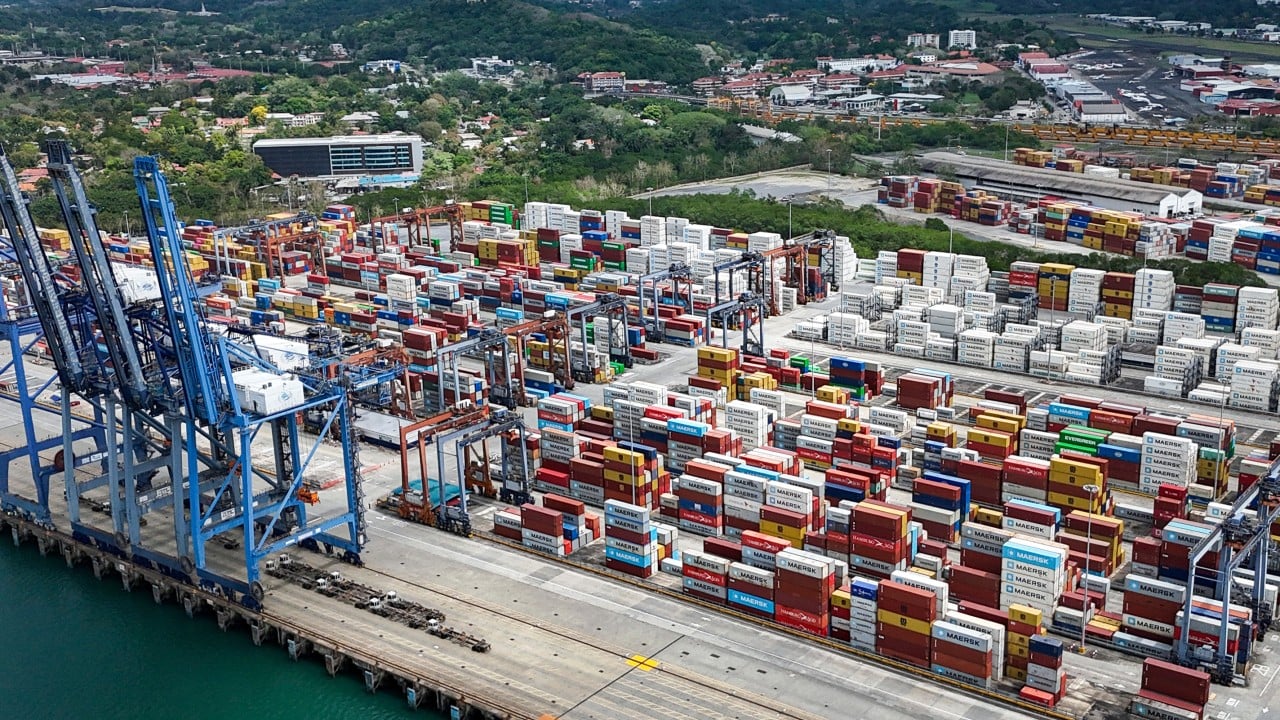
CK Hutchison, the Hong Kong-based behemoth that moves the world’s freight, isn't just annoyed. They are livid. Through their subsidiary, Panama Ports Company (PPC), they have been locked in a high-stakes standoff with the Panamanian government over the management of the ports of Balboa and Cristobal. These aren't just patches of concrete and steel. They are the twin gates of the Pacific and the Atlantic. They are the nervous system of global trade.
When the government failed to meet a crucial deadline to appoint its arbitrator, it didn't just delay a meeting. It signaled a breakdown in the very rules that allow global commerce to function.
The Invisible Hand at the Gantry
Imagine a crane operator named Javier. He sits 150 feet above the deck of a Neopanamax vessel. His world is measured in centimeters and seconds. If Javier misses his mark, the chain reaction of delays ripples from the Gulf of Panama to the shelves of a grocery store in Rotterdam.
Javier doesn't care about arbitration clauses. He cares about the stability of his shipyard. But the stability of that shipyard depends entirely on the "Legal Certainty" that bureaucrats in suits often treat as a buzzword. For an investor like CK Hutchison, legal certainty is the oxygen of the industry. You do not pour billions of dollars into dredging harbors and erecting massive gantry cranes if the rules of the game can be changed—or ignored—by the host government on a whim.
Panama’s missed deadline is being framed by the company as a "slap in the face" to international law. It suggests a staggering level of negligence or, perhaps more dangerously, a calculated indifference.
The Architecture of a Dispute
The friction began years ago. At the heart of the conflict is a disagreement over contract extensions and the "fair share" of revenue the state believes it is owed versus the massive capital expenditures the company has made to keep the ports competitive.
In a standard world, these disagreements go to a neutral room. Three experts sit at a table. One is chosen by the company. One is chosen by the state. The third is agreed upon by both. This trinity is designed to ensure that neither side's local politics or corporate greed can hijack the truth.
But what happens when the state simply doesn't show up to pick their person?
The mechanism stalls. The tension builds. For CK Hutchison, this isn't just a procedural hiccup; it’s a breach of the bilateral investment treaty. It’s the equivalent of a homeowner refusing to show up to a boundary dispute hearing while still trying to move the fence.
The Ghost of 1997
To understand why this feels so personal for both sides, you have to look back at the late nineties. When CK Hutchison first won the rights to operate these ports, it was a moment of profound geopolitical shifting. The Americans were leaving. The Canal was becoming truly Panamanian.
The entry of a Hong Kong firm was met with skepticism by some and celebration by others. It was a bet on the future of a post-US Panama. For decades, that bet paid off. The ports were modernized. The throughput skyrocketed.
But success breeds resentment.
As the ports became more profitable, the political narrative in Panama shifted. Populist voices began to ask why a foreign entity was reaping such rewards from Panamanian soil. This is the classic "Resource Nationalism" cycle. A country needs foreign expertise and money to build something. Once it’s built and humming, the country wonders why they ever needed the foreigner in the first place.
The Danger of the Empty Chair
Panama’s failure to appoint an arbitrator is a dangerous gamble. In the world of International Centre for Settlement of Investment Disputes (ICSID) rules, you cannot stop the train by refusing to board it. If a state remains silent, the appointing authority will eventually choose an arbitrator for them.
The state loses its voice.
This brings us to the human element that the spreadsheets ignore: the reputation of a nation. Panama is not just a country; it is a brand. That brand is built on being the "Crossroads of the World." If that crossroad becomes a place where contracts are murky and legal deadlines are treated as suggestions, the ships will eventually find other routes.
Other ports in Colombia, Jamaica, and even the burgeoning projects in Mexico are watching this play out with hungry eyes. Every day that Panama appears disorganized or hostile to its primary investors is a day that a logistics manager in Singapore considers diversifying their route.
The Weight of the Ledger
Let’s look at the numbers, though they represent more than just math. We are talking about claims that could reach into the hundreds of millions, if not billions, of dollars.
If Panama loses this arbitration—not on the merits, but because of procedural incompetence—the bill will be footed by the Panamanian taxpayer. It won't be the politicians who missed the deadline who pay. It will be the schools that don't get built and the roads that remain unpaved.
This is the invisible stake. A missed deadline in a glass tower in Washington D.C. (where many of these hearings take place) eventually translates to a lack of resources in a rural province in Chiriquí.
A Breach of Faith
CK Hutchison’s public "slamming" of the Panamanian government is a rare move for a company that usually prefers the shadows of quiet diplomacy. It suggests that the bridge has not just been scorched, but dismantled.
When a company of this size goes public with its grievance, it is sending a signal to the entire global investment community. It is a "Buyer Beware" sign hung on the door of the Isthmus.
The tragedy is that this was entirely avoidable. Arbitrations are designed to be the "adults in the room" solution to complex business divorces. By failing to participate in the selection process, Panama hasn't shown strength. It has shown a chaotic internal architecture.
The Echo in the Terminal
Back at the Port of Balboa, the sun is setting over the Pacific entry of the Canal. The lights of the terminal flicker on, a constellation of industrial activity that never sleeps.
The ships continue to arrive. The containers continue to swing through the air. On the surface, everything looks like business as usual. But underneath the pavement, the foundation is cracking.
Trust is a non-renewable resource. Once a sovereign state demonstrates that it cannot or will not follow the procedural requirements of its own treaties, the cost of doing business in that country goes up. Lenders demand higher interest. Partners demand more guarantees.
Panama’s silence wasn't just a missed date on a calendar. It was a message sent to every boardroom on the planet. And in the world of global trade, once you stop talking, the only thing left to do is pay.
The most expensive thing a government can ever buy is the right to be ignored.
Would you like me to analyze the specific clauses of the Panama-UK Bilateral Investment Treaty that CK Hutchison is likely citing in this dispute?