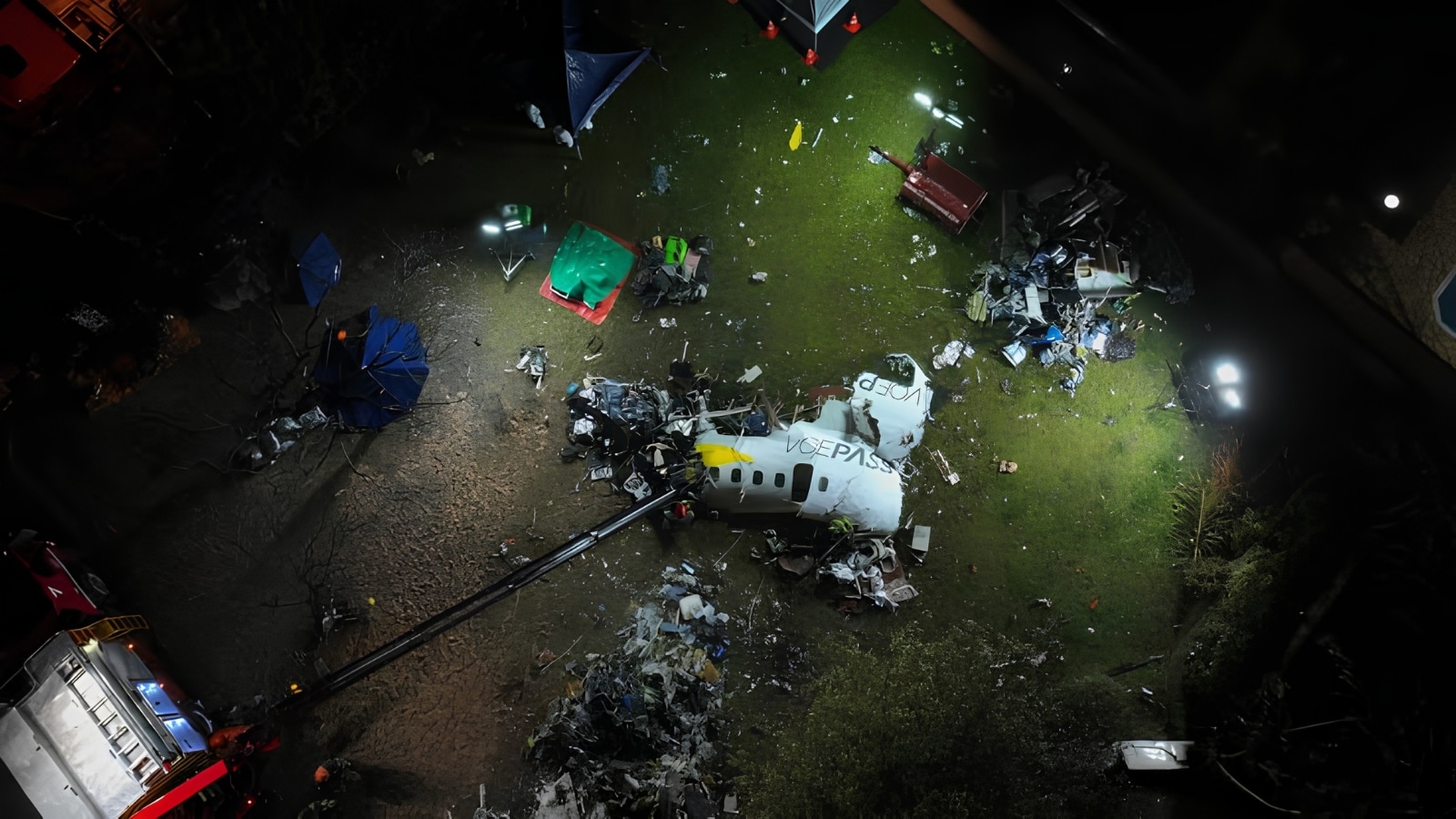
The federal police indictments of sixteen current and former executives at Voepass Airlines establish a critical boundary in aviation jurisprudence. By moving past the immediate mechanical failure of the ATR 72-500 turboprop that crashed in Vinhedo, Brazil, killing all 62 occupants, investigators have targeted the organizational architecture that permitted structural safety margins to erode. This case study examines how operational negligence, systemic normalization of deviations, and regulatory friction intersect to produce catastrophic corporate liability.
The Anatomy of Operational Degradation
Air safety disasters rarely stem from single point failures. Instead, they represent the accumulation of latent vulnerabilities across an operational ecosystem. In the Voepass disaster, the investigative record reveals a pattern of operational decisions that prioritized schedule completion over mechanical integrity.
Flight data recorders established that the aircraft de-icing system suffered recurring performance failures across 136 prior flights, during which the system was repeatedly cycled on and off manually. Rather than grounding the airframe for comprehensive maintenance, dispatch protocols permitted continued deployment into known severe icing conditions.
This operational choice highlights a fundamental failure in risk management economics:
- Short-term optimization: Avoiding revenue loss and schedule disruption by bypassing maintenance holds.
- Long-term tail risk: Exposing the asset to catastrophic failure parameters when environmental hazards exceed weakened safety thresholds.
When an airline tolerates known mechanical deficiencies, it shifts the safety margin from engineering redundancy to human intervention. In this instance, that shift proved fatal when the aircraft encountered severe atmospheric icing at 17,000 feet, inducing an unrecoverable flat spin.
The Culture of Normalizing Deviations
The federal police investigation highlighted a pervasive corporate culture that systematically minimized technical irregularities. In high-frequency regional aviation, economic pressures often incentivize flight crews and ground personnel to bypass standard reporting protocols to maintain departure schedules.
Evidence uncovered during the investigation demonstrated that technical failures were routinely omitted from aircraft logbooks. This practice breaks the feedback loop required for safety management systems to function. When logbooks fail to reflect true mechanical states, subsequent flight crews inherit unquantified risks.
The mechanism of failure operates through three distinct administrative bottlenecks:
- Reporting Suppression: Maintenance issues are handled informally to prevent aircraft downtime, erasing them from official oversight logs.
- Resource Constraints: Underfunded technical teams lack the replacement parts or turnaround time required to execute proper de-icing system overhauls.
- Cognitive Overload: Flight crews managing marginal equipment are forced to split attention between routine cockpit tasks and compensating for hardware failures, degrading response times during emergency sequences.
The convergence of these variables explains why the crew failed to execute corrective maneuvers before the aircraft lost lift. The operating environment was cognitively oversaturated long before the meteorological threat materialized.
Criminal Indictments and Corporate Governance
The decision by federal investigators to formally accuse 16 individuals—including company president Jose Luiz Felicio Filho—under charges of endangering air traffic safety resulting in a fatal disaster shifts the enforcement paradigm. Historically, aviation investigations in Latin America focused primarily on systemic safety recommendations rather than individual criminal culpability.
The invocation of potential 12-year prison sentences for executive and operational staff redefines accountability in commercial aviation. It establishes that corporate leadership cannot insulate itself behind structural delegation when organizational policies actively encourage non-compliance with airworthiness directives.
Civil litigation initiated by victims' legal representatives targets every layer of the operational chain, from directors to ticket sales operations. This multi-tiered liability model forces a reassessment of corporate insurance structures, board oversight duties, and executive risk exposure across the regional carrier market.
Regulatory Oversight Failures
While the immediate focus remains on internal corporate malfeasance, the investigative findings implicate broader institutional vulnerabilities. Regulatory bodies charged with continuous oversight face inherent resource constraints when monitoring decentralized regional carriers. Prior warnings regarding administrative irregularities at Voepass underscore the friction between regulatory enforcement capacity and the rapid pace of commercial operations.
When oversight agencies issue operational restrictions that go unenforced or unresolved due to carrier inertia, the regulatory deterrent value collapses. Investigators have signaled that supervisory bodies must undergo parallel scrutiny to determine why operating licenses remained active despite prolonged compliance failures.
Reconstruct systemic risk parameters by decoupling safety audits from operational revenue dependencies, ensuring that mandatory grounding triggers cannot be overridden by administrative scheduling demands.
The final moments of Voepass Flight 2283 and the investigation into the crash
This video provides an overview of the preliminary findings regarding the mechanical issues and ice buildup associated with the Voepass flight.