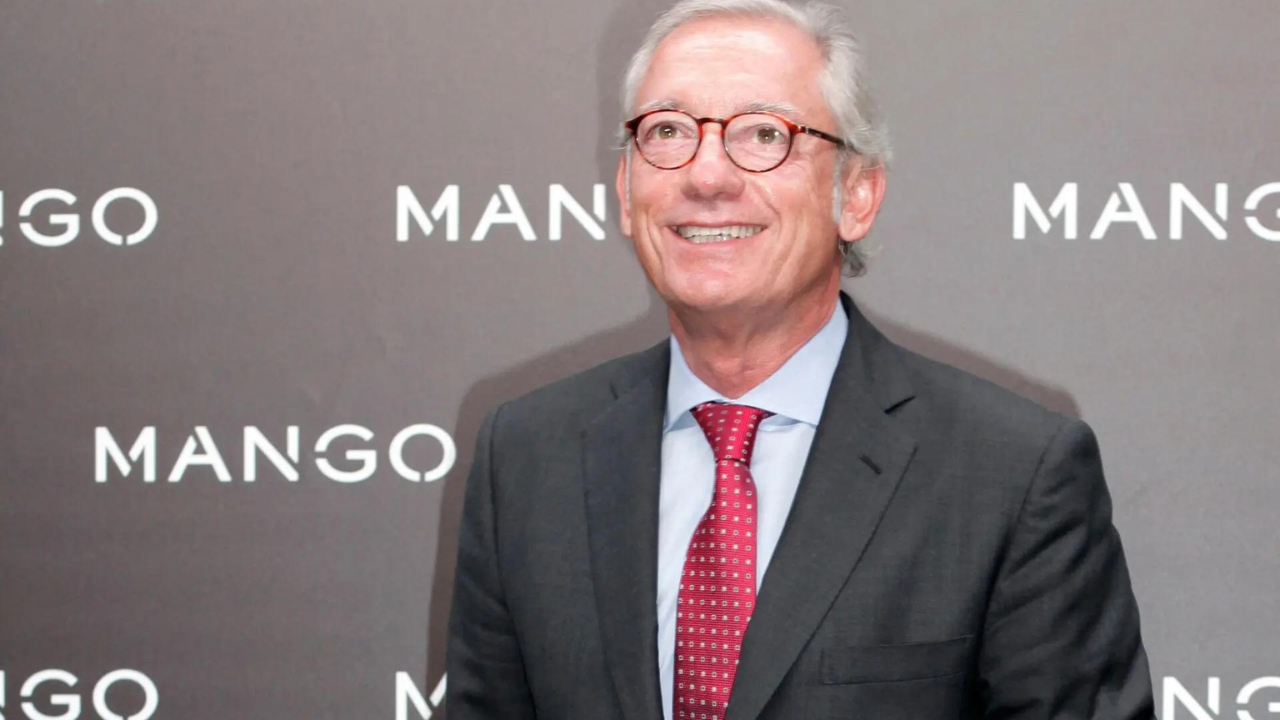
The arrest of Jonathan Andic on May 19, 2026, on suspicion of homicide regarding the 2024 death of his father, Mango founder Isak Andic, exposes a critical intersection between family-run corporate governance, estate succession, and criminal forensic risk. When a billionaire patriarch dies under ambiguous circumstances while accompanied solely by his primary heir, the stability of a multi-billion-dollar enterprise is immediately compromised. Solving the operational, reputational, and systemic risks created by this executive crisis requires separating speculative media narratives from the formal legal mechanisms and corporate frameworks currently in motion.
Jonathan Andic, the 45-year-old vice-chairman of the Mango board, was taken into custody by the Catalan regional police, the Mossos d'Esquadra, and subsequently released on a €1 million ($1.15 million) bail by a judge in Martorell. The court has implemented strict precautionary measures, including passport seizure, a ban on leaving Spain, and mandatory weekly judicial appearances. The investigation shifts the narrative from a tragic hiking mishap to a corporate governance crisis that threatens the stability of one of Europe’s largest fast-fashion retailers, which reported record revenues of €3.8 billion ($4.4 billion) in 2025.
The Forensic Timeline and Judicial Inconsistencies
To evaluate the operational vulnerability of Mango, one must map the timeline of the investigation. The initial closure of the case and its subsequent reopening indicate that the current judicial actions are driven by objective forensic or digital data rather than new witness accounts.
- December 14, 2024: Isak Andic, 71, fell 100 to 150 meters down a ravine near the Salnitre caves in the Montserrat mountain range, outside Barcelona. Jonathan Andic was the sole companion present.
- January 2025: The presiding judge closed the case, classifying the death as an accidental slip.
- March 2025 – October 2025: The Mossos d'Esquadra quietly reopened the file. By October 2025, the judicial status of Jonathan Andic shifted from witness to a formal suspect under investigation (investigado).
- May 19, 2026: Jonathan Andic was formally arrested, escorted to the Martorell Court of Instruction Number Five, and released under restrictive bail terms.
Under Spanish criminal procedure, a case protected by judicial secrecy (secreto de sumario) is rarely reopened without specific material catalysts. Investigative disclosures indicate that the Catalan police identified significant inconsistencies between Jonathan Andic’s verbal reconstruction of the mountain route and the telemetry data extracted from the mobile devices of Jonathan and his sisters, Judith and Sarah Andic.
The physical mechanics of a 100-meter fall in steep terrain present a distinct forensic profile. In a true accident, a slip on loose shale typically shows clear footwear friction marks at the point of origin and defensive trauma on the hands of the victim. Conversely, a push or a forced fall often leaves different mechanical markers, such as a lack of initial slip signs at the precipice and atypical trajectory metrics.
When forensic pathobiology cannot definitively rule out third-party intervention, investigators look for digital and behavioral anomalies. The seizure of Jonathan’s mobile telephone immediately after the incident provided data points—GPS positioning, altimeter readings, and time-stamped communication logs—that contradicted his initial sequence of events.
Interpersonal Friction and the Succession Bottleneck
The structural vulnerability of family-controlled multinational corporations lies in the blurring of lines between bloodlines and corporate hierarchy. In the case of Mango, this vulnerability manifested as a series of operational shifts and financial disputes that occurred prior to Isak Andic's death.
+-------------------------------------------------------+
|                 Isak Andic (Founder)                  |
|          Handed over control, then reclaimed it       |
+---------------------------+---------------------------+
                            |
               Tense Corporate Relationship
                            |
                            v
+-------------------------------------------------------+
|               Jonathan Andic (Son/Heir)               |
|      Friction over control & inheritance changes      |
+-------------------------------------------------------+
Data from the investigation, including testimony from Isak Andic’s partner, Estefania Knuth, points to a pattern of professional friction between father and son. This conflict was rooted in a volatile corporate succession plan that spanned over a decade:
- The 2012–2014 Expansion Autonomy: Isak Andic designated Jonathan as his successor in 2012, handing him significant operational control by 2014. Jonathan oversaw the expansion of the "Mango Man" line and broader retail operations.
- The 2015 Centralization Reversal: Following structural market difficulties and margin erosion within the fast-fashion sector, Isak Andic stepped back into an active management role. He curtailed Jonathan’s operational authority, signaling a lack of confidence in the heir's strategic direction.
- The 2023 Equity Realignment: In December 2023, one year before his death, Isak Andic transferred 5% of Mango’s equity to the non-family Chief Executive Officer, Toni Ruiz. This move diluted the family’s direct equity holding and institutionalized non-family executive control, disrupting Jonathan's path to absolute corporate authority.
This operational volatility created a distinct friction points. The friction was compounded by estate disputes involving Isak Andic’s will, his widow, and his three children. In high-net-worth family enterprises, sudden changes to corporate governance or estate distribution function as a major catalyst for conflict. The transition of equity to a non-family CEO combined with a tense father-son dynamic provides a clear structural motive for prosecutors investigating a forced succession scenario.
Corporate Governance Isolation and Market Stabilization
Mango’s operational structure has successfully isolated its commercial engine from this executive crisis. The company's 11% revenue growth to €3.8 billion in 2025 demonstrates that the day-to-day operations of its 2,900 stores across 120 markets are insulated from the personal legal troubles of the Andic family.
This insulation is achieved through a deliberate corporate governance framework that separates equity ownership from executive execution:
- Operational Insulation: The operational leadership of Mango remains under CEO Toni Ruiz. Because Ruiz holds both equity and institutional authority, supply chain management, design procurement, and retail expansion continue without direct disruption from the board-level crisis.
- Board Containment: Jonathan Andic holds the title of vice-chairman and chairs the family asset management vehicle, Punta Na Holding, S.A. However, his role is strategic and asset-focused rather than operational. His legal restriction within Spain prevents him from leading international market visits, but it does not stop the execution of domestic corporate governance.
- The Family Defense Mechanism: The Andic family’s public communications have maintained absolute neutrality toward the judicial process while affirming Jonathan’s innocence. This strategy protects the brand’s consumer-facing reputation by presenting the crisis as a private, isolated legal matter rather than a corporate conspiracy.
The primary vulnerability of this strategy is the risk of reputational contagion. While fast-fashion consumers rarely alter buying habits based on the legal status of an enterprise's shareholder family, institutional lenders, credit insurers, and commercial real estate partners operate on strict risk profiles. Prolonged homicide proceedings against a vice-chairman can trigger restrictive covenants in credit agreements, increase the cost of capital, and complicate long-term real estate lease renewals in premier retail corridors.
The Strategic Playbook for the Mango Board
To preserve institutional stability as the criminal case progresses toward trial, the Mango Board of Directors must take defensive actions. First, the board must formalize a temporary suspension of Jonathan Andic’s vice-chairman responsibilities. Maintaining an executive facing active homicide charges on the board creates an unnecessary target for environmental, social, and governance (ESG) risk assessments, which institutional investment funds rely on.
Second, the company must empower CEO Toni Ruiz as the singular voice of the enterprise. This move signals to international credit markets that operational continuity is detached from the Andic estate.
Finally, Punta Na Holding must establish a transparent proxy structure for the family’s voting shares. This action guarantees that even if Jonathan Andic faces extended legal restrictions or incarceration, the family’s controlling interest can vote on corporate resolutions without delays. By implementing these measures, Mango can protect its financial performance from the fallout of this family crisis.