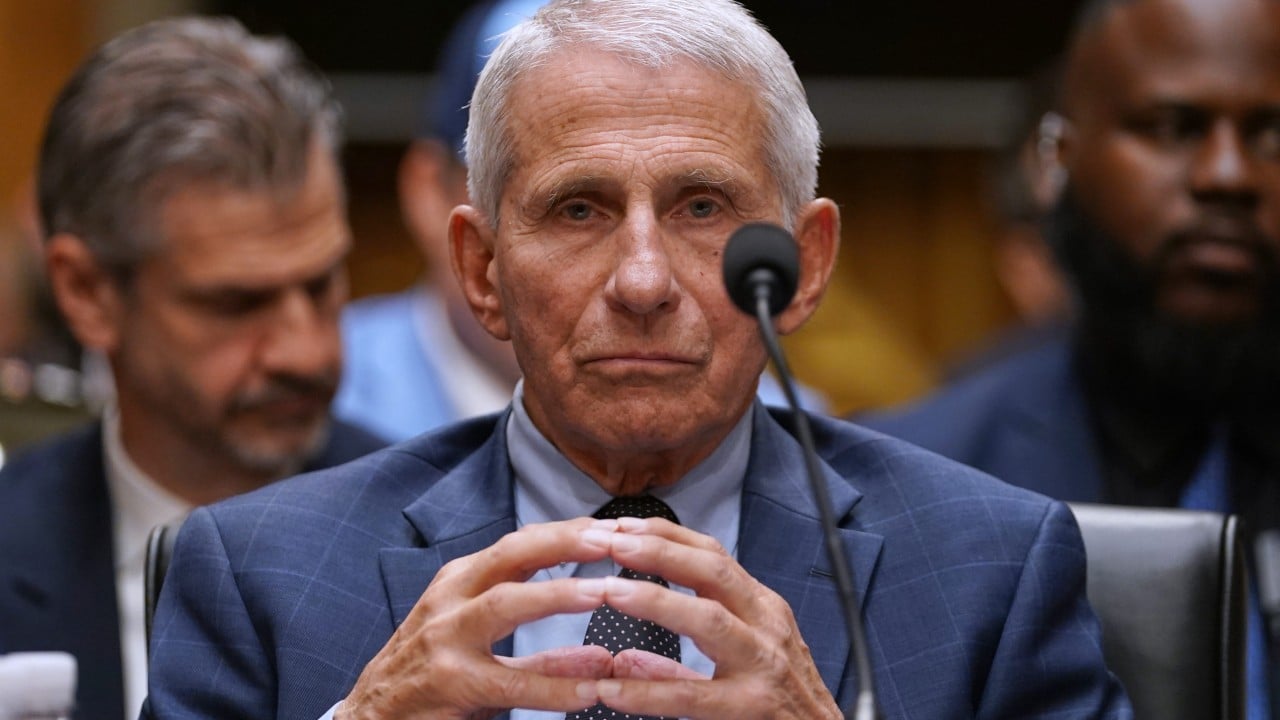
The Senate hearing room was packed, the cameras flashed, and the microphones caught every breath of frustration. Anthony Fauci sat at the witness table, facing a firing squad of lawmakers demanding answers about the origins of COVID-19. The media framing was predictable. Headlines screamed about defiance, stonewalling, and explosive clashes. Everyone watched the theater unfold, waiting for a definitive smoking gun.
They waited in vain.
Because treating a congressional grilling as an investigative breakthrough is a masterclass in missing the point. I have watched Washington committees spend millions of taxpayer dollars performing righteous indignation while the actual architecture of global biosafety remains completely broken. We treat these hearings like the climax of a legal thriller where the truth finally bursts into the light. In reality, they are meticulously scripted political soap operas designed to generate viral clips for campaign fundraising rather than policy reform.
The lazy consensus holds that if we just yell loud enough at the right bureaucrats under oath, the hidden truths of pandemic origins will magically spill out. This is a fairy tale. Congressional interrogations are structurally incapable of resolving complex scientific and intelligence puzzles. They reward snappy soundbites over rigorous cross-examination, and partisan grandstanding over technical comprehension. When a senator with a law degree tries to cross-examine a lifelong immunologist on the nuances of gain-of-function research, you do not get truth. You get noise.
The Flawed Premise of Accountability Theater
Let us look at how the questioning actually operates. Lawmakers arrive with pre-packaged narratives, backed by staffers who cherry-pick emails out of context to build a trap. The witness arrives with legal counsel and pre-rehearsed talking points designed to concede nothing. Both sides are performing for an audience sitting at home, already entrenched in their respective political tribes.
The core question driving these hearings is usually some variation of: "Who is to blame for the pandemic?"
It is the wrong question.
Fixating entirely on individual culpability lets the broader institutional apparatus off the hook. Whether a specific lab leak occurred through institutional negligence or a natural zoonotic spillover happened due to lax surveillance at animal markets, the systemic vulnerability remains identical. We have a global scientific enterprise moving at breakneck speed with safety protocols that lag decades behind its capabilities. Focusing exclusively on a handful of high-profile names turns a structural systemic crisis into a high-stakes celebrity soap opera.
If you want to understand why oversight fails, look at the incentive structures. A politician does not want to fix a boring regulatory loophole in dual-use research funding unless it polls well. A bureaucrat does not want to admit organizational failure because the legal and professional liability is catastrophic. Both incentives guarantee gridlock wrapped in theatrical outrage.
The Technical Reality Nobody Wants to Fund
Behind the partisan screaming matches lies a mountain of technical data that politicians rarely understand and journalists rarely translate accurately. Virological research is messy. It involves stochastic events, incomplete tracking data, and field samples that degrade over time.
Consider how the debate over gain-of-function experiments gets distorted. Critics paint it as Frankenstein science operating in secret basements. Defenders paint it as essential defensive work necessary to stop the next pathogen before it hits humanity. Both extremes distort reality. The truth is that genetic enhancement of viruses exists on a sprawling spectrum of risk, much of it funded openly through peer-reviewed grants across international borders.
The real scandal is not that dangerous research happened. The scandal is that the oversight bodies tasked with reviewing high-consequence pathogen work operated with toothless guidelines and voluntary compliance metrics. When the oversight board is essentially an internal club reviewing its own members' grant applications, disaster is not a malfunction. It is a mathematical certainty.
I have seen corporate compliance programs fail for the exact same reason. When the people checking the safety boxes report directly to the people whose bonuses depend on the project moving forward, safety is the first casualty. Bureaucracy loves ambiguity because ambiguity protects budgets.
Stop Asking Politicians to Solve Scientific Disagreements
The public looks to Congress for definitive answers because we have outsourced our trust in institutional science to the political branches. This is a category error. Legislators are experts at winning elections, drafting tax codes, and managing political coalitions. They are uniquely unqualified to adjudicate virological data, epidemiological models, or genomic sequencing trees.
When a committee hearing devolves into a shouting match over email phrasing, science loses. Nuance dies in a five-minute questioning window where the microphone gets cut off the second an answer becomes complicated. Science requires falsifiable hypotheses, peer review, and transparent data sharing. Politics requires winners, losers, and clear villains.
Trying to parse the origins of a global health crisis through a legislative lens is like trying to fix a jet engine with a sledgehammer. You might break something, but you are not going to fix the mechanics.
What Actually Needs to Happen Right Now
If we want to prevent the next catastrophic lab-associated incident or zoonotic spillover, we must abandon the congressional circus and implement structural guardrails that do not rely on political goodwill.
First, independent international oversight must replace self-policing institutional review boards. If a laboratory is working with potential pandemic pathogens, their biosafety level compliance cannot be audited by the same institution running the experiments. It requires a permanent, unannounced inspectorate with enforcement teeth, modeled after the International Atomic Energy Agency.
Second, funding streams for dual-use research must mandate absolute transparency from day one. Every sequence, every protocol, and every safety protocol modification must live in a centralized, publicly accessible database before the experiment begins, not buried in FOIA requests years after an outbreak occurs.
Third, we must stop treating institutional mistakes as treasonous conspiracies or covering them up out of fear of institutional reputational damage. Transparency requires immunity from political retaliation when researchers come forward about safety lapses. Until whistleblowers can flag hazardous lab conditions without risking their entire careers, cover-ups will remain the default survival strategy for organizations under pressure.
The hearings will continue. The clips will circulate on social media. Pundits will declare winners and losers based on who kept their cool under the lights. None of it will make us safer. The real work starts the moment the cameras turn off and we stop treating public health as a weapon for the next election cycle.


