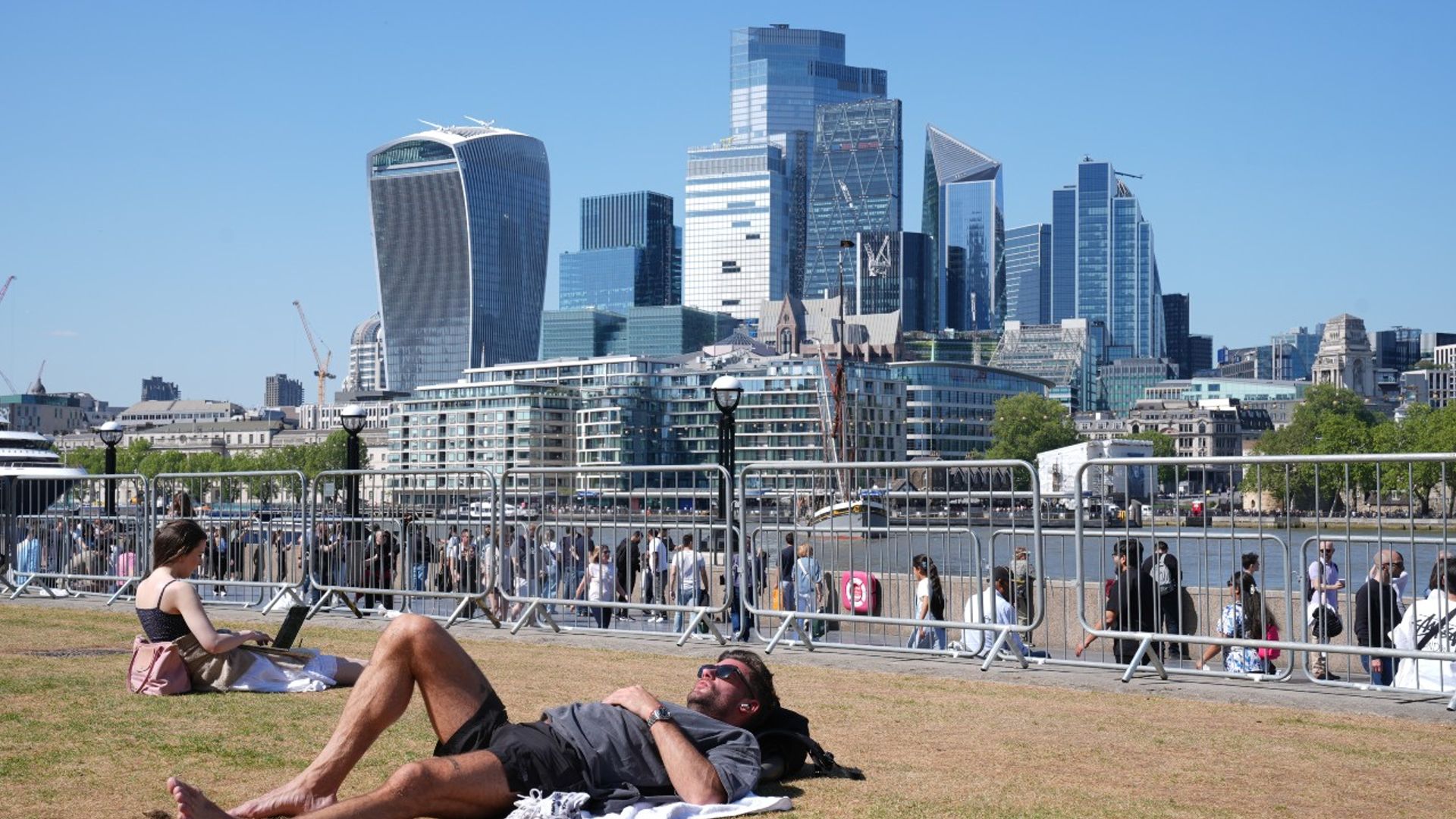
The modern media machine has a predictable summer routine. The moment meteorologists spot a 30°C reading on a radar chart, the crimson banners go up. Health alerts flash. Public authorities issue stern warnings about staying indoors, closing blinds, and treating a standard summer peak like an atmospheric apocalypse.
This annual cycle of panic is doing more harm than good.
By treating 30°C (86°F) as an existential crisis, health authorities and media outlets are coddling the public, misallocating emergency resources, and ignoring the actual physiological and structural issues that make heat dangerous. We have pathologized the weather. In doing so, we have created a population that is hyper-anxious yet fundamentally unprepared for genuine climatic shifts.
The lazy consensus insists that 30°C is an inherently dangerous threshold requiring sweeping state interventions and blanket medical warnings. That premise is flawed, scientifically lazy, and counterproductive.
The Myth of the 30C Danger Zone
Let's clear up the data immediately. In terms of global climate metrics, 30°C is a mild summer afternoon. Billions of people work, exercise, and thrive in temperatures far exceeding this benchmark without their societal infrastructure collapsing.
The danger of heat is not an absolute number on a thermometer. It is a function of two distinct factors: relative humidity and baseline acclimatization.
When a health alert is triggered purely based on a dry-bulb temperature hitting 30°C, it ignores the basic thermodynamics of human cooling. The human body cools itself via the latent heat of vaporization—sweating.
- At 30°C with 30% relative humidity, the air feels completely manageable because sweat evaporates instantly.
- At 26°C with 90% relative humidity, the wet-bulb temperature rises, sweat pools on the skin, and the cardiovascular system works twice as hard to dump heat.
Yet, the public narrative clusters around the big, scary round number of 30°. We are teaching people to fear the wrong metric. I have spent years analyzing public health communication strategies, and the data consistently shows that high-volume, low-threshold alerts breed public cynicism. When you cry wolf over a standard summer day, people tune out. Then, when a genuine 40°C heat anomaly arrives, the warnings fall on deaf ears because the public has developed alert fatigue.
Stop Treating Acclimatization Like a Luxury
The prevailing advice during these minor heat events is to retreat immediately to air-conditioned sanctuaries or freeze ourselves in place. This is a short-sighted strategy that actively degrades human resilience.
The human body possesses an extraordinary capacity for heat acclimatization. Within seven to fourteen days of exposure to elevated temperatures, plasma volume expands by 10% to 20%, stroke volume increases, heart rate lowers for a given workload, and the salt content of sweat decreases. This is a fundamental biological upgrade.
[Initial Heat Exposure]
       │
       ▼
[High Heart Rate / High Salt Loss / Rapid Fatigue]
       │
       ▼ (7–14 Days of Controlled Exposure)
[Plasma Volume Expands + Sweating Efficiency Increases]
       │
       ▼
[Successful Acclimatization / Lower Thermal Stress]
By hiding from the first sign of summer heat, we arrest this natural process. We remain perennially unacclimatized, meaning that when we inevitably must step outside, our bodies experience maximum physiological shock.
The hyper-cautious approach treats the human body like a delicate piece of glassware. It is not. It is an adaptive, dynamic organism that requires environmental stressors to maintain optimal function. Obviously, vulnerable populations—the elderly, those with severe cardiovascular disease, and infants—require careful monitoring. But treating the entire healthy adult population as if they are one warm afternoon away from heatstroke is institutional hyperbole.
The Real Culprit: Stagnant Architecture, Not the Sun
The media wants you to look at the sky. You should be looking at the floorboards.
The real danger in Western nations during a hot spell isn't the outdoor climate; it is our abysmal, insulation-deficient housing stock. We have spent decades building and retrofitting homes exclusively to trap heat during freezing winters, with zero consideration for passive cooling during summer peaks.
Imagine a scenario where a modern apartment building is constructed with massive south-facing glass windows, no external shutters, and structural concrete that acts as a thermal flywheel. During a 30°C day, that building becomes a greenhouse. It absorbs solar radiation all day and radiates it back into the living spaces all night. The indoor temperature can easily climb to 35°C, offering no nocturnal relief.
That is not a weather crisis. That is an architectural failure.
Instead of funding massive public awareness campaigns telling people to drink water—advice so obvious it borders on insulting—resources should be aggressively diverted into structural engineering. We need:
- Mandated external shading and retrofitted shutters on all multi-family dwellings.
- High-albedo reflective coatings on urban roofs to mitigate the urban heat island effect.
- Strict building regulations that penalize over-glazing on south-facing facades.
Fix the buildings, and the 30°C alerts become entirely obsolete overnight.
Dismantling the Standard Heatwave Advice
The standard checklist provided by mainstream media outlets during a warm spell is often a mix of patronizing common sense and outright bad advice. Let's dismantle the worst offenders.
"Drink liters of ice water constantly"
Hydration is important, but chugging ice-cold water indiscriminately can induce mild gastrointestinal distress and, in extreme cases, lead to hyponatremia—where blood sodium levels drop dangerously low due to overhydration. The body regulates thirst exceptionally well on its own. Drink when you are thirsty. You do not need an app or a public health mandate to tell you when to consume fluid.
"Close all windows during the day"
This advice only works if the outdoor temperature is significantly higher than the indoor temperature and your home is perfectly insulated. In poorly insulated, top-floor apartments, closing the windows turns the space into an unventilated oven. If there is a breeze outside, cracking windows on opposite sides of the building to create a cross-breeze is infinitely more effective at lowering the indoor index than locking yourself in a stagnant air pocket.
"Avoid all physical activity"
While running a marathon at noon in direct sunlight is undeniably foolish, completely shutting down physical movement for a 30°C day is an overreaction. Shifting workouts to the early morning or late evening allows the body to experience the thermal stress necessary for acclimatization without risking heat illness.
The Downside of the Hardline Stance
To be completely transparent, a contrarian approach requires acknowledging its own limitations. Advocating for stoicism and structural focus over public panic has a distinct vulnerability: it relies on individuals to accurately judge their own physiological limits.
Some individuals lack that self-awareness. Weekend athletes will push through a humid afternoon and end up in an emergency room with heat exhaustion. Employers may use the lack of formal alerts to exploit outdoor laborers, forcing them to work through dangerous conditions without adequate breaks or shade.
The systemic pushback against alerts must be accompanied by rigid labor laws that protect outdoor workers based on the actual wet-bulb globe temperature (WBGT), rather than arbitrary air temperature readings. We must replace vague, population-wide media hysteria with hyper-local, operational safety standards for specific high-risk environments.
Shift the Target
The current framework for handling summer weather is broken because it targets the wrong variable. We cannot control the sun. We can control our physiological readiness, our architecture, and our public infrastructure.
Stop checking the weather app with a sense of impending doom. Stop allowing sensationalist headlines to dictate your summer routine. The human body is built to sweat, adapt, and endure. Turn off the air conditioning for an hour, let your body recognize the season, and demand that municipal budgets be spent on urban forestry and smarter architecture rather than redundant public relations campaigns.
The thermometer isn't the problem. Our fragility is.